02 — Locations
Portsmouth Yard Rules and Battery Spots
03 — Wall Space
How Much Wall a Powerwall 3 Actually Needs
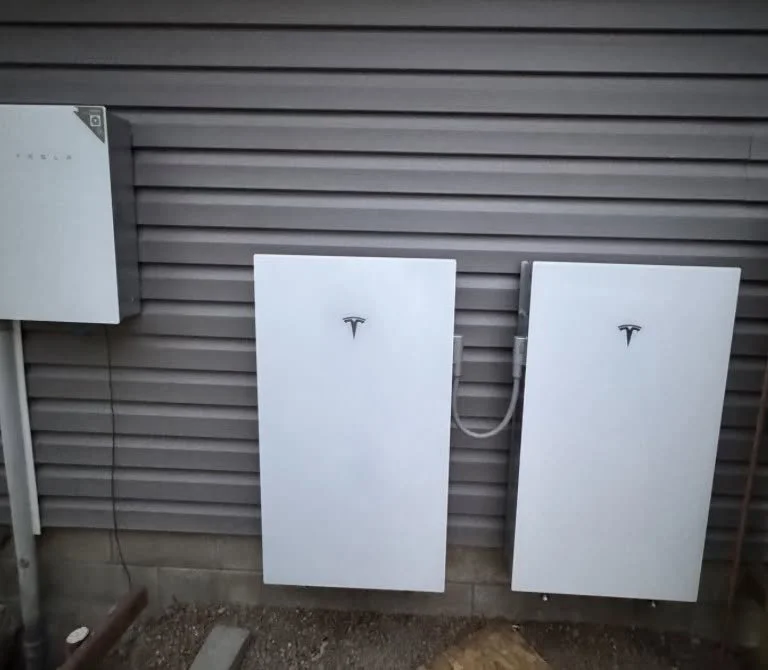
Tesla’s installation manual sets the numbers. Each Powerwall 3 needs at least 32 inches of wall width, with 4 inches clear on each side, 2 inches above, and 12 inches of open air in front. Tesla also calls for 36 inches of working space in front of the unit under the electrical code, and more where local code or the site requires it.
On a side wall, that means about 3 feet of clear yard in front of the battery, well beyond the depth of the unit itself.
The bottom of the mounting feet sits no more than 45 inches above the ground, and nothing can be mounted in the clearance above it. Tesla’s manual allows two units side by side with at least 4 inches between them, and 6 inches is recommended for wiring and switch access, though the inspector decides the final spacing. Only Expansion units can stack behind a Powerwall 3.
Tesla also asks that no water source sit above or near the unit, so it stays out from under gutters, spigots, and sprinkler spray that side walls often carry. The vents on the back and lower front must stay free of foliage and debris, so any screening shrubs are planned to stay out of that airflow.
04 — Gateway
The Second Box: A Gateway Beside the Meter and Panel
A Powerwall system also needs a Tesla device that detects an outage and separates the house from the grid, and Tesla does not allow third-party equipment in its place. Tesla’s design guidance also says a gateway may never be connected by tapping existing wiring on the line side of the main panel or service disconnect.
One option, the Backup Switch, plugs into the existing meter socket, with the meter already plugged in. Tesla publishes a list of utility territories that allow it, and that list does not currently include Dominion Energy.
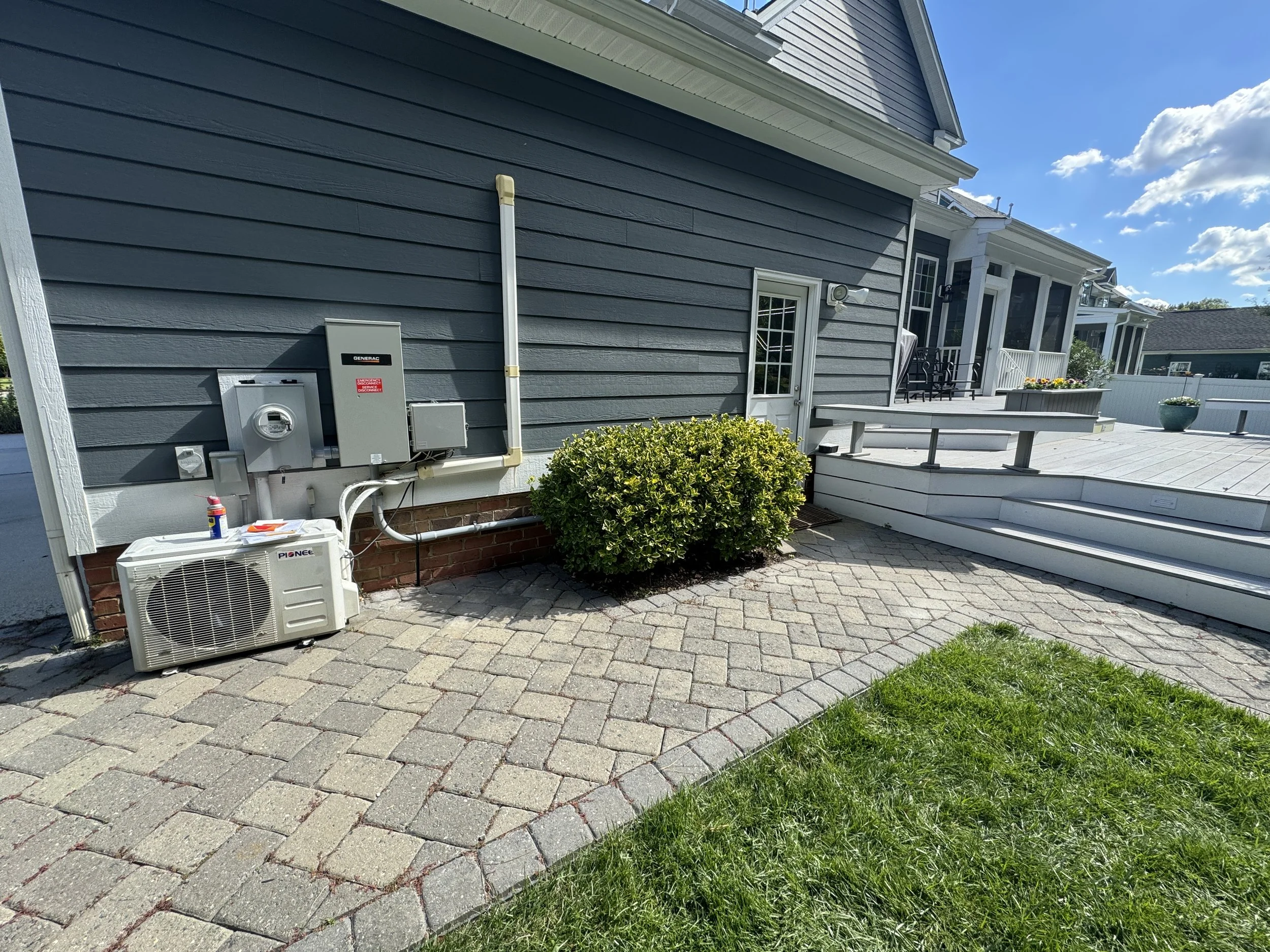
For a Portsmouth home on Dominion service, the design is typically planned around Gateway 3, which supports whole-home or partial-home backup with Powerwall 3 and connects to the battery by wire. That gateway typically goes near the meter and main panel, so we lay out the meter, gateway, battery, and working space as one wall before choosing the spot.


05 — Existing Solar
Already Have Solar? The Dominion Side of Adding a Battery
Castles does not install rooftop solar, but it adds batteries to an existing array. Powerwall 3 has an integrated solar inverter that allows direct solar connection, and compatibility with an existing array is assessed on a case-by-case basis before the design is finalized. Dominion notes that batteries may be part of a renewable generation system, though they do not count as a renewable source by themselves.
Dominion’s net metering process runs through a Net Metering Interconnection Notification. The system must be certified by a licensed Virginia electrician or approved by the local inspection authority; the applicant is responsible for local zoning and building codes, and nothing can be connected inside the meter base without Dominion’s prior approval.
06 — Process
From Yard Measurements to Working Backup
Measure the exterior
Side yards, walls, doors, windows, downspouts, faucets, and the garage are measured and photographed.
Lay out the gateway and battery
The meter, gateway, Powerwall, and workspace are planned as a single wall.
Mount and schedule inspection
The unit goes on the chosen wall under permit, and we meet the city inspector.
07 — Why Castles
Powerwall Planning for Portsmouth Lots
The Side Yard
We measure it against the setback before we quote a spot.
Wall or Garage Mount
Locations that use less yard space.
08 — Proof
Service a Family Keeps Calling Back
A family that has called us several times singles out the customer service.
From our five-star Google reviews

Google 5.0 Rated by Hampton Roads Customers
Castles Electrical maintains a 5.0 rating on Google. The reviews below load as a live widget, so this page shows current feedback from real Castles Electrical customers.
09 — FAQs
Portsmouth Powerwall FAQs
10 — Hurricane Season
Backup, Evacuation Zones, and Medical Equipment
The Virginia Department of Emergency Management notes that the Atlantic hurricane season runs from June 1 to November 30, peaking from mid-August to late October. Portsmouth directs residents to Know Your Zone, the state’s storm-surge evacuation planning tool, which assigns zones A through D by street address. A battery keeps backed-up circuits running at home, but it does not change an evacuation decision.
For households that rely on powered medical equipment, Dominion asks customers to request placement on its medical conditions list, which requires a physician’s statement renewed each year, and advises keeping battery-powered or manual equipment on hand. The Virginia Department of Emergency Management’s Power Outage Plan covers signing up as a life-sustaining equipment customer. A Powerwall adds a layer to those steps.