whole-home surge protection in Portsmouth, VA, Castles Electrical

Master Electrician & Class B Licensed

Whole-Home Surge Protection in Portsmouth, VA

Only 12 percent of Portsmouth homes were built in 2000 or later, the lowest share among Portsmouth, Norfolk, Chesapeake, and Suffolk in Census estimates, and plenty of the older ones still have two-prong outlets.

A plug-in surge strip needs a ground wire to send a surge to, and a two-prong outlet has none, so the strip plugged into it loses much of its protection. In a house wired that way, the device at the panel becomes the main defense for the electronics, and whether that device can work depends on the grounding behind it.

From Park View and Port Norfolk to Cradock and Churchland, Castles Electrical adds panel surge protection to houses built for a different era. We hold Master Electrical and Class B licenses, and the estimate is free and in writing.

Master Electrical & Alternative Energy License #2710048784 Class B Contractors License #2705166194 Google 5.0 Rated Family-Owned & Operated Since 2012 Tesla Certified & Generac Dealer Licensed Electricians, Never Subcontracted Free Installation Estimates
Licensed. Insured. Trusted. We treat your home like it’s our own.
Locally Owned in Virginia Beach Since 2012 Serving Virginia Beach & Nearby Cities
GENERAC
TESLA
KOHLER
NABCEP
BBBA+
SquareD
GENERAC
TESLA
KOHLER
NABCEP
BBBA+
SquareD
Home / Portsmouth, VA / Whole-Home Surge Protection in Portsmouth

01 — Why Castles

Protection for Houses With Older Wiring

A Type 2 Device at the Panel

On its own breaker, with short leads run to the main lugs.

Equipment Protectors Where They Help

Hardwired units at the heat pump, the range, or a well pump, when you want them.

02 — Portsmouth Conditions

Two-Prong Outlets, Old Panels, and Where Protection Belongs

Plenty of those houses still carry circuits with no equipment ground at the outlet.

On those circuits, the panel device is the protection that still has a proper path to ground. When voltage spikes on the incoming power, it diverts surge current into the grounding system at the service before the surge spreads through the house. That is why we confirm the grounding electrode connection and the bonding at the panel before installing, because decades-old connections can loosen or corrode.

When the panel is part of the question

An older panel may have no open spaces for the breaker that feeds the device, or may be showing its age. When space is the only issue, a breaker space can often be freed up. When the panel itself is the problem, we tell you.

Cable and phone lines that enter at another wall

A panel surge device protects the power lines. Cable television, internet, and telephone lines enter the house separately, often on different walls, and manufacturers make separate protectors for coaxial and phone lines. In an older Portsmouth home where those services have been added over the years, we note where each one enters so you know which lines a panel device does not cover.

03 — Layers

Layers of Surge Protection in a Portsmouth Home
Protection
Where it goes
What it covers
Type 1 device
At the service, on the line or load side of the main disconnect
The service entrance and everything downstream
Type 2 device
In or beside the main panel, on its own breaker
All the circuits fed from that panel
At equipment such as a heat pump or mini-split
That piece of equipment
Coaxial and phone line protectors
Where those lines enter the house
TV, internet, and phone equipment
Plug-in protector
At a grounded three-prong outlet
Computers, televisions, and chargers
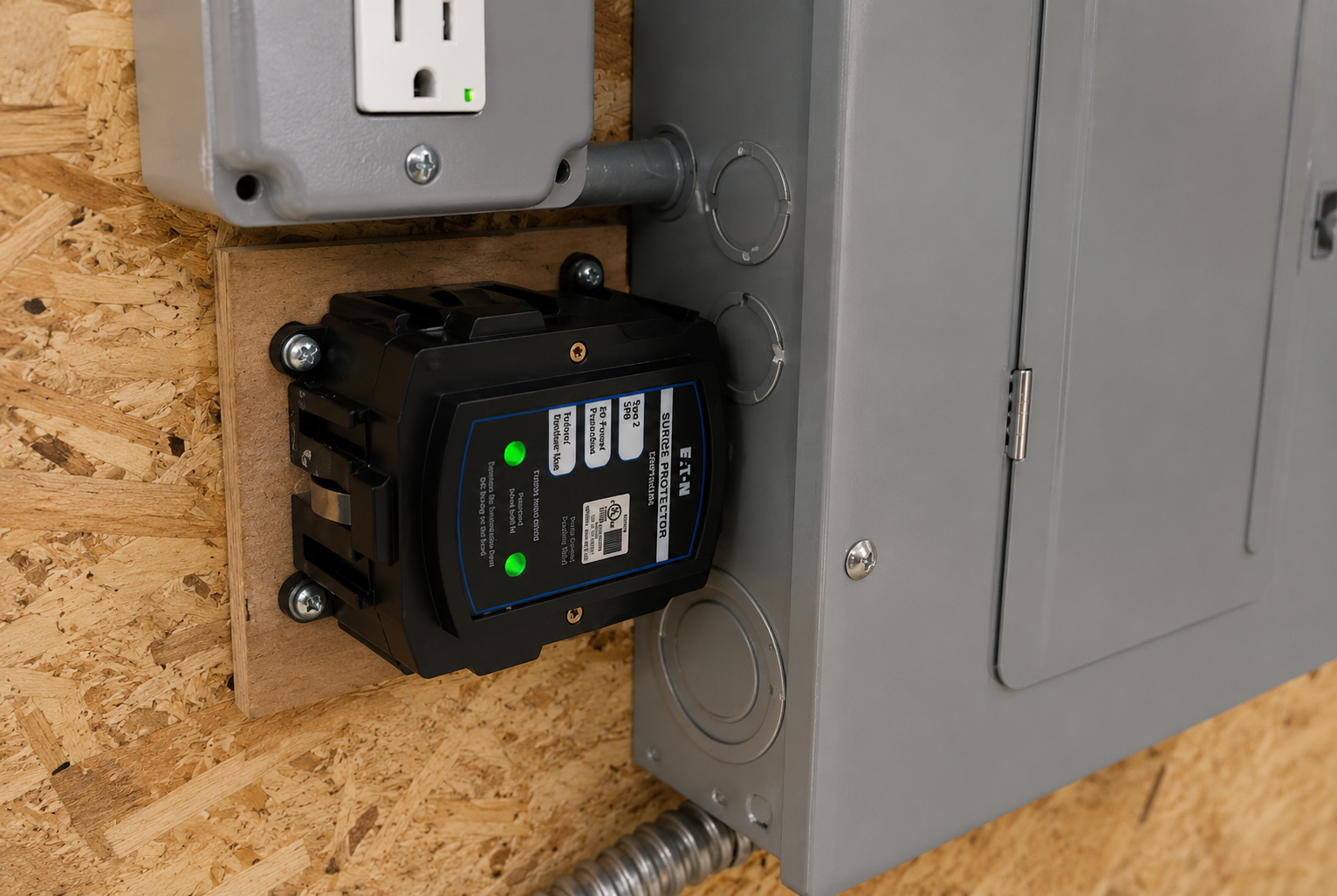
Surge protective device beside a panel, next to a three-prong outlet

04 — Plug-In

Plug-In Protectors That Still Earn Their Place

A power strip and a surge protector can look identical. UL Solutions puts it plainly: a power strip is just an extension cord with multiple outlets, while a surge protector has an internal element that clamps the surge. UL says to make sure the product is UL certified, and to compare the suppressed voltage rating, which ranges from 330 to 4,000 volts, with a lower rating giving better protection.

UL also advises replacing any strip whose cord or body is damaged, even though strips do not expire on a schedule. The Consumer Product Safety Commission posts recalls of surge protectors and power strips, so an older unit’s brand and model are worth checking on its site before it goes back behind the television.

The Electrical Safety Foundation describes a point-of-use protector as additional protection for use with a Type 1 or Type 2 device. In a Portsmouth house with many two-prong outlets, plug-in units belong only on outlets confirmed to be grounded, and UL notes that a home full of strips usually does not have enough outlets. Each layer covers something the other layers cannot reach on their own.

05 — Water Pipe Ground

When the Water Pipe Was the Ground

In many older houses, the grounding electrode conductor runs from the panel to the metal water line. Under Virginia’s 2021 residential code, a metal underground water pipe counts as a grounding electrode only when it is in direct contact with the earth for 10 feet or more and is electrically continuous back to where the grounding conductor connects.

If the underground line, or part of it, has been replaced with plastic over the years, the pipe may no longer qualify as an electrode. The clamp can still be on the pipe and look fine at the panel while the path a surge device relies on no longer reaches the earth. The residential code also requires a metal water pipe electrode to be supplemented by an additional electrode, such as a ground rod.

Location matters too. Virginia’s code says interior metal water piping more than 5 feet from where it enters the building cannot be used to interconnect grounding electrodes, so a clamp on a pipe in a back closet does not do that job.

If you know the water line was repiped at some point, please mention it when you book. Before installing a surge device, we trace where the grounding conductor lands, whether the pipe is metal where it enters, and whether a second electrode is in place. Any corrections are listed separately on the estimate.

06 — CSST

Yellow Gas Tubing and the Bonding Question

Some Portsmouth homes have corrugated stainless steel tubing, or CSST, a flexible gas line often sheathed in a yellow jacket. Virginia’s home inspection regulation requires an inspector who sees any shade of yellow CSST in a home built before the 2006 Virginia Construction Code took effect, on May 1, 2008, to note it in the report.

The report must include a statement to the effect that manufacturers believe the product is safer when properly bonded and grounded, as their installation instructions require, and that proper bonding and grounding should be determined by a contractor licensed to perform the work in Virginia. The model residential code calls for CSST without an arc-resistant jacket to be electrically continuous and bonded to the electrical service grounding electrode system.

That bond ties into the same grounding system a panel surge device depends on. If your inspection report mentions yellow CSST, tell us when you book and have that page of the report handy, and we can look at whether a bonding connection to the grounding system is present during the visit. Work on the gas piping itself stays with a gas contractor.
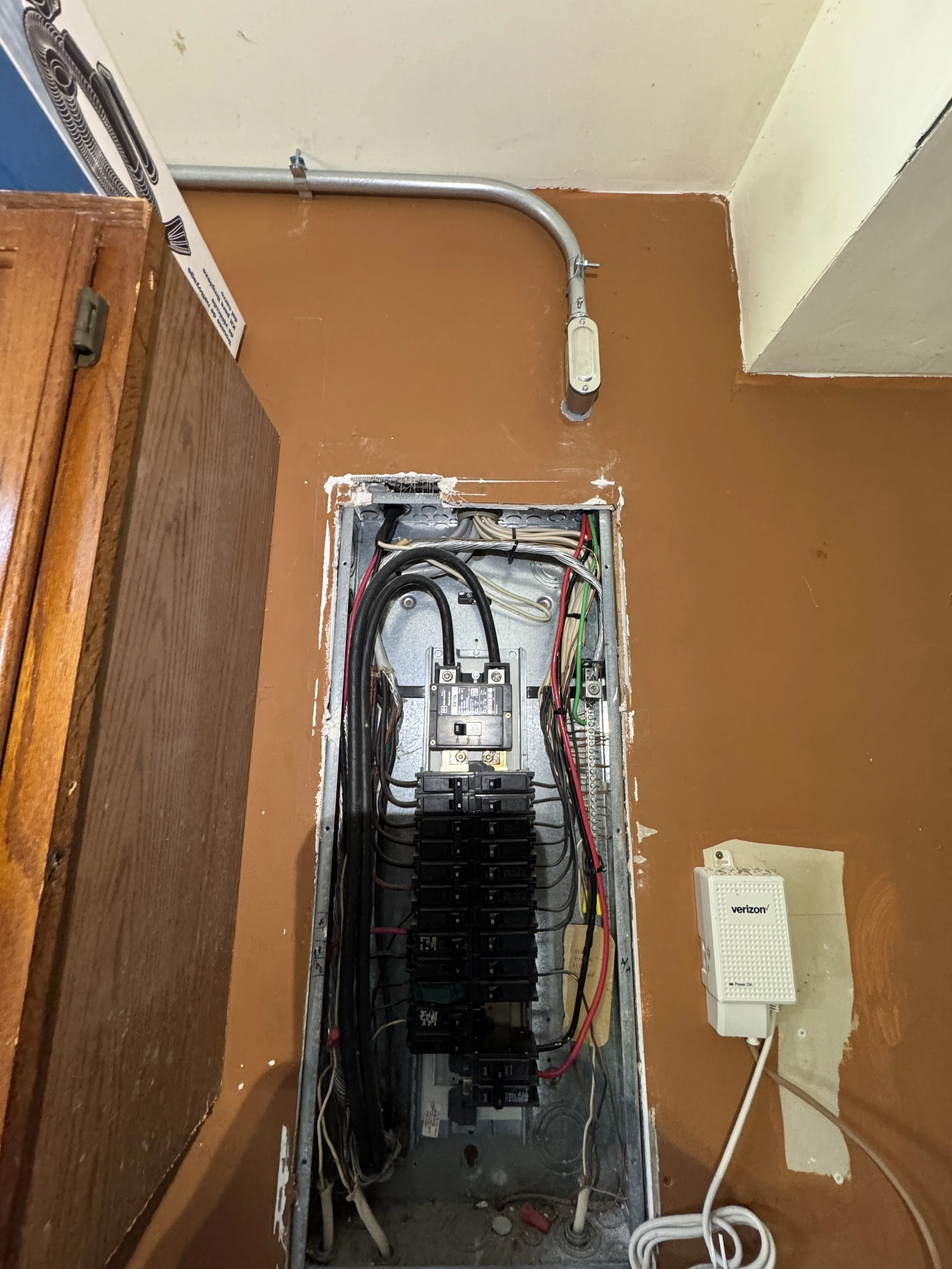
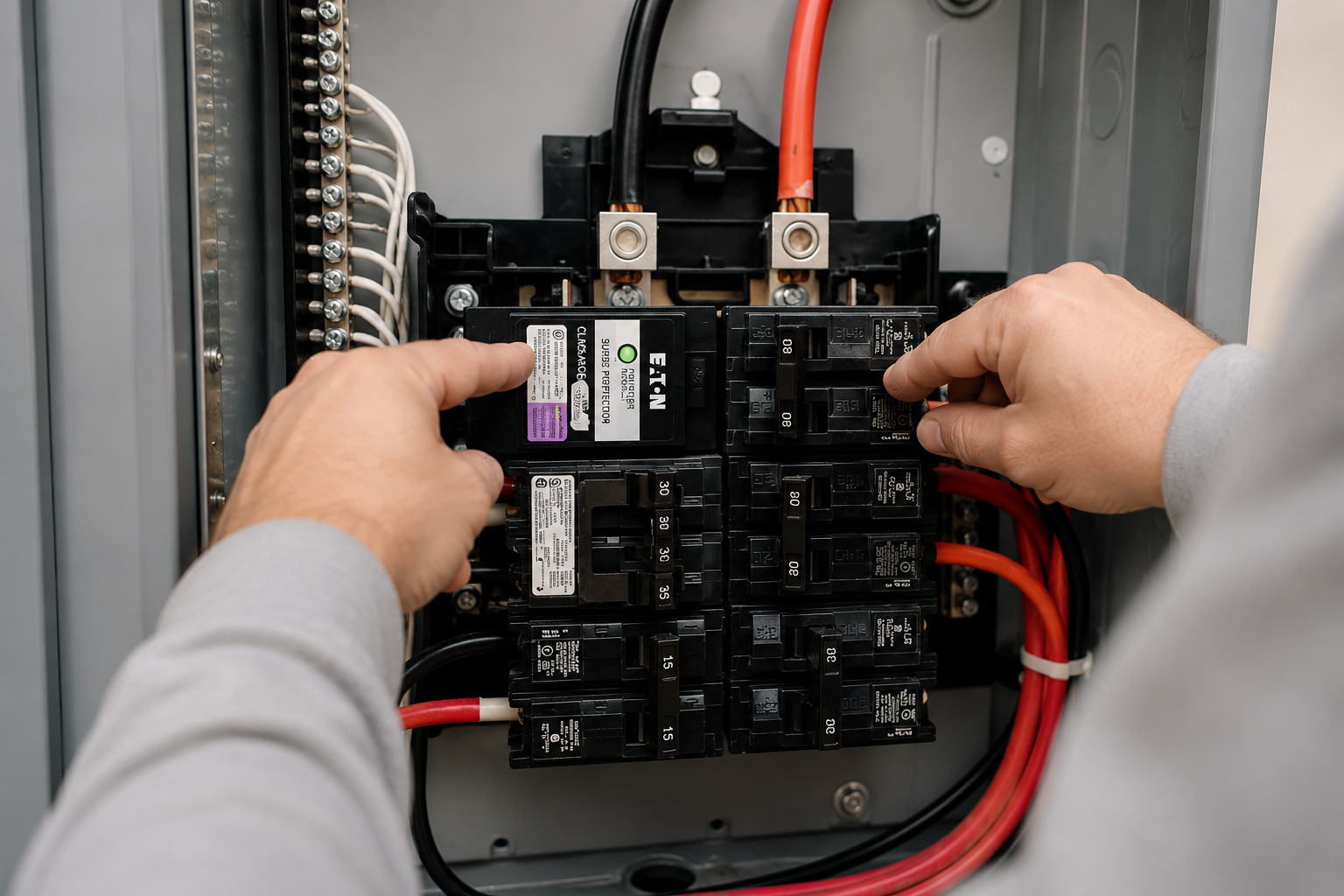
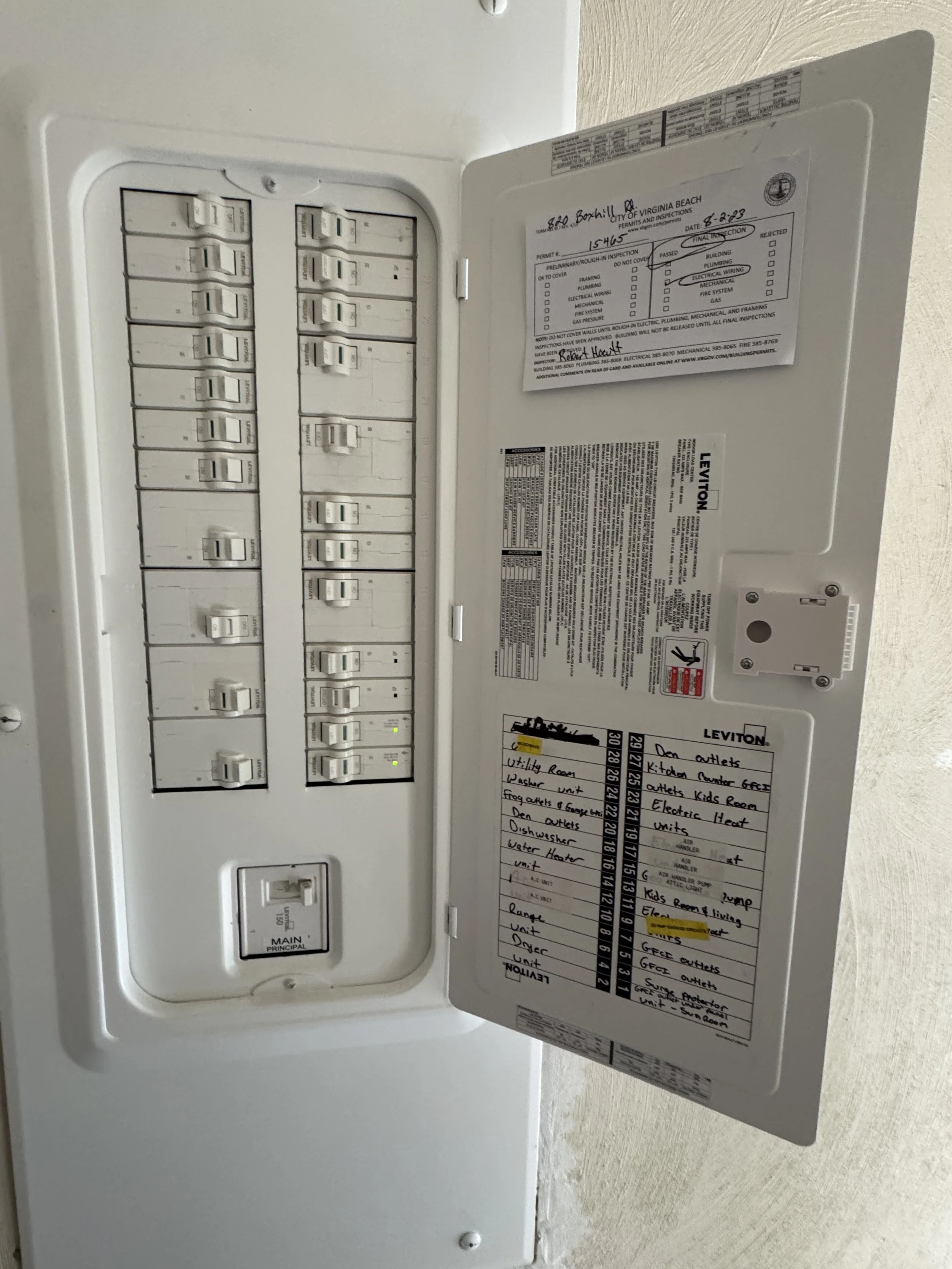
Panel opened up in an older Portsmouth, VA home to check the bonding and grounding connections
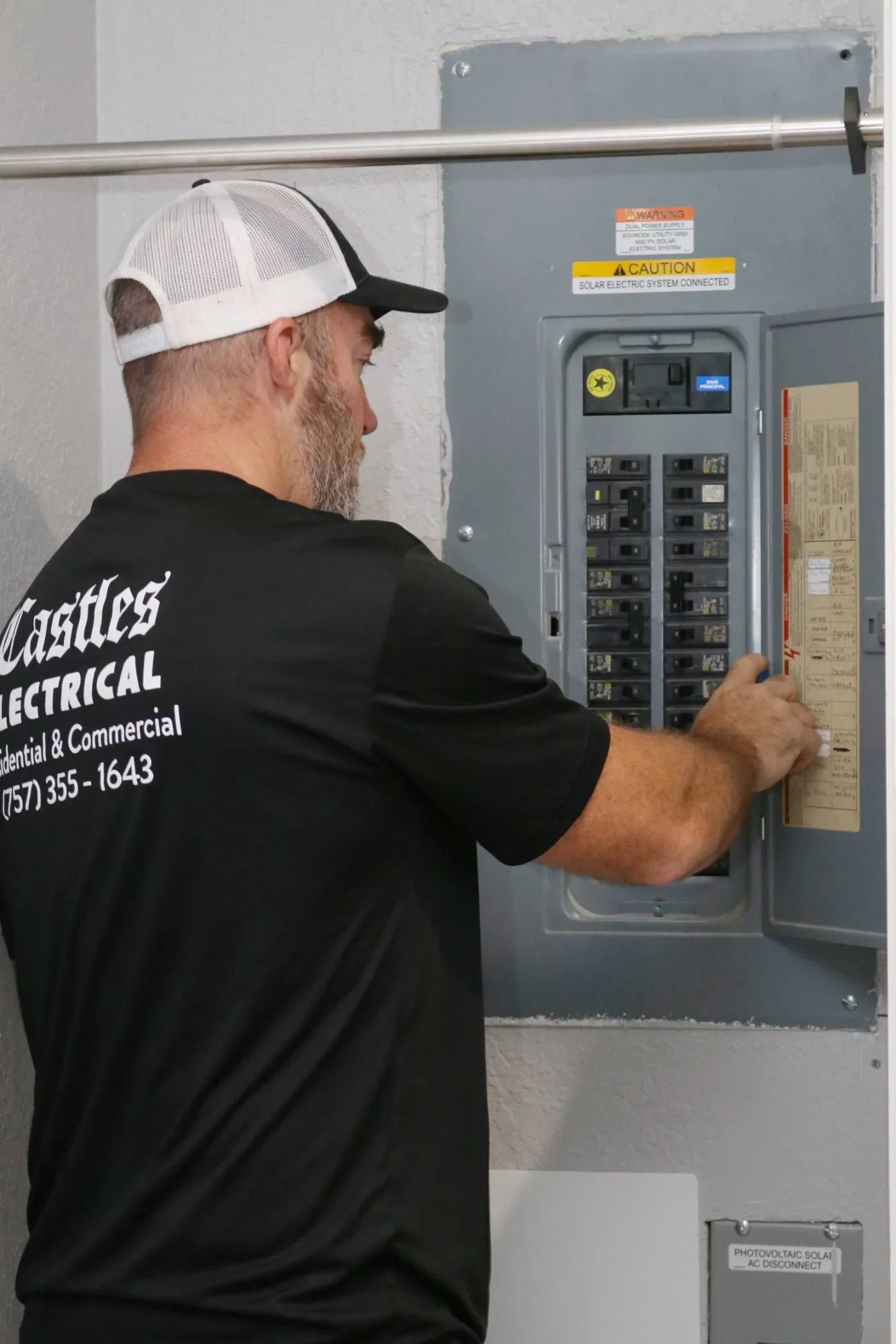
Castles Electrical electrician working inside a panel in Portsmouth, VA

Castles Electrical

Licensed, insured, and locally owned. The work is done by our own electricians, never subcontracted.

07 — Process

What We Check Before Adding Protection

01

The service and panel

Age, condition, open spaces, and whether the panel is due for replacement.

02

Grounding electrode connection

Where the house is grounded and whether that connection is sound.

03

Bonding at the panel

That the neutral and grounding connections are made correctly.

04

Two-prong and ungrounded circuits

Which rooms have outlets where plug-in protectors lose much of their value.

05

Written estimate

The device, any grounding corrections, and optional equipment protection are listed separately.
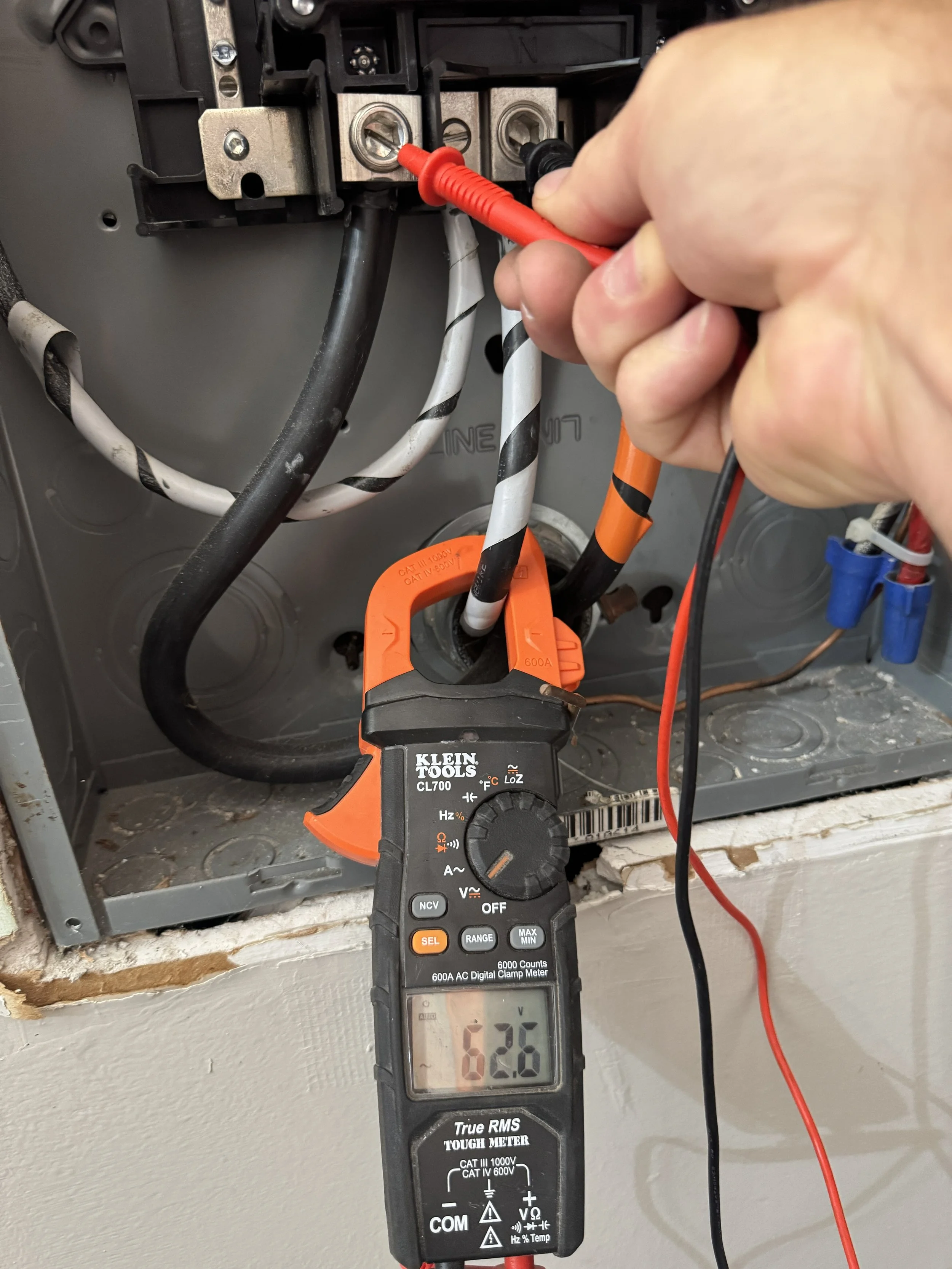
Testing at the panel before a surge protective device is added in Portsmouth, VA

08 — Proof

The Owner on the Job

“

One reviewer noted the owner came out to see the job himself.

From our five-star Google reviews
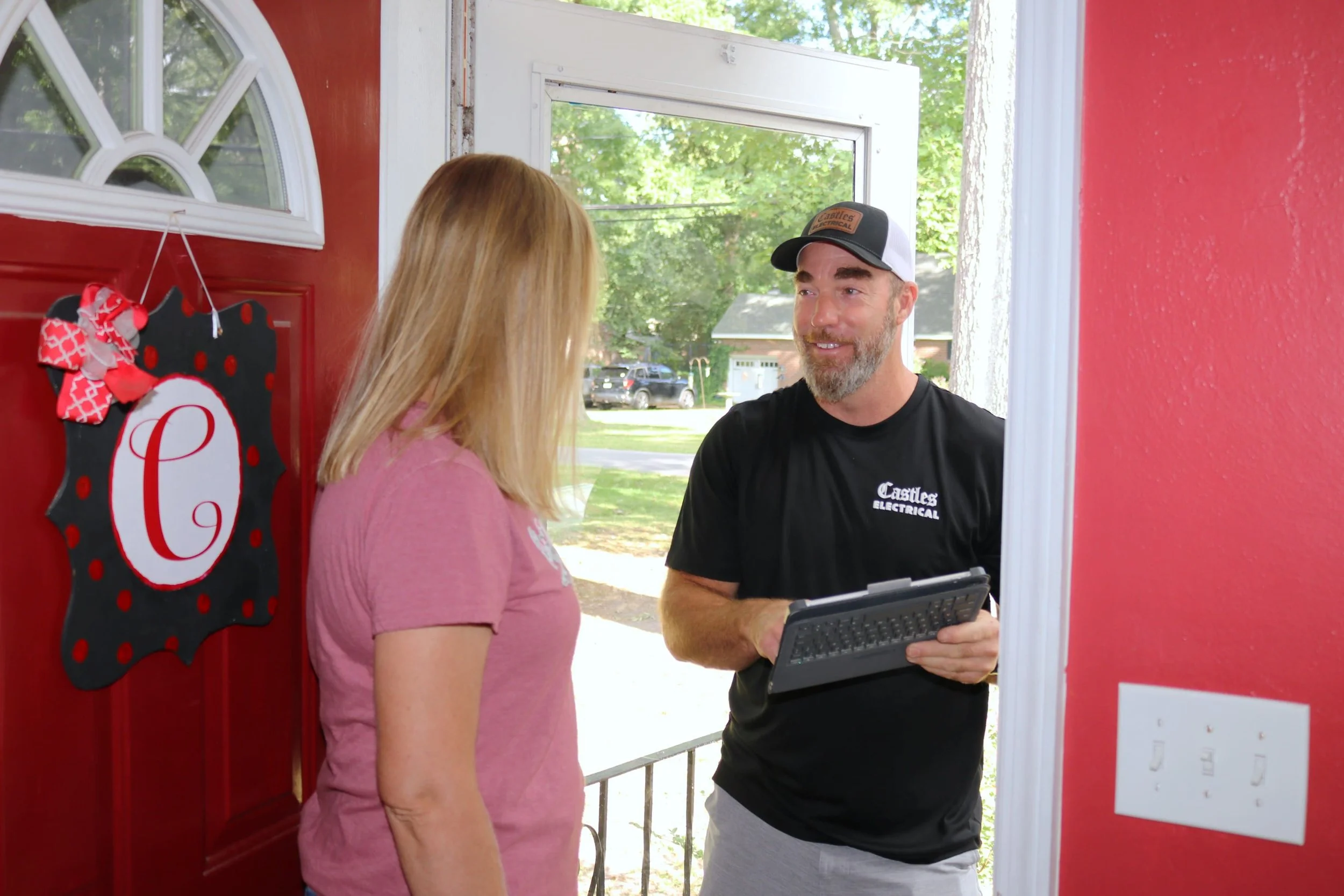
Castles Electrical going over the job at a Portsmouth customer’s door
Aged panel interior in an older Portsmouth, VA house

Google 5.0 Rated by Hampton Roads Customers

Castles Electrical maintains a 5.0 rating on Google. The reviews below load as a live widget, so this page shows current feedback from real Castles Electrical customers.

Leave Us a Google Review

09 — FAQS

Portsmouth Surge Protection FAQs

My outlets are two-prong. Does a panel surge device still help?+

Yes. It limits surges on the incoming service for every circuit in the panel, grounded or not. That makes it the layer that still works in the rooms where the outlets have no ground.

Will a three-prong adapter make my surge strip work?+

No. An adapter does not create a ground, and boxes in older homes are often ungrounded. We can test the circuit and explain the options for grounding it.

When does a panel surge device need replacing?+

There is no set date. The device is sacrificial, so one that has taken a large surge may have spent itself doing its job. It carries an indicator, and we show you where it is and what it looks like when the device needs replacing.

Does the surge device protect my internet equipment?+

Only from surges on the power side. Surges can also come in on the cable or phone line, which need their own protectors where those lines enter.

My older Portsmouth house still has a fuse box. Can it get whole-home surge protection?+

A Type 2 device connects to a breaker, so in a house still on fuses, the fuse box is usually replaced first, and the surge device goes in with the new panel.

Ready When You Need Us

Two-Prong Outlets or an Untested Ground?

Count the two-prong outlets and snap a photo of the panel. We will review the grounding and the panel and provide a free installation estimate in writing.

Office and hours

Based at 2984 S Lynnhaven Road, Suite 104, Virginia Beach, VA 23452.

  • Monday to Friday: 7:00 AM to 10:00 PM
  • Saturday: 7:00 AM to 7:00 PM
  • Sunday: Closed
  • After-hours voice messages are checked, and we take emergency and after-hours calls when we can

No surge device is better than the ground behind it.

Castles Electrical electrician reviewing the job with a homeowner