02 — Dominion Cable Plan
Who Supplies the Cable From the Line to the Meter
Dominion’s general rule is that the customer supplies the cable that runs down the wall from the line to the meter. Virginia homes are the exception: Dominion will install it on a new or rewired single-occupancy residence with a service of 100 amps or more, under what its manual calls the Virginia Residential Overhead Service Entrance Plan.
A house moving from a fuse box to a 100- or 200 amp breaker panel can fit that description. You can also have us install the cable instead, and Dominion can require the owner to supply it when the company judges the requested route unreasonable or unsafe. Whether the plan applies to a particular house is Dominion’s decision, so we do not promise it in advance.
The plan leaves one piece with the owner either way. Dominion’s rules state that the customer must still provide and maintain acceptable support for the company’s service drop and cable. On most older Portsmouth houses, that means a mast or a wall attachment, and it is part of the service entrance work on our side of the job.
03 — Heights
How High the Line Has to Be
Dominion wants the point where its line attaches to sit at least 10 feet up, and preferably 12. Older one-story Portsmouth houses with the bracket on a low eave or porch roof often need a new mast to reach that. The weatherhead, the hooded fitting where the service cable begins, belongs above the wires coming in from the street, or close to the attachment point when that is not practical.
The line also has to clear windows that open, doors, and porches by 3 feet, and pass at least 12 feet over a home driveway and yard that do not carry truck traffic, or 18 feet where trucks drive. We check each clearance on the first visit.
The drip loop, the short sag of wire where the line meets the cable, counts too. For a normal house, Dominion’s rules call for at least 10 feet between that loop and the finished ground.
04 — Piece by Piece
The Outside of a Fuse Box Replacement, Piece by Piece
05 — Cable Route
Siding, Chimneys, and the Meter Wall
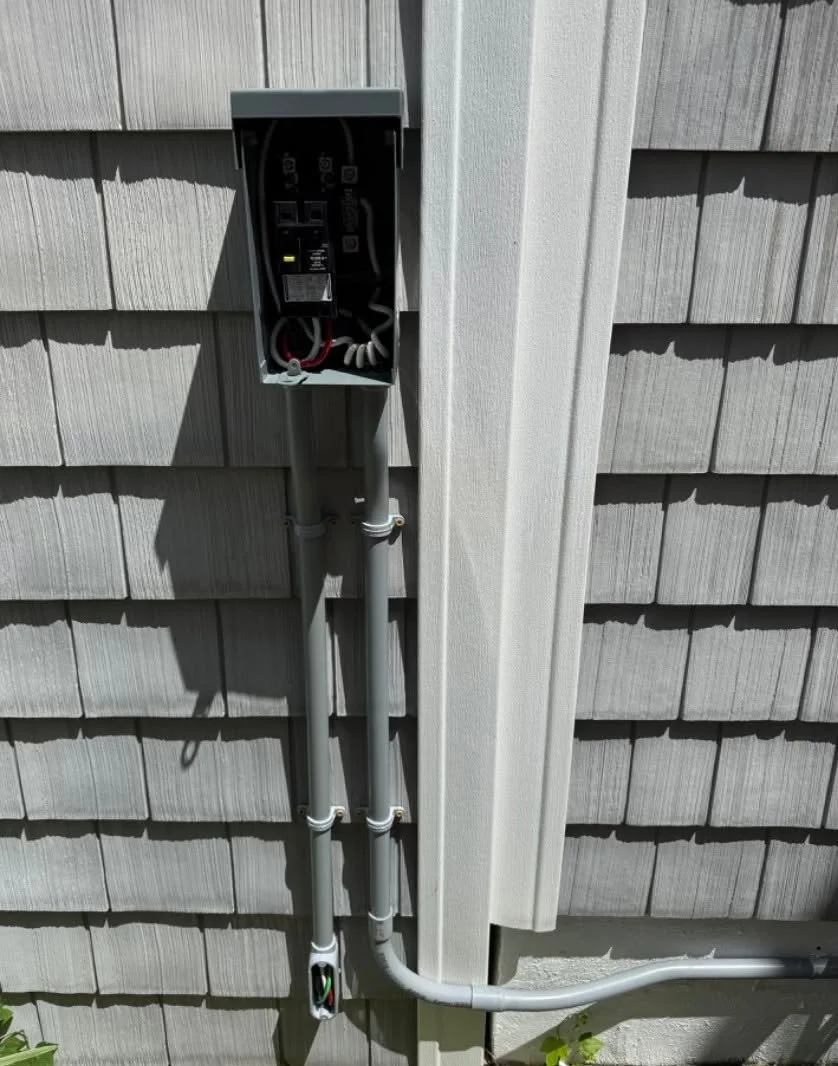
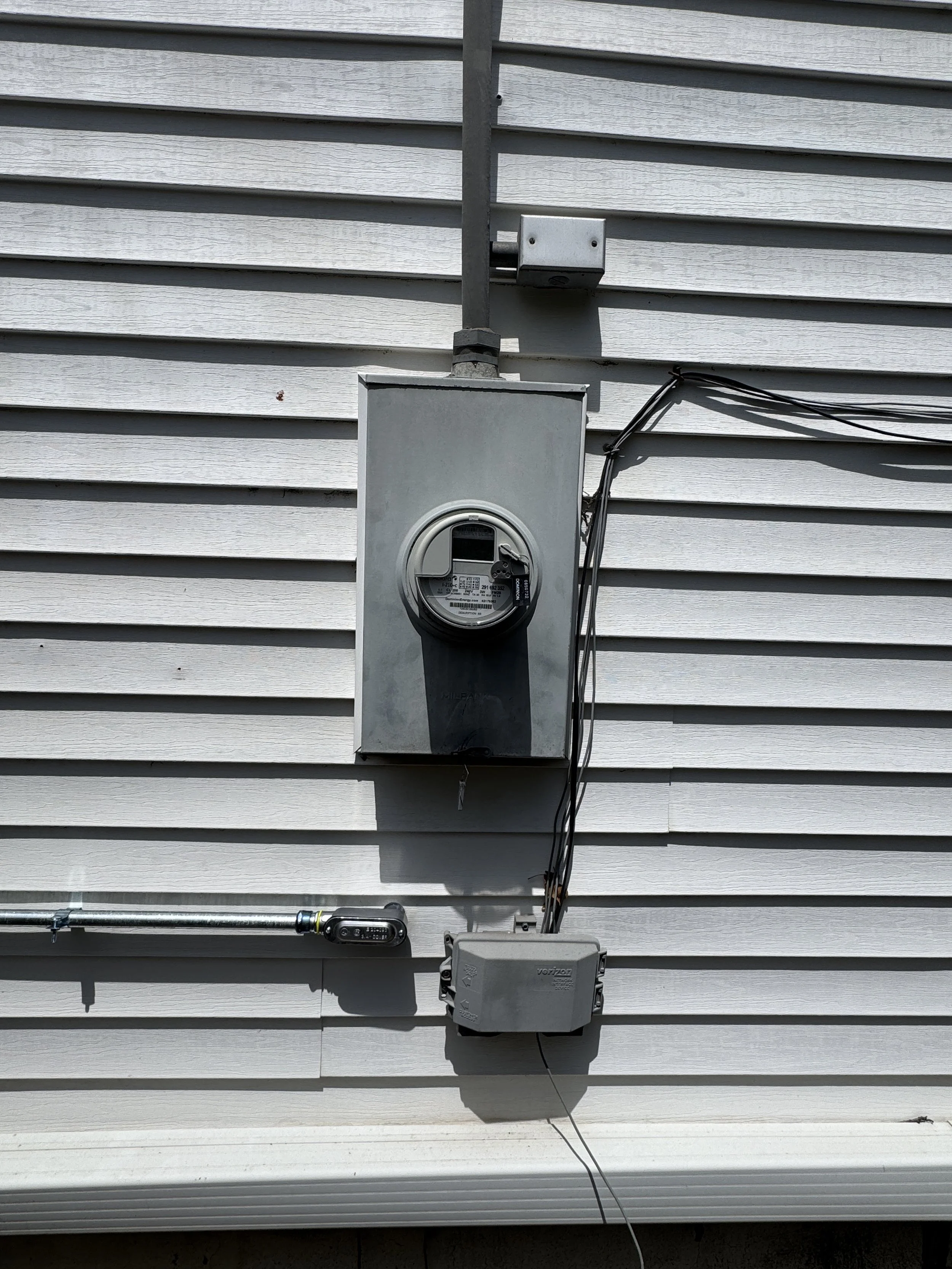
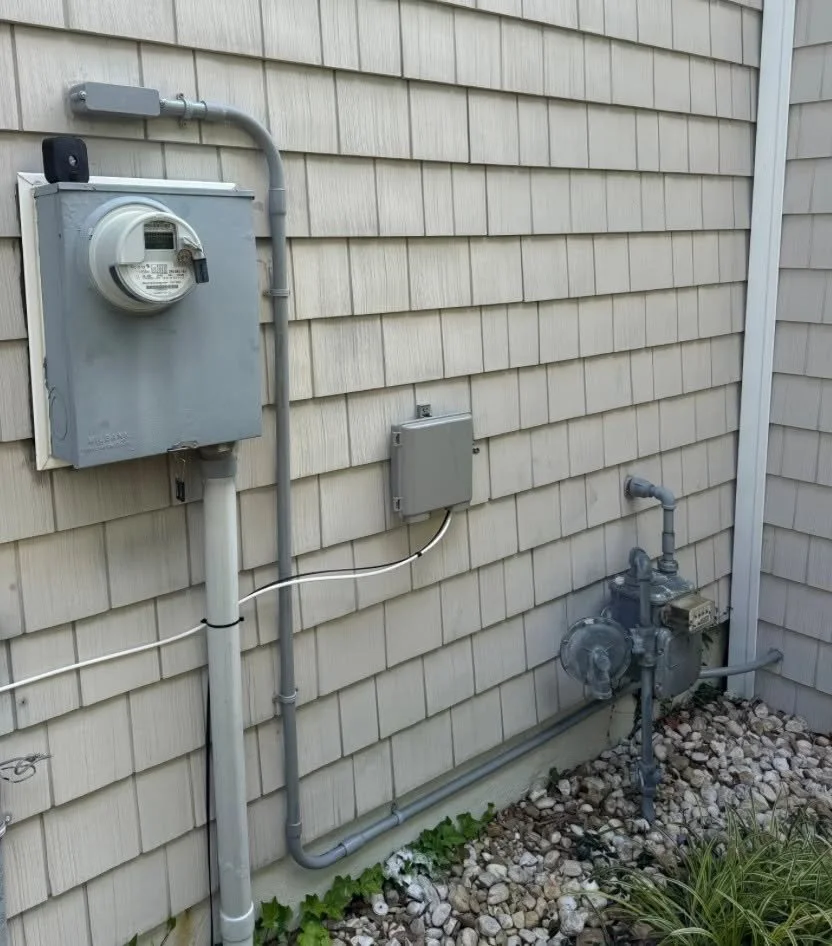
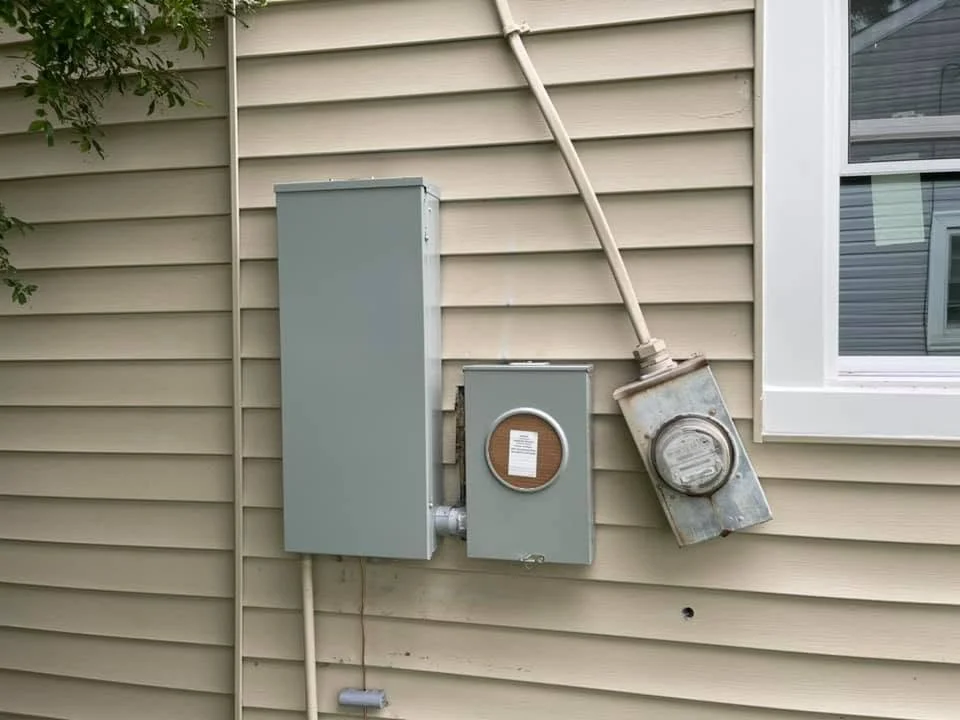
From the weatherhead down, you should be able to see the whole cable on the outside of the house. Dominion wants service entrance conductors in one continuous length, without splices, and completely visible on the outside of the building from the service head to the meter, with a continuous conduit run where they must pass through a concealed area.
Under the Virginia cable plan, the rules get more specific. The whole length of cable between the drop and the meter enclosure stays on the exterior of the house. It may not be covered by siding or other exterior products, and it may not be installed on a masonry chimney. The exception is a service brought through the roof in the customer’s conduit mast.
The meter enclosure goes on the outside wall where the drop attaches, or on the wall next to it. The panel inside has more freedom, so a new panel location does not always move the meter.
On older Portsmouth houses due for new siding or chimney repairs, planning the fuse box replacement first keeps the cable route from changing twice.
06 — Changeover
What Happens on Changeover Day
Dominion publishes a drawing called the Typical Overhead Rewire Arrangement. It shows how the old and new meter bases are connected for the changeover, and its labels include the old service entrance, the new meter installation, a watertight connector, and the new entrance to the service panel.
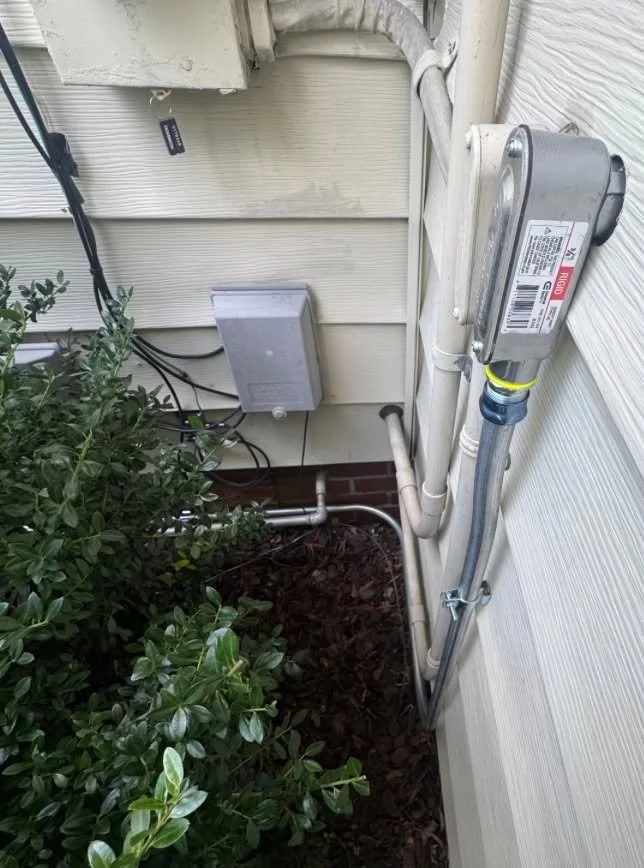
In practice, a short temporary cable bridges the old and new meter bases so the house can come back on before Dominion makes the service permanent. Dominion’s rules state that no unmetered electricity may be used, and that temporary connectors and insulating tape are furnished and installed on the customer’s side of the job. The hole where the temporary cable enters is sealed against weather, debris, and birds.
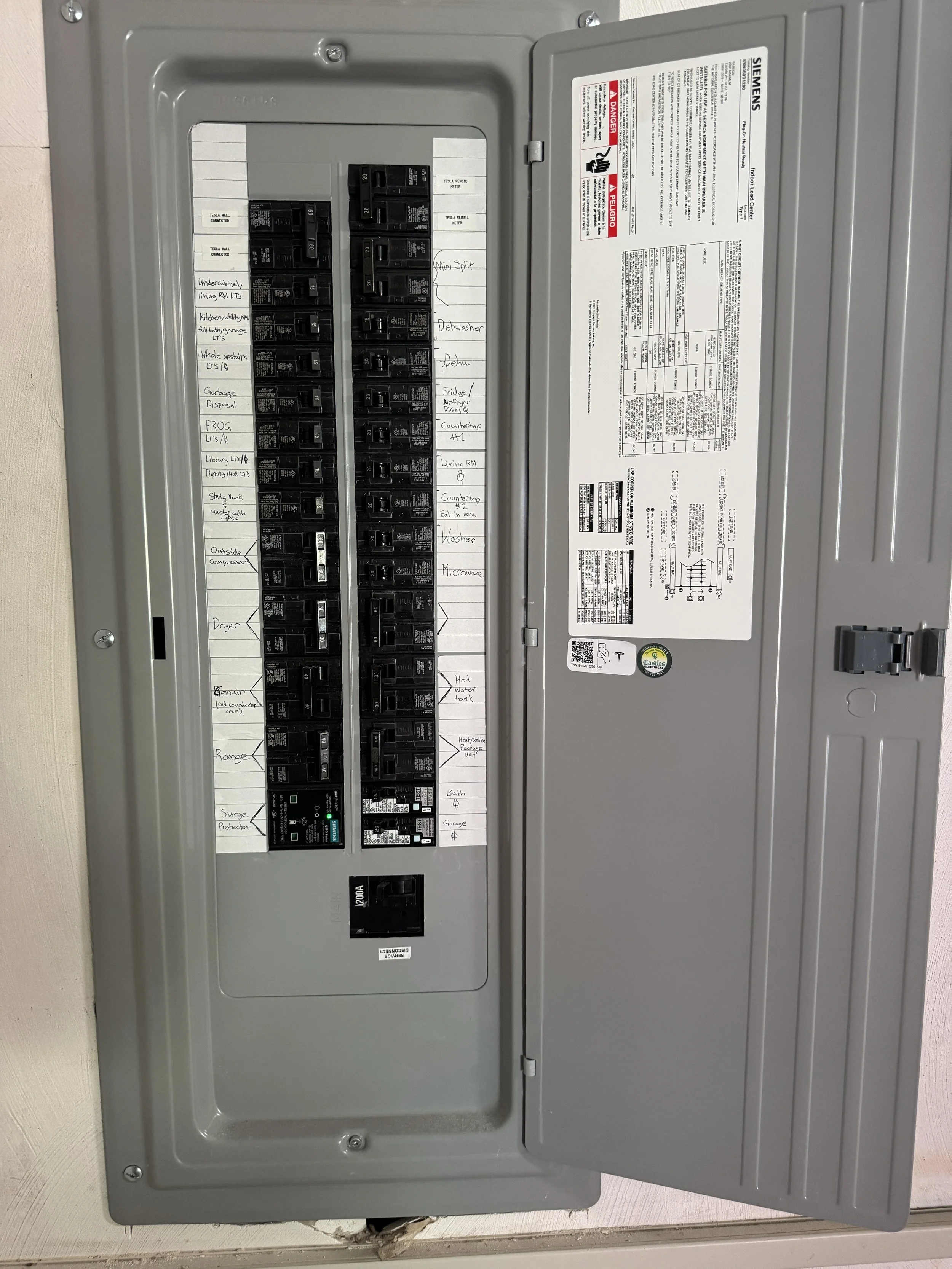
Dominion’s rules also state that additional loads should not be used until permanent service is complete. If the house needs a larger service, our Portsmouth panel upgrade page covers sizing it.
07 — Why Castles
The Service Entrance, and the Changeover Day
The Service Entrance
We check the mast, weatherhead, and cable route against Dominion’s rules.
The Changeover
We coordinate the old-to-new service changeover with Dominion.
08 — Process
From Photos to Permanent Service in Portsmouth
Send photos
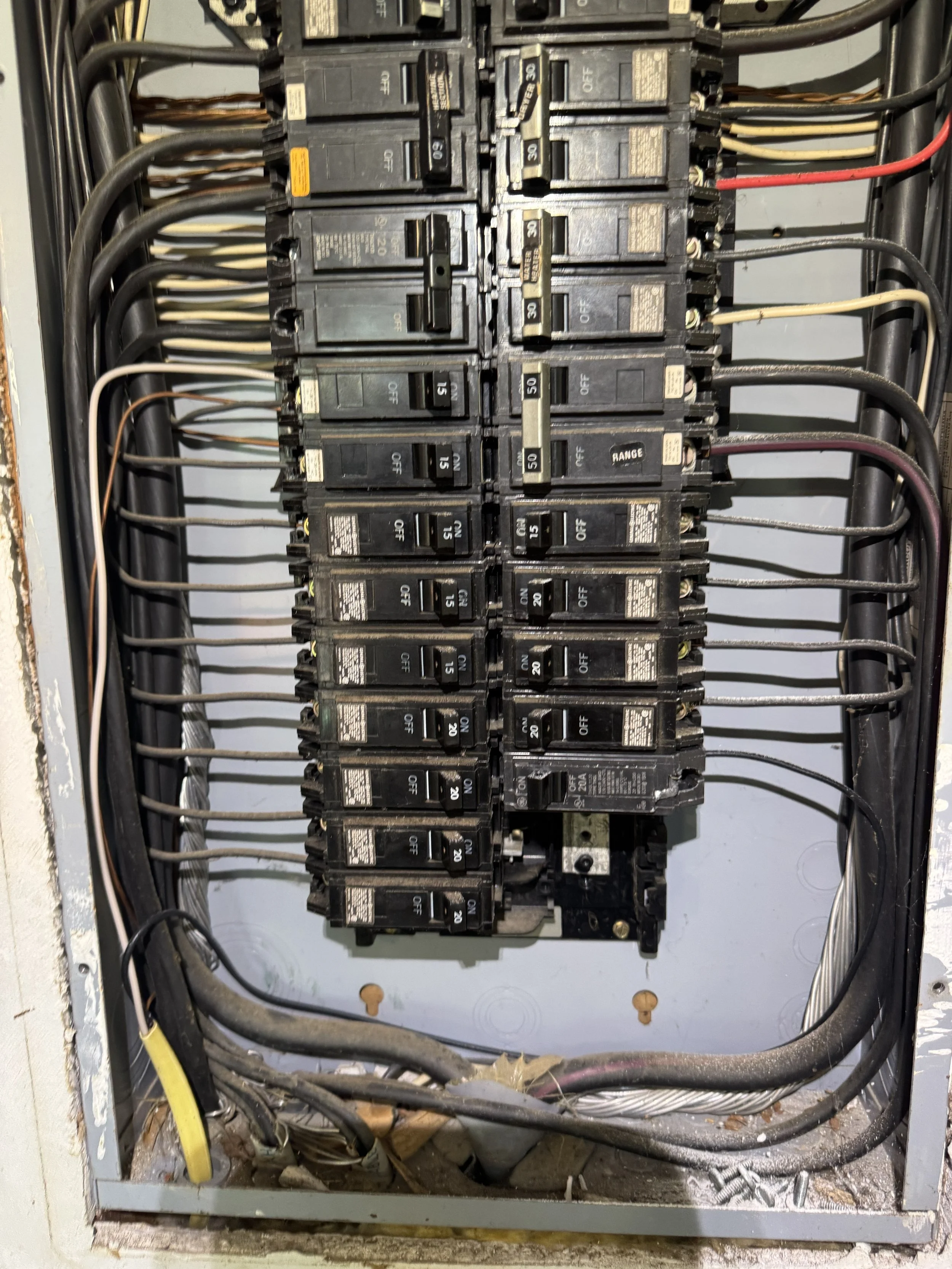
The fuse box, the meter, and the bracket or mast under the eave.
Walk the outside
Drop height, attachment point, cable route, window and porch clearances, and the meter wall.
Lay out the new service
A panel and service entrance layout drawn to Dominion’s rules, with the cable plan left to Dominion’s decision.
Written estimate and permit
A free installation estimate honored for 30 days, then the city electrical permit.
Changeover and inspection
New panel and service entrance, permanent service from Dominion, and the city inspection.
09 — Proof
Owner-Led Panel Work
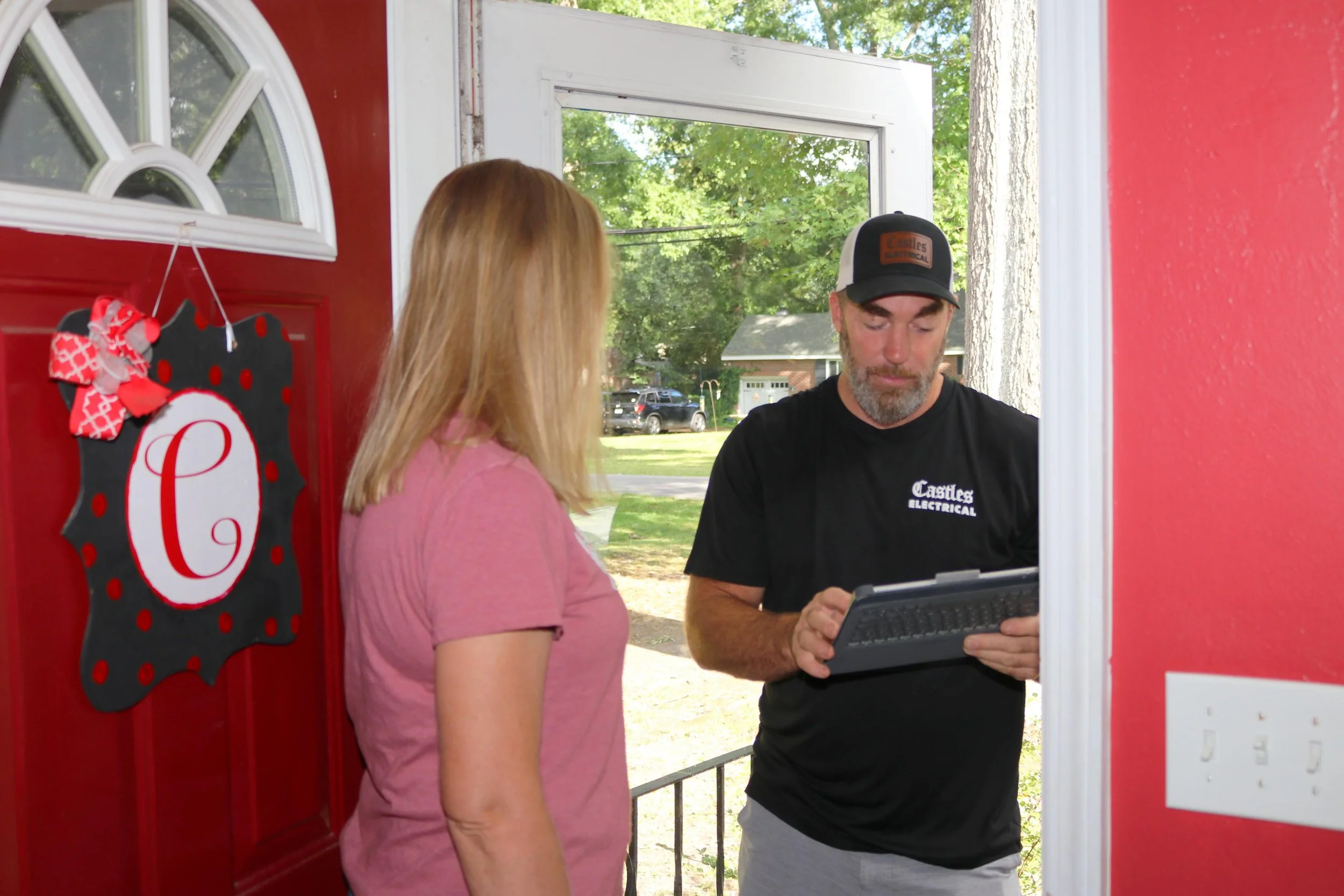
One customer with a panel issue wrote that the owner came out himself, was professional, and got things working.
From our five-star Google reviews
Google 5.0 Rated by Hampton Roads Customers
Castles Electrical maintains a 5.0 rating on Google. The reviews below load as a live widget, so this page shows current feedback from real Castles Electrical customers.
10 — FAQS