01 — The Warning
When the Charger Flags the Wall Plug
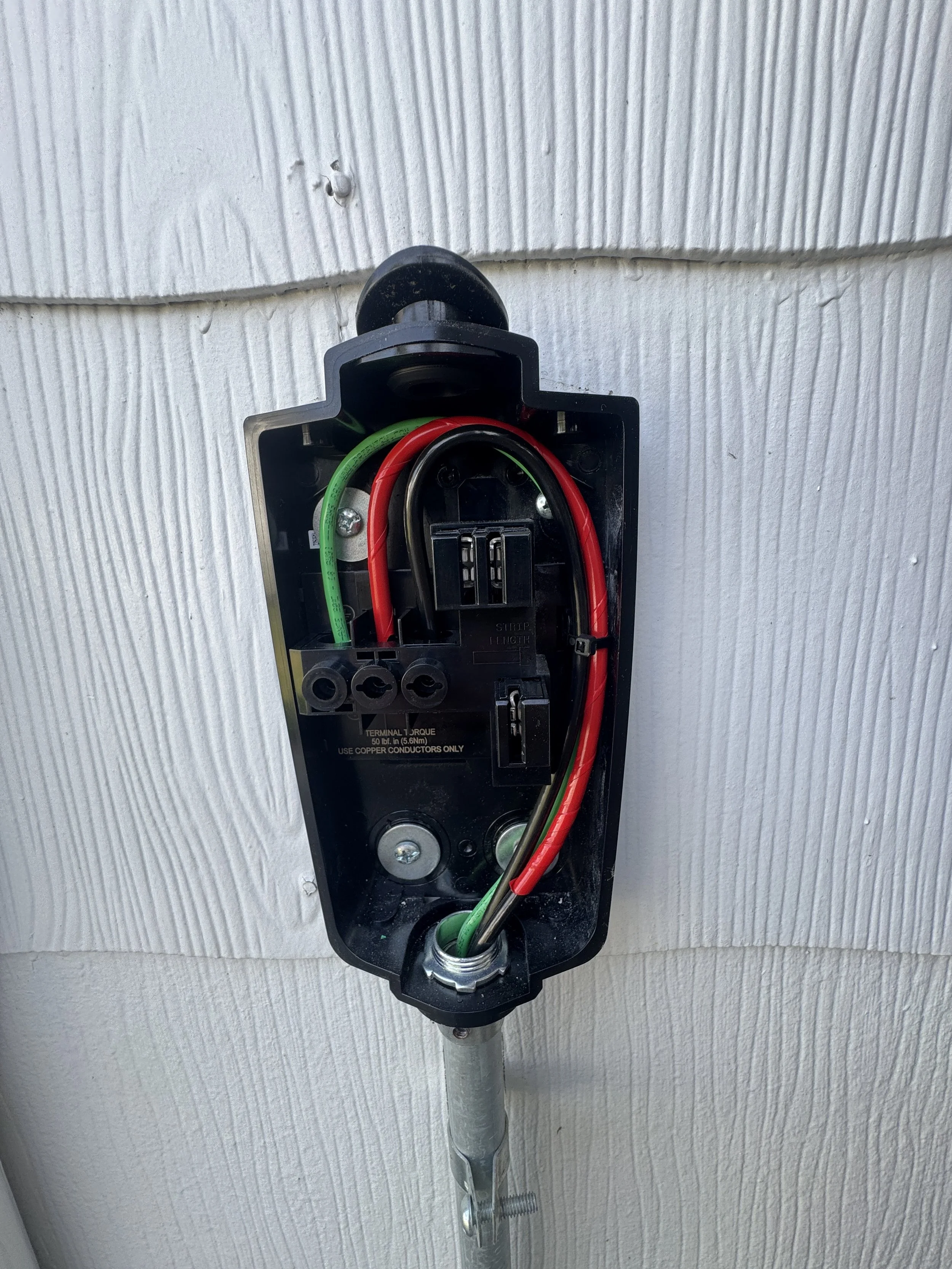
Many plug-in chargers tell you which part of the connection got hot. Tesla’s Gen 2 Mobile Connector is one example: a count of red flashes separates the heat at the car connector, the adapter, the controller, and the wall plug, and four red flashes, while the green lights stream, point to the wall plug.
Only the wall plug code leads back into the house. The maker’s text for it reads, “Charging current is reduced due to high temperature detected in the wall plug.” Its advice is to make sure the outlet is suitable for charging, and the plug is seated correctly, to consider a different outlet, and, if uncertain, to ask your electrician.
The charger is protecting itself by slowing down. The repair question is why the connection at the wall got hot in the first place. Once a charger reports heat there, stop charging from that outlet and call us.
02 — Heat Sources
What Makes a 14-50 Connection Heat Up
Charging is a long, steady draw. Tesla lists its Mobile Connector on a 14-50 outlet at a maximum 32-amp output on a 240-volt, 50-amp breaker, and a car can pull that for hours at a stretch.
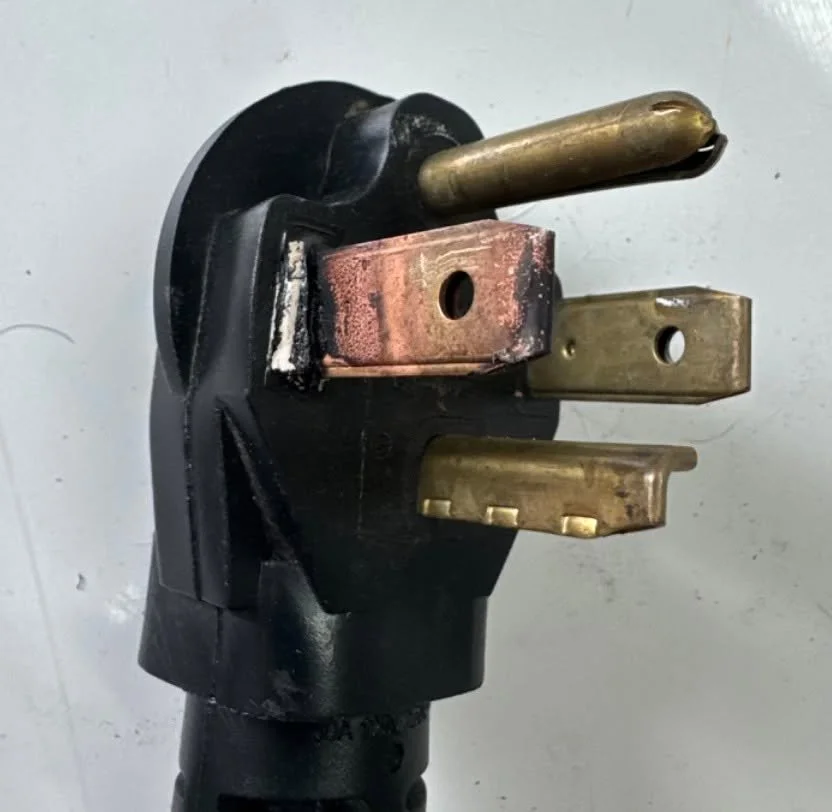
Heat builds wherever current meets resistance. A terminal screw that was never tightened to the maker’s value, contacts worn loose from years of plugging, or a plug that sits partway out of the face can each turn a connection warm under that load.
The Electrical Safety Foundation’s EV guidance says to inspect the charger before use, skip it if it is damaged, and keep extension cords out of the setup. A faceplate that has changed color or a plug that leaves a dark mark on its blades tells us heat has been building for a while.
03 — Why Castles
How We Repair a Hot Charging Outlet
Read the Warning First
The charger’s own code tells us where to look.
Torque to the Printed Value
Terminals are tightened to the number listed for the part.
04 — EV-Grade Device
An Outlet Built for Daily Plugging
A 14-50 outlet installed for a range may see its plug go in once and stay there. A charger cord gets plugged in and pulled out by a driver, then carries a heavy load for hours. Receptacle makers now sell 14-50 devices graded for that second job.
Leviton, as one example, describes its 1450R as Heavy-Duty/EV Grade and says it was designed specifically for plug-in EV charging and the extended charge times involved. The product page lists heavy-gauge copper contacts and pressure-wire terminals that make full contact with the conductors. When a failed charging outlet needs to be replaced, the new device should be compatible with EV charging and installed per the instructions printed for that part.
Some owners move off the plug altogether. Castles installs hardwired EV chargers, and each charger comes with its own specifications, which decide what its circuit must match.
A replacement also has to meet the GFCI rule. Under section 625.54 of the 2020 National Electrical Code, receptacles installed for EV charging need ground-fault circuit-interrupter protection for personnel, so a new 14-50 serving a charger needs that protection, and we confirm what the permit and inspector require.
05 — Torque
Terminal Torque Comes From the Label
The 2020 National Electrical Code, which Virginia’s 2021 building codes use, makes the manufacturer’s torque value part of the installation. In section 110.14(D), terminal tightening values are specified by the equipment or its instructions, and an approved method must be used to reach them.
Leviton lists 75 inch-pounds for the 1450R’s terminals. Other devices print their own numbers, so the value we use is the one for the part going into your wall. The same rule applies at the other end of the circuit, where the conductors land on the breaker, so both terminations belong in a charging outlet repair.

07 — Process
Five Steps at a Hot Charging Outlet
What the charger shows
The status light pattern, any message on the car’s screen, and a photo of the outlet.
Power off and open the box
We look at the receptacle, its terminals, and the wire behind it.
Check the breaker end
The conductor terminations at the breaker are part of the check.
Repair the connection
A replacement device suited to EV charging, with the GFCI protection the code requires for a charging outlet, or a circuit correction, following the printed instructions.
Charge under load
We let the car charge at its normal rate and scan the outlet and breaker with a thermal camera.
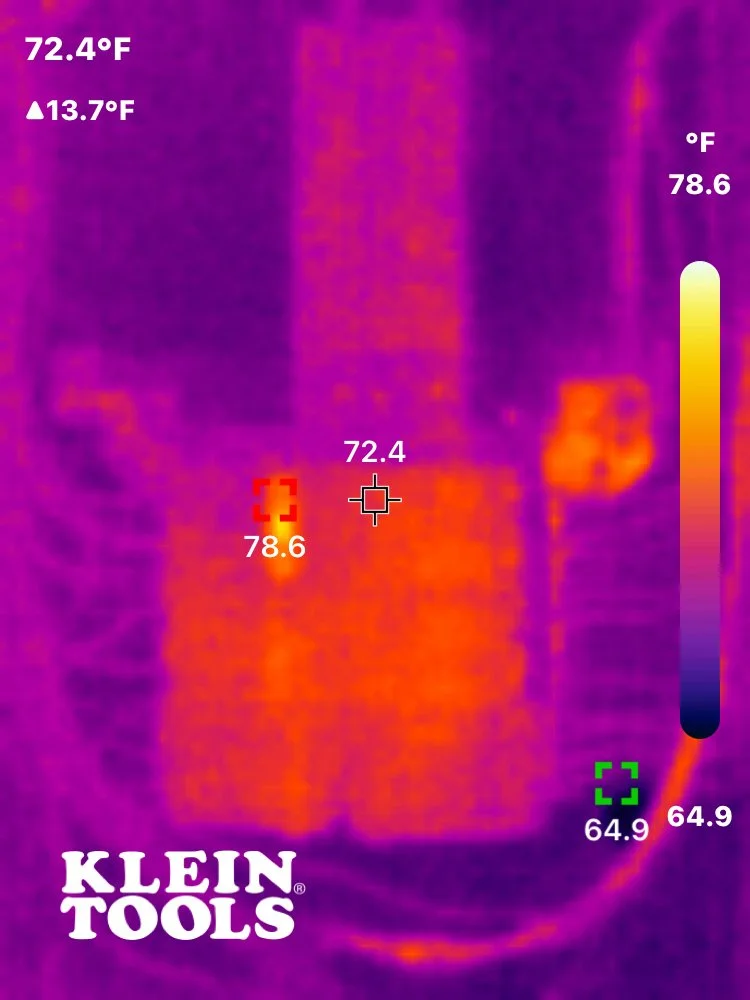
Testing under load matters because heat at a charging outlet builds over time. A connection can look fine with the power off and still warm up after an hour of steady current.
Our repair workmanship is warranted, and replacement parts carry the manufacturer’s parts warranty.
08 — Proof
A Wall Connector, Set Up and Checked
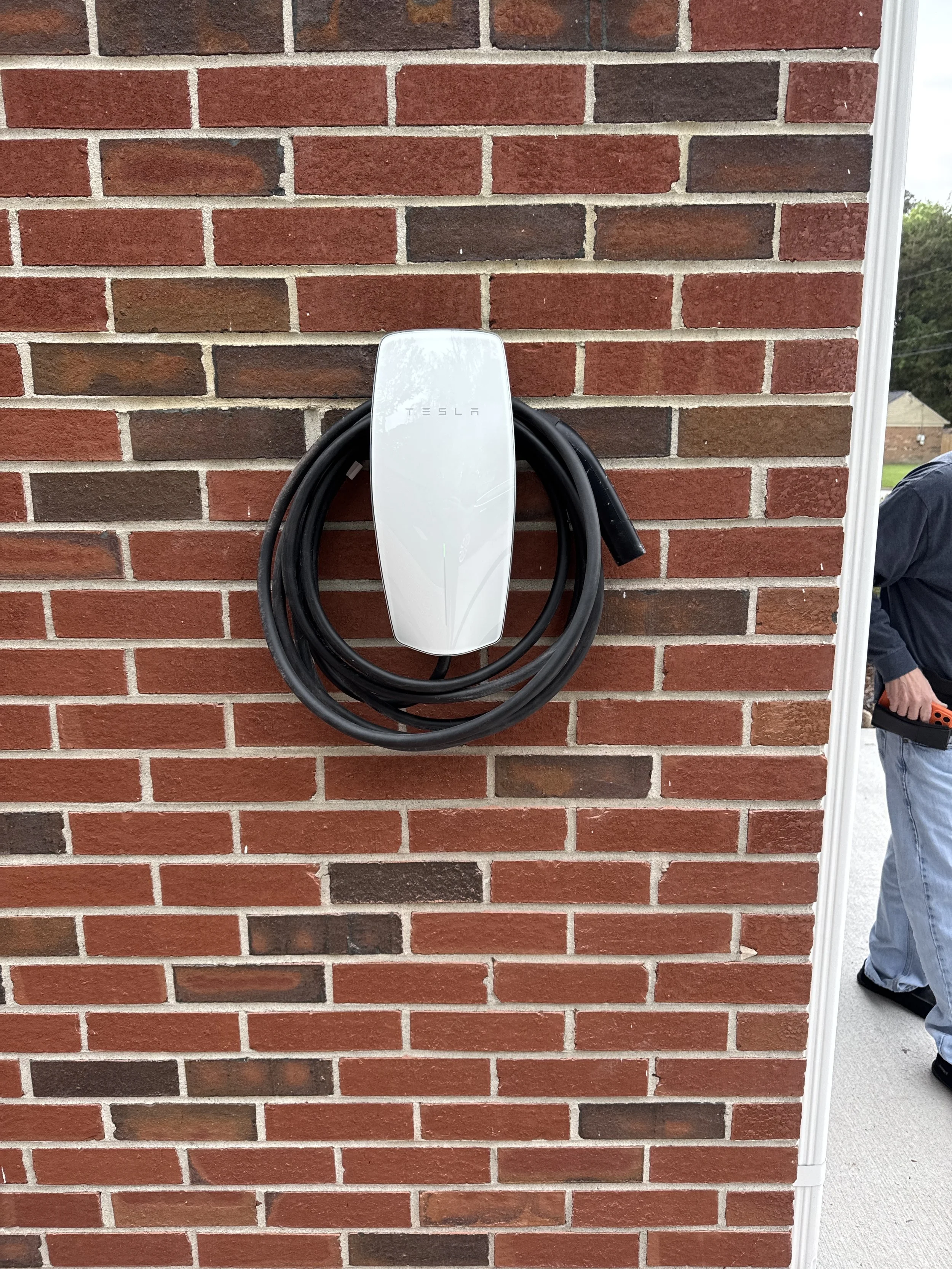
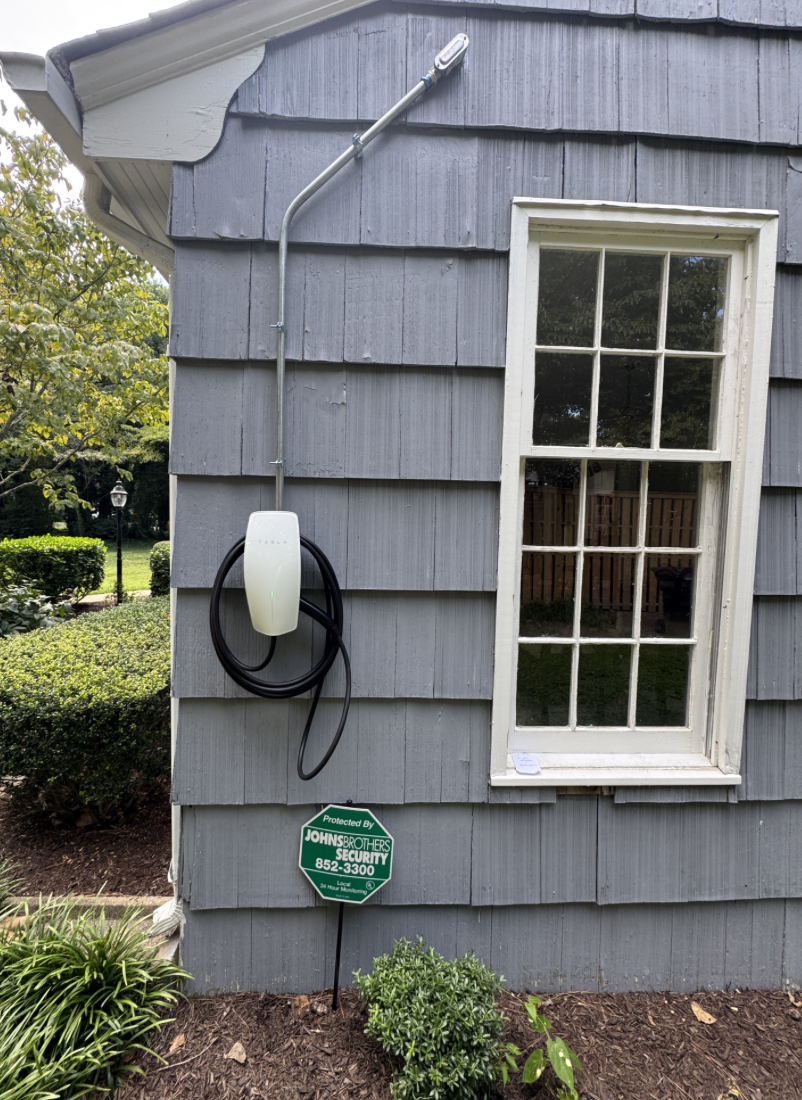
One EV owner’s review describes a home Tesla wall charger that our electrician set up and left working.
From our five-star Google reviews
Google 5.0 Rated by Hampton Roads Customers
Castles Electrical maintains a 5.0 rating on Google. The reviews below load as a live widget, so this page shows current feedback from real Castles Electrical customers.
09 — FAQS