electrical repair and troubleshooting in Portsmouth, VA, Castles Electrical

Master Electrician & Class B Licensed

Electrical Repair & Troubleshooting in Portsmouth, VA

A switch plate that is warm to the touch in a 1960s Portsmouth house can point to aluminum wiring. The Consumer Product Safety Commission says cables installed from 1965 to the mid-1970s may contain it, and nearly three in ten Portsmouth homes date from the 1960s and 1970s, by Census estimates. Those warning signs are the same complaints behind many repair calls: warm plates, flickering lights, and circuits that stop working.

Churchland, Simonsdale, and Cradock are on our regular list for these calls.

Master Electrical & Alternative Energy License #2710048784 Class B Contractors License #2705166194 Google 5.0 Rated Family-Owned & Operated Since 2012 Thermal Imaging Diagnostics Workmanship Warranty on Repairs Licensed Electricians, Never Subcontracted
Licensed. Insured. Trusted. We treat your home like it’s our own.
Locally Owned in Virginia Beach Since 2012 Serving Virginia Beach & Nearby Cities
GENERAC
TESLA
KOHLER
NABCEP
BBBA+
SquareD
GENERAC
TESLA
KOHLER
NABCEP
BBBA+
SquareD
Home / Portsmouth, VA / Electrical Repair & Troubleshooting in Portsmouth

01 — Portsmouth Conditions

When a Portsmouth Repair Call Turns Out to Be Aluminum Wiring

With aluminum branch wiring, the trouble shows up where it connects to outlets, switches, and splices. CPSC reports that homes built before 1972 and wired with aluminum are 55 times more likely than copper-wired homes to have one or more wire connections at outlets reach fire hazard conditions. Heat at those connections is what homeowners feel through the plate or smell as burning plastic.

Not every house built in those years has aluminum wiring, and additions or rewired circuits from the same period can have it even when the rest of the house is copper. So the first step on a Portsmouth call with these symptoms is to open a device box and look at the conductors, which are silver when they are aluminum.

What a repair can look like

A full copper rewire removes the issue entirely. Short of that, the recognized repair is pigtailing: attaching a short copper lead to the end of each aluminum conductor so standard receptacles and switches connect to copper. The right method depends on how much of the house is aluminum.

Pushing aluminum wire into an ordinary outlet, or twisting aluminum and copper together under a standard wire nut, recreates the problem.

Symptoms that should not wait

A switch plate that is hot to the touch, a burning plastic smell near an outlet, or sparking at a switch means a connection is overheating. Stop using that outlet or switch, shut off the breaker for it when the panel can be reached safely, and call. If you see smoke, get out first and call 911.

02 — Signs

Warning Signs and What We Check in Portsmouth Homes
Warning sign
What it can mean
What we check
Warm or hot switch plate or outlet cover
An overheating connection
The device terminals and wire type
Lights that flicker on one circuit
A loose connection somewhere on that run
Each device and splice on the circuit
A circuit that stops working
A failed connection or tripped protection
Breaker, devices, and splices in order
Burning plastic smell near a device
Insulation or a device overheating
That box first, then the rest of the circuit
Outlets replaced before that failed again
Devices or connections not suited to the wire
Device markings and connection method
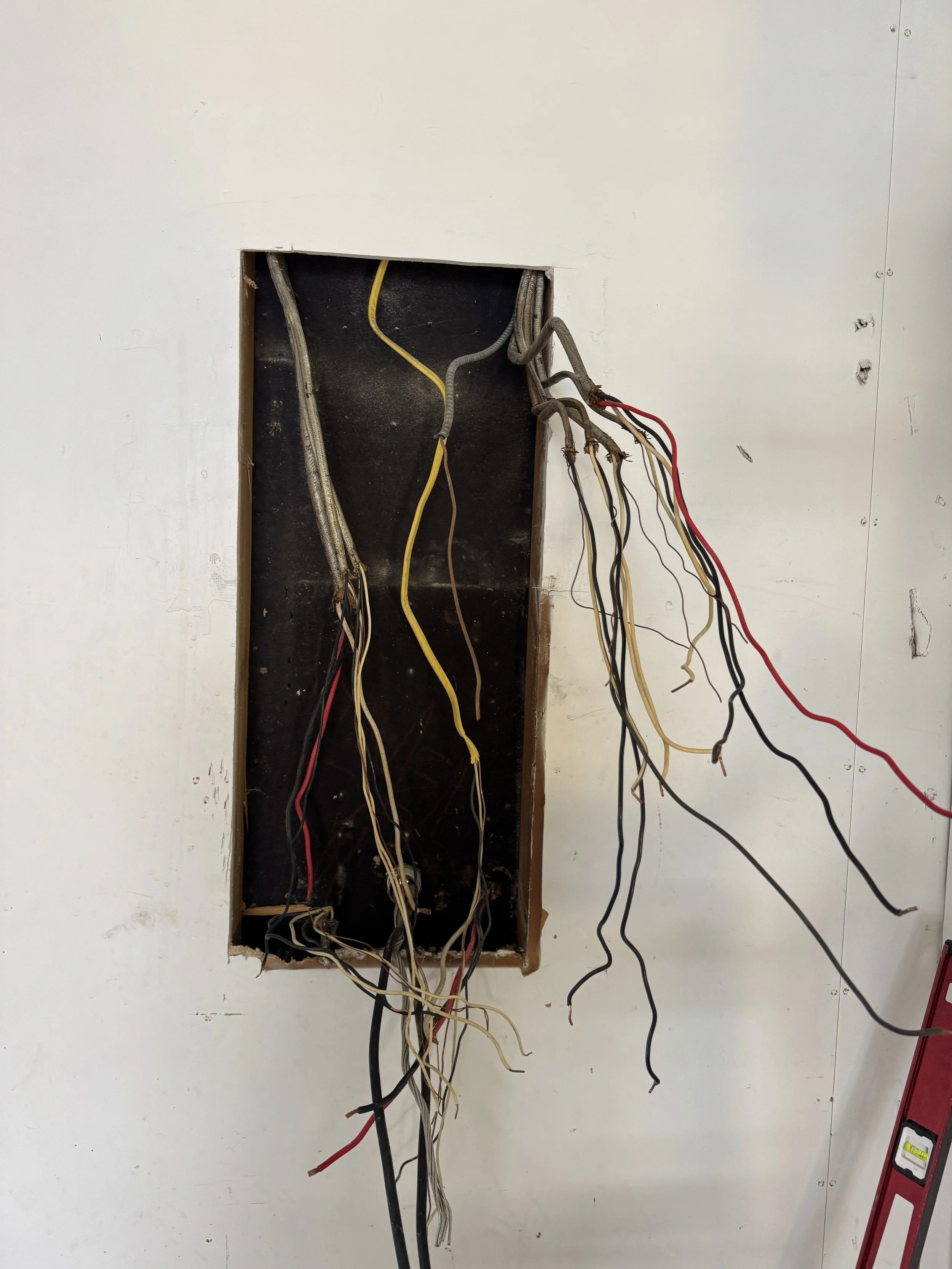
Cable runs exposed in an opened wall of a Portsmouth, VA home

03 — Cable Markings

Reading the Cable Jacket

CPSC explains that virtually all aluminum branch wiring went in as plastic-sheathed NM cable that looks like copper cable from the outside. In an unfinished attic, basement, or garage, the printed or embossed jacket carries the answer, and a flashlight held at a low angle helps. Aluminum cable is marked “Al” or “Aluminum” every few feet.

Read as much of the marking as you can. A cable marked “CU-clad” or “Copper-clad” along with “Al” uses copper-coated aluminum, which the repair recommendations do not cover, and neither do the larger aluminum conductors for service entrance cables, dryers, and ranges. If the marking cannot be read, a qualified electrician makes the determination.

The era explains the pattern. A copper shortage in the mid-1960s pushed builders to use aluminum on general 15- and 20-amp circuits, where it had mostly been limited to a few large circuits such as dryers and ranges.

04 — Connectors

Connector Repairs, and Where a Twist-On Sits

CPSC’s first choice is a COPALUM connector, a metal sleeve crimped onto the aluminum and copper wires with a dedicated power tool and die, making what amounts to a cold weld. The agency considers that pigtail a safe and permanent repair, and only electricians trained by the manufacturer are authorized to install it.

Where COPALUM is not available, the AlumiConn setscrew connector is named the next best alternative for a permanent repair. It performed well in initial tests but has a shorter track record, and the work belongs to a qualified electrician.

Twist-on connectors sit in a third group. A twist-on marked for aluminum and copper intermixed in dry locations is a listed device, and Virginia’s Section E3406.8 allows the two metals to meet inside a connector listed for that purpose and those conditions. CPSC treats an AL/CU twist-on pigtail as an emergency or temporary repair.

We put the method and its listing in writing, so the choice between a temporary fix and a permanent one stays yours.

05 — Every Connection

Every Connection Reaches Past the Outlets

CPSC says the repair should include every connection or splice involving aluminum wire in the home: outlets, dimmers, switches, fixtures, appliances, junction boxes, and panel boxes. Appliances wired directly to No. 12 or No. 10 aluminum branch circuits also need repair, and the examples include dishwashers, cooling equipment, heaters, air conditioners, and light fixtures.

In a 1960s or 1970s Portsmouth house, that list can mean a built-in dishwasher, a wall heater, a hardwired air conditioner, ceiling fixtures, and splices in attic junction boxes. CO/ALR devices are not made for every one of those locations, such as permanently wired appliances and ceiling fixtures, which is one reason they count as an incomplete repair.

Deterioration at aluminum connections is cumulative, and the COPALUM repair has been shown to be practical in an occupied and furnished home. A written whole-house scope lists these locations room by room so none is missed.
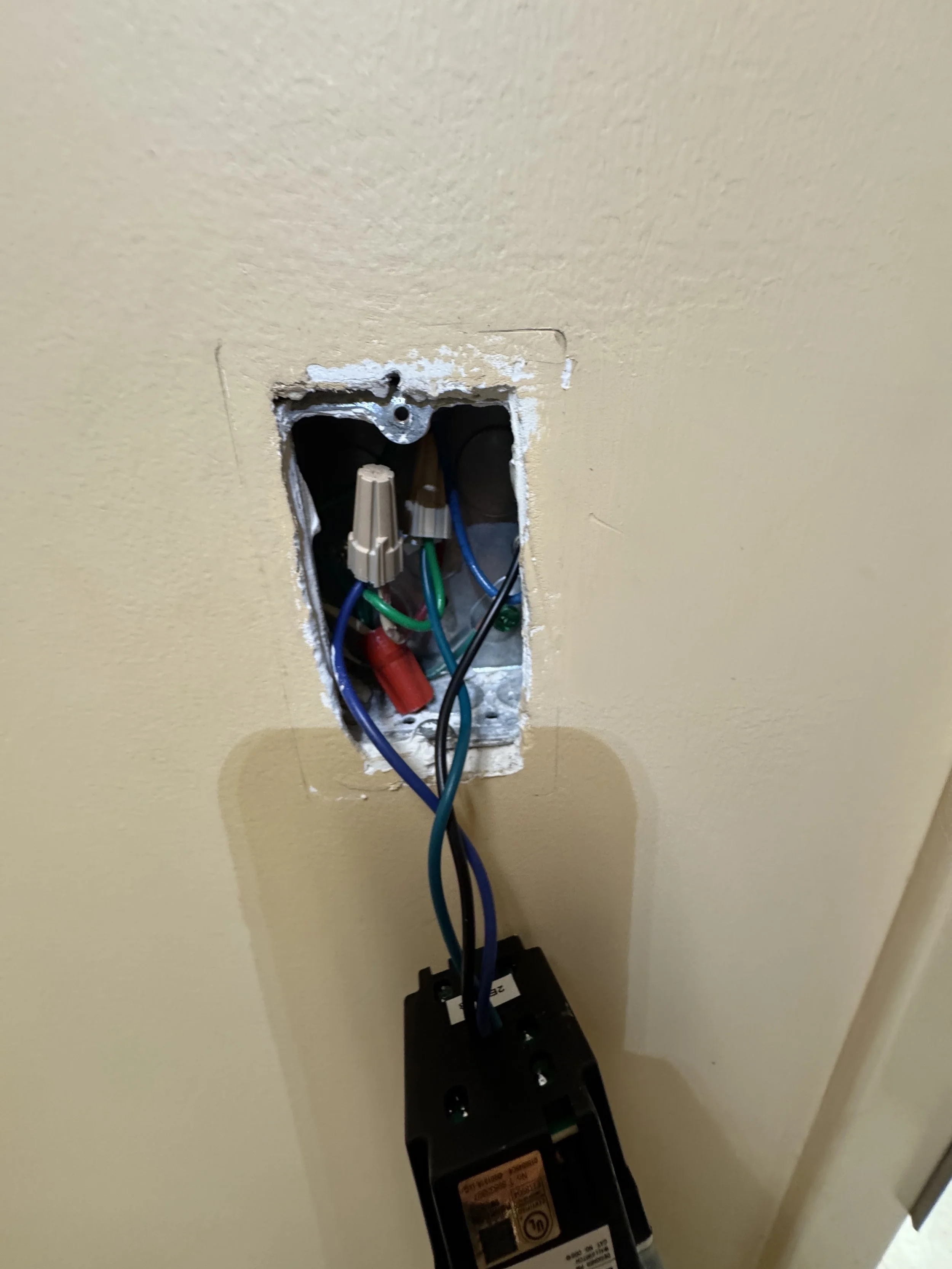
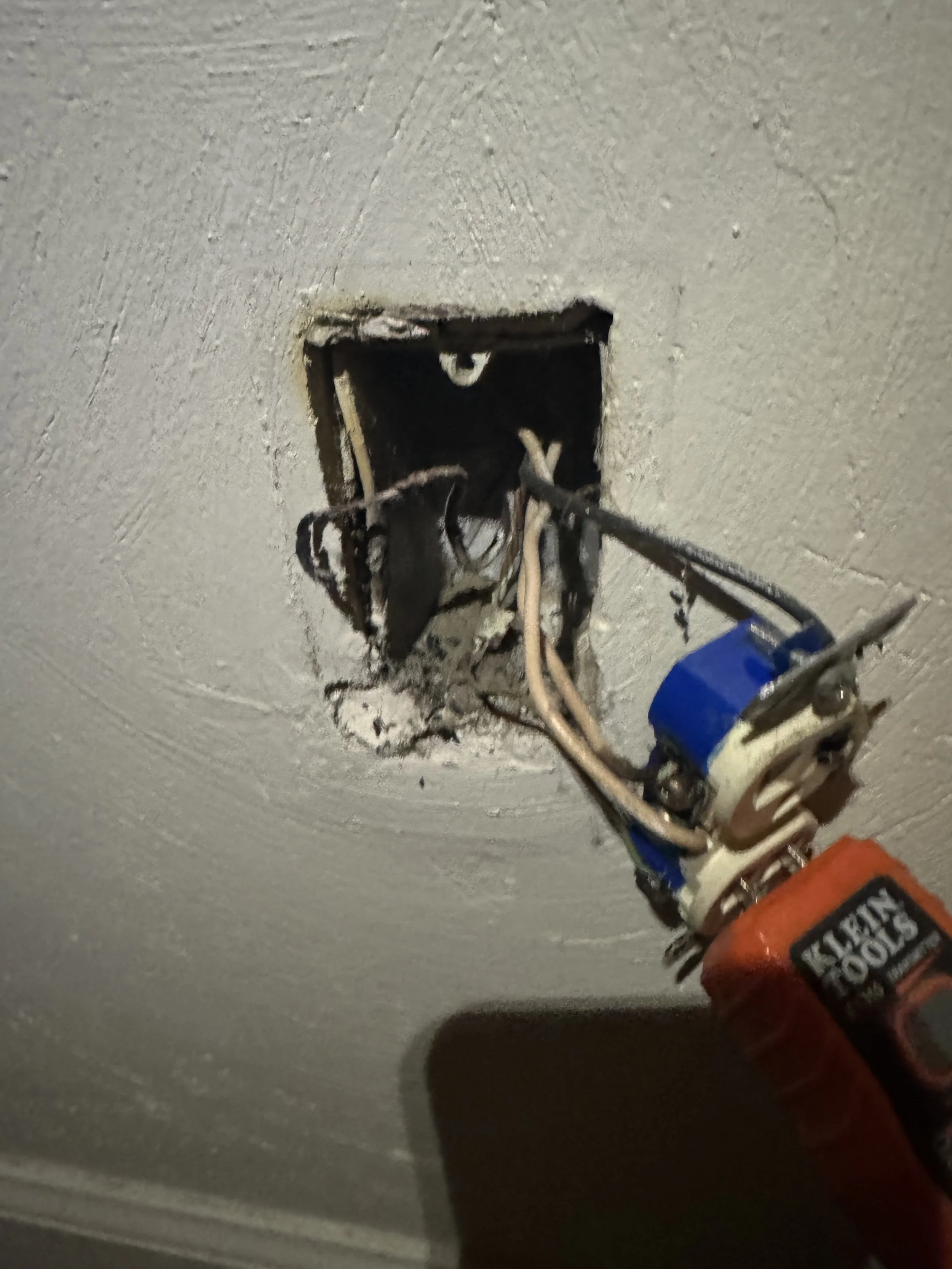
Connections in a device box checked during a Portsmouth, VA repair visit

06 — Permit Line

Repair or New Wiring: Where Portsmouth’s Permit Line Falls

Portsmouth’s permit guide lists work that needs an electrical permit, including adding new circuits and installing, replacing, or extending electrical wiring. The same guide lists ordinary repairs and like-for-like replacement of residential electrical fixtures and appliances among work that needs no permit, while still requiring the work to meet code.

On an aluminum-wired house, making a failed connection safe on the visit is repair work, and replacing aluminum runs with copper is wiring replacement, which the city lists as permit work. The guide does not address whole-house pigtailing either way, so we will confirm with the city whether a permit is required before scheduling that work.

07 — Process

Our Troubleshooting Steps for a Portsmouth Home

01

First phone call

We ask what you are seeing, when the house was built, and whether any rooms were added later.

02

Find the circuit and open the boxes

We identify the breaker, then inspect each outlet, switch, and splice on it for wire type, heat damage, and loose terminals.

03

Make failed connections safe

Failed connections are made safe on the visit, and if more of the house is aluminum, you get a written scope for connector repair or copper replacement.

08 — Why Castles

What We Check on Aluminum-Era Homes

Connections Checked by Heat

Thermal imaging finds the warm termination.

Whole-House Scope Written

Every aluminum connection listed by room.
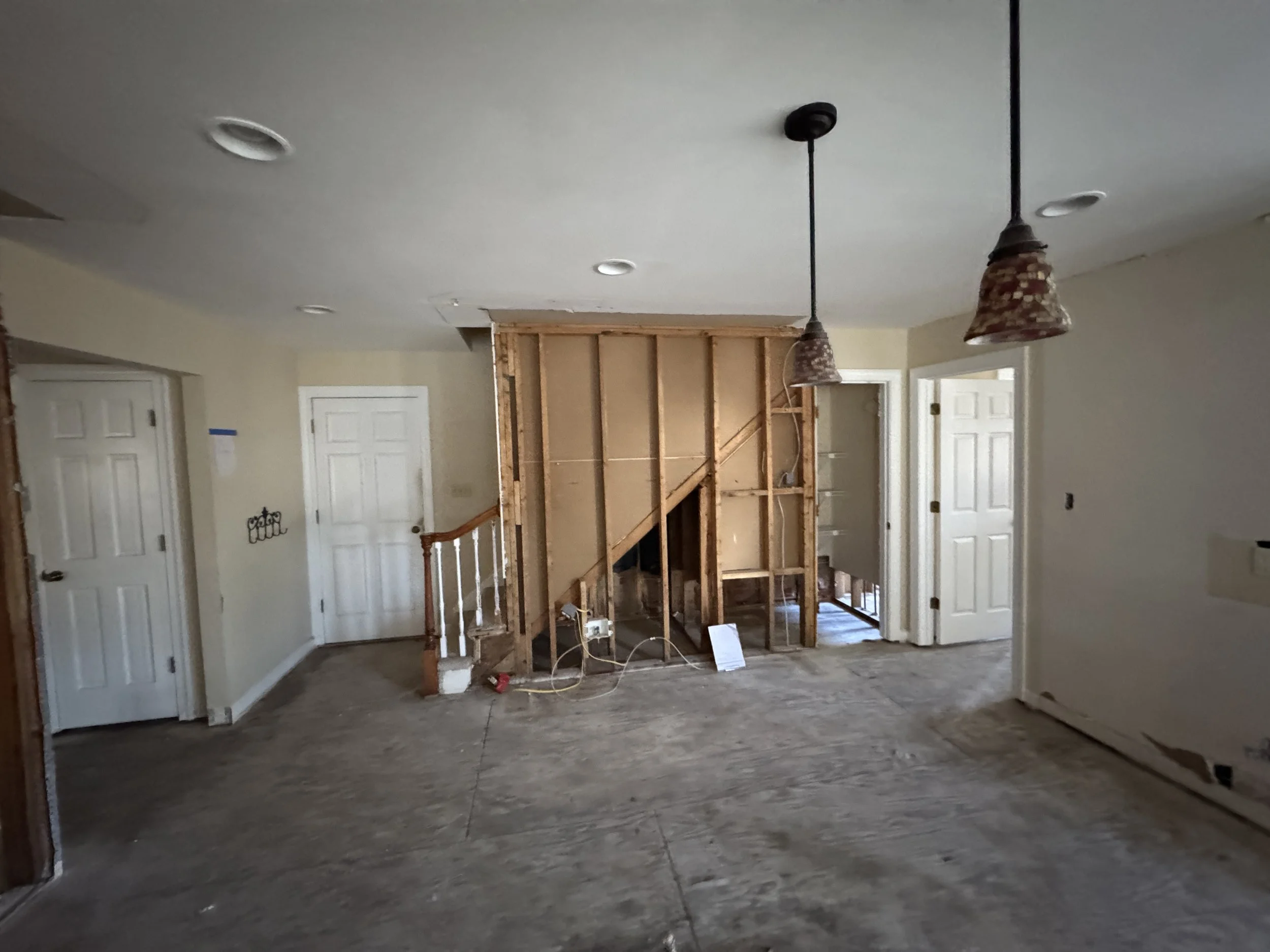
Portsmouth, VA room opened to the framing while circuits are replaced

Castles Electrical

Licensed, insured, and locally owned. The work is done by our own electricians, never subcontracted.

09 — Proof

Repair Calls Described in Google Reviews

“

A Google review mentions an urgent electrical repair that was handled after the call.

From our five-star Google reviews
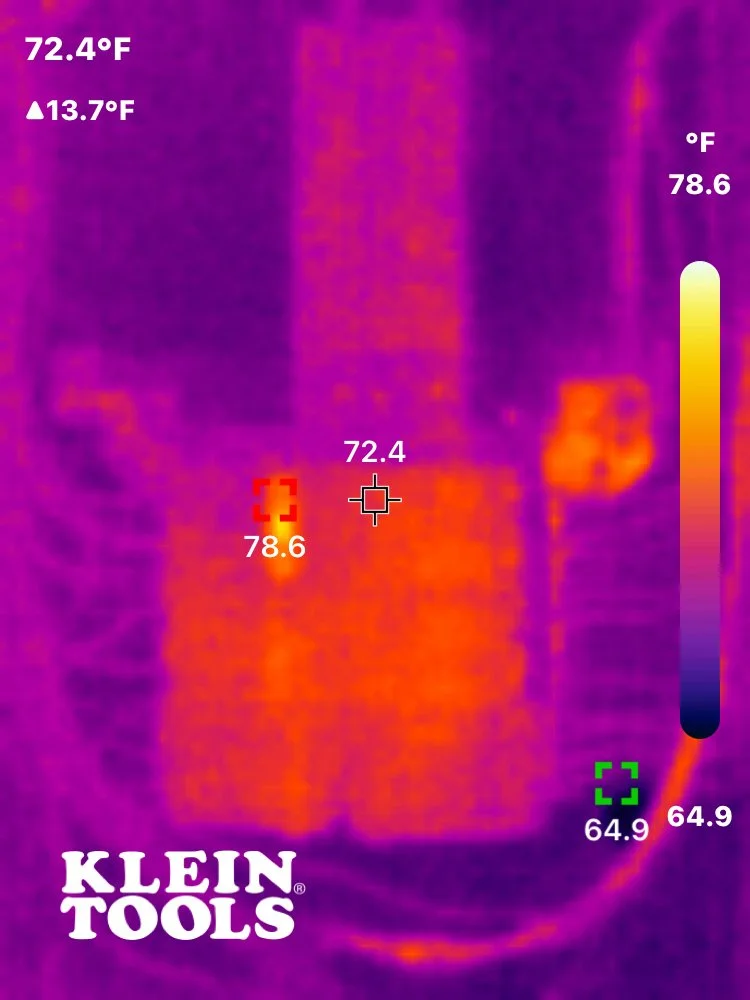
Thermal camera image showing heat at a connection in a Portsmouth, VA home
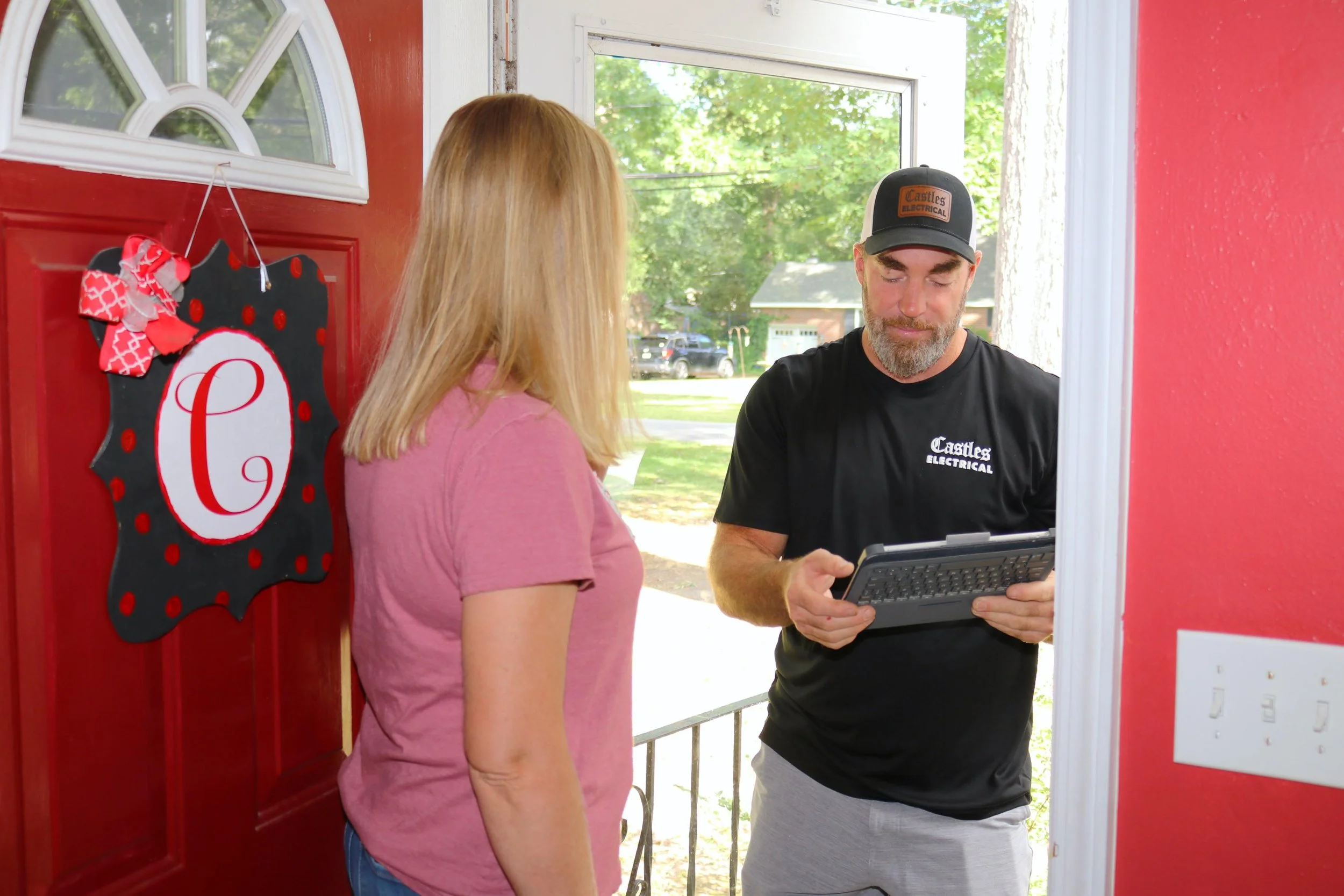
Castles Electrical electrician going over a repair visit with a Portsmouth homeowner

Google 5.0 Rated by Hampton Roads Customers

Castles Electrical maintains a 5.0 rating on Google. The reviews below load as a live widget, so this page shows current feedback from real Castles Electrical customers.

Leave Us a Google Review

10 — FAQS

Portsmouth Electrical Repair FAQs

Does aluminum wiring have to be removed?+

CPSC’s guidance focuses on the connections: a complete repair with a recognized connector, or replacing the wiring with copper. Warning signs are a reason to have the connections checked rather than waited out.

Are outlets marked for aluminum wire enough?+

Not as a long-term fix. Devices marked CO/ALR are at best an incomplete repair, suitable only as a temporary fix for a failed connection. The recommendation is a complete repair with a recognized connector, or copper replacement, and we explain which fits your house.

Should I buy a house with aluminum wiring?+

Many people do, with a plan for it. Have the connections evaluated before closing so you know whether you are looking at connector repairs or partial rewiring, and check what your insurer asks about it.

Our home inspector’s report says aluminum branch wiring. What does that mean?+

Virginia’s home inspection rules require licensed inspectors to report the presence of solid-conductor aluminum branch-circuit wiring. The report tells you it is there, and an electrician can then open boxes, check the connections, and explain whether the house needs connector repairs or copper replacement.

Can a dimmer go on a circuit with aluminum wiring?+

Dimmers are on the list of connections the repair should include. Standard dimmers and switches connect to copper, so a dimmer goes in once the aluminum at that box has been pigtailed to copper with a recognized method.

Ready When You Need Us

Outlets That Keep Failing in Portsmouth?

A warm switch plate is worth a call. The visit itself is billed, and you hear the rate before booking.

Office and hours

Based at 2984 S Lynnhaven Road, Suite 104, Virginia Beach, VA 23452.

  • Monday to Friday: 7:00 AM to 10:00 PM
  • Saturday: 7:00 AM to 7:00 PM
  • Sunday: Closed
  • After-hours voice messages are checked, and we take emergency and after-hours calls when we can

In a 1960s Portsmouth house, the warm plate is where the search begins.

Castles Electrical electrician reviewing the job with a homeowner