02 — Gas Light to Fuses
A House Wired in Stages
Electric light spread through American homes slowly. According to the Census Bureau, the 1940 Census was the first to ask about home lighting, and it found electric lights in 78.7 percent of occupied housing units nationwide.
Houses from Norfolk’s early suburbs were built during that same transition, and in homes of that age we often find electrical work added in stages. A fuse box can be the second or third system a house has had, with circuits from different decades meeting at the same few fuse positions.
03 — Fuses and Breakers
Fuses and Breakers Do the Same Job Differently
The Electrical Safety Foundation International describes a fuse as using a filament that melts when overloaded. Once a fuse blows, it must be removed and thrown away, and the replacement must have the same rating.
A standard breaker trips when current exceeds its rating, and it can be reset and reused. Swapping fuses for breakers changes how a circuit is protected, not how much it can carry, so overloaded circuits are handled in the circuit plan. ESFI also notes that frequent breaker trips indicate a problem and should be inspected by a qualified electrician.
04 — Reading the Box
What We Read at a Norfolk Fuse Box Before Planning the Panel
Circuits from different eras
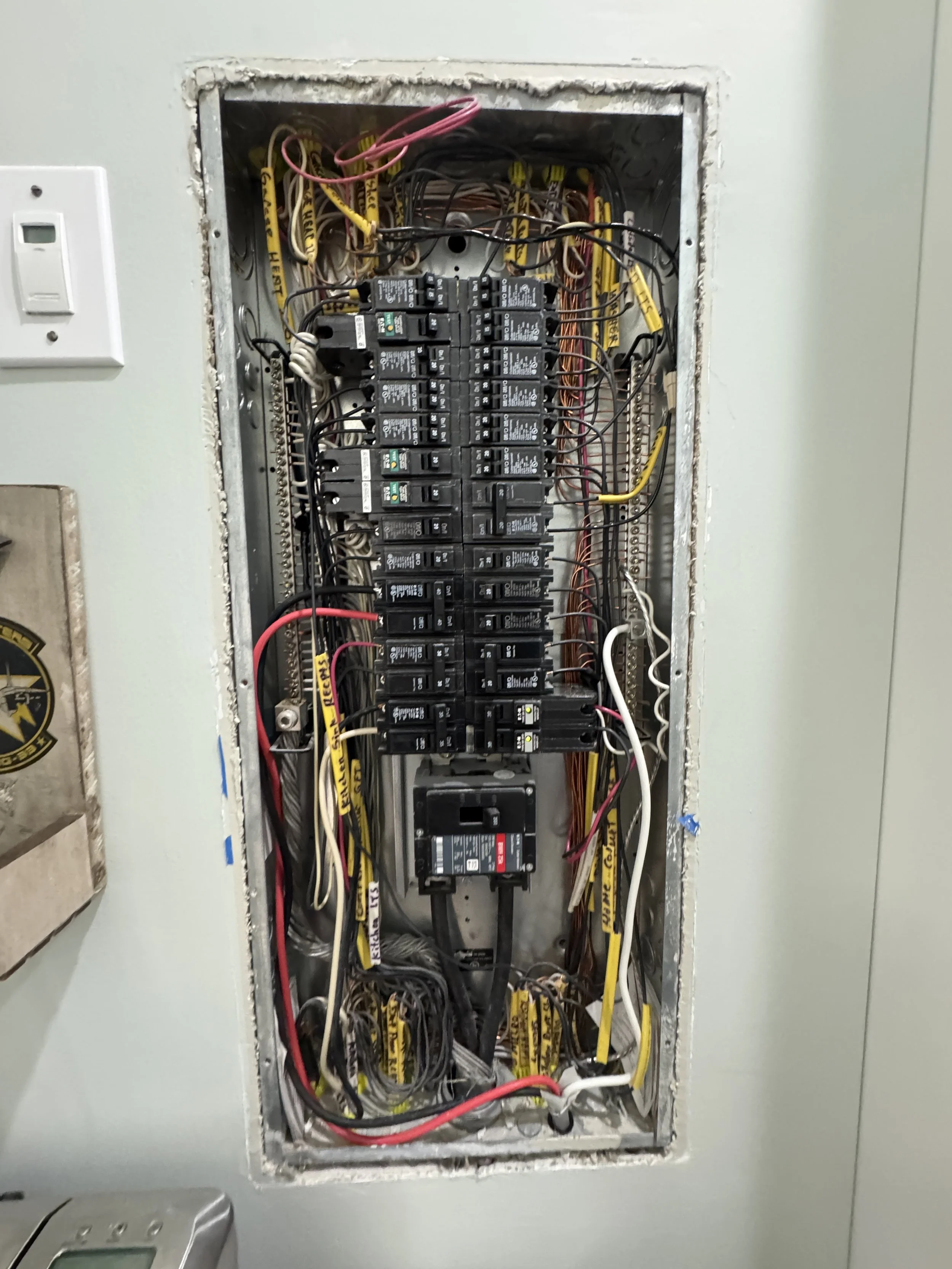
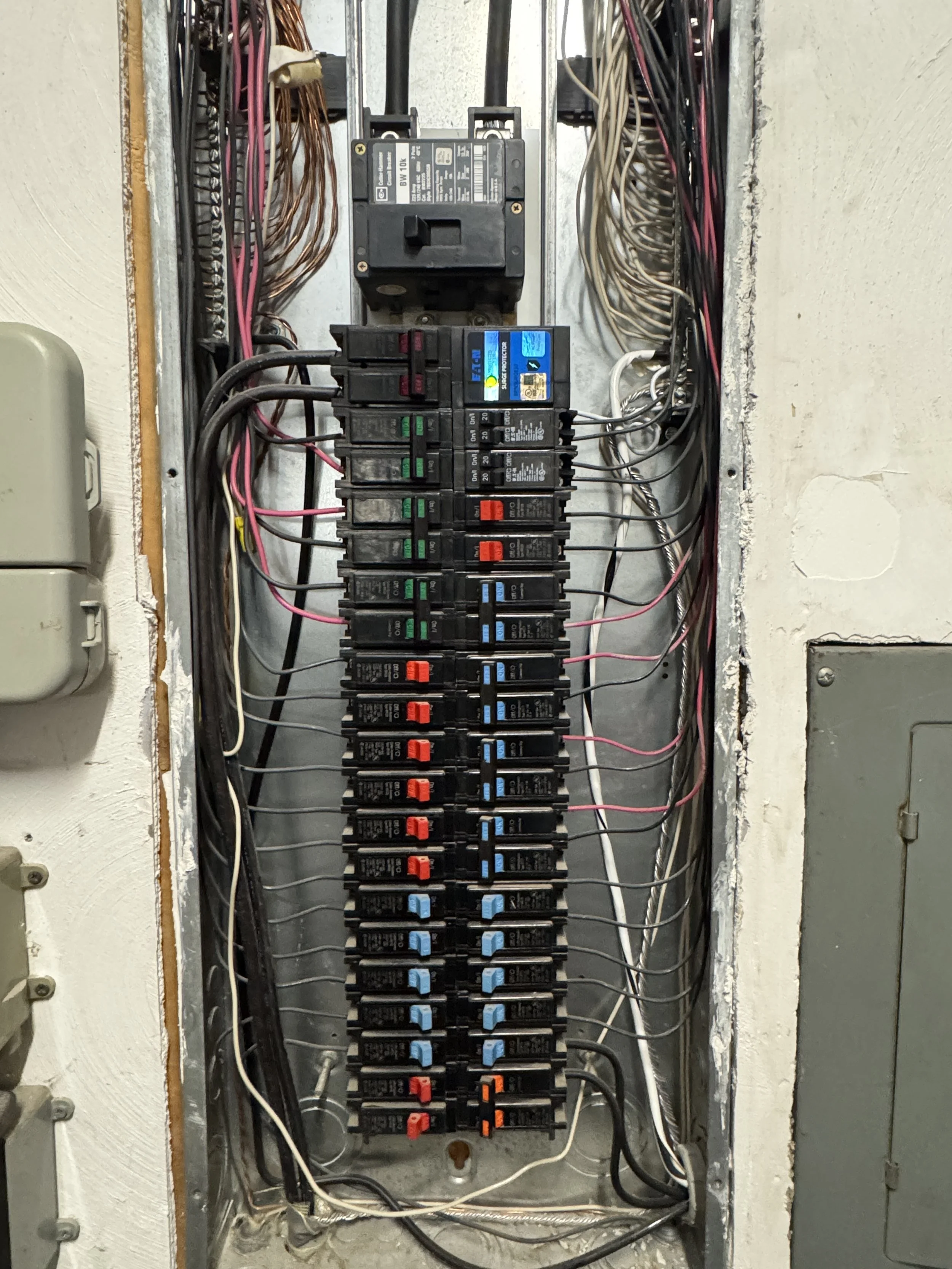
We look at the conductors entering the box to see which circuits came from which period, then count the circuits against the rooms and appliances the house has now. A kitchen, laundry, or bathroom heater added decades after construction may share a circuit with something much older.
Add-ons and leftovers
We check for extra fuse blocks or small subpanels mounted beside the original box, for unlabeled circuits, and for circuits that no longer serve anything. Earlier modifications at the box that are unsafe are corrected as part of the replacement.
Meter, service entrance, and grounding
We also note where the meter, service entrance, and grounding are, since they shape where the new panel can go. From there we sort out what moves to the new panel, what gets labeled, and what needs separate work. If the house needs more capacity as well, that is the same conversation as a panel upgrade in Norfolk, where the question is service size rather than fuse positions.
05 — More Than One Home
Houses That Became More Than One Home
Virginia’s historic register entries describe Cruser Place as providing single- and multi-family housing for Norfolk residents, and Colonial Place as a mix of building types ranging from high-style houses to vernacular interpretations of the elaborate styles erected decades earlier. Cruser Place, with 74 contributing buildings, now sits at the center of the larger Colonial Place-Riverview community. Over the past century, some large older houses have also been divided into apartments or have had a unit added upstairs.
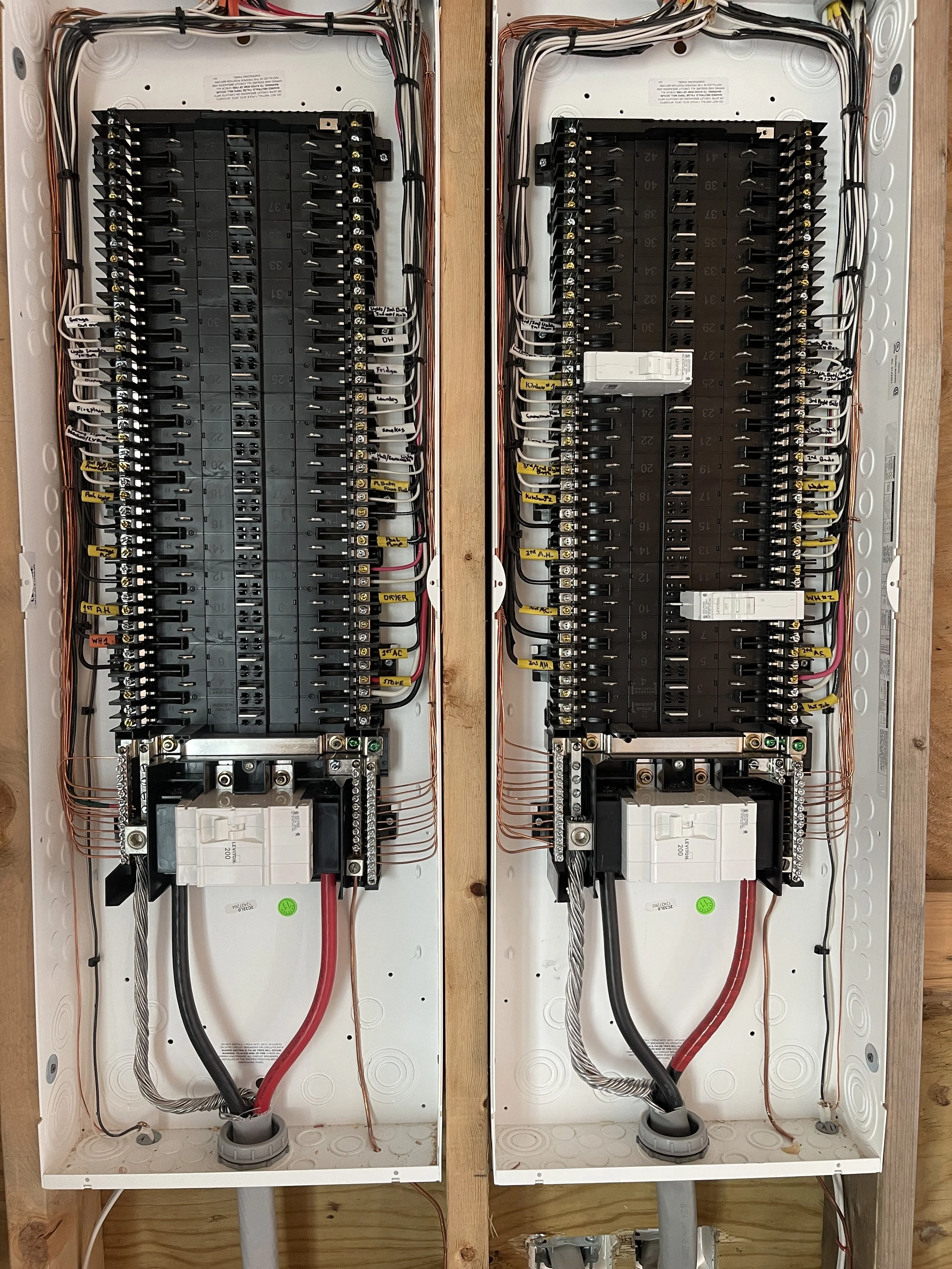
Those houses often have two fuse boxes, and the second one means one of two things: a separate unit on its own meter, or an add-on for circuits the first box had no room for. We trace which box feeds which rooms and which meter before planning anything, so each panel is labeled with the unit and rooms it serves.

06 — Moving the Panel
Should the New Panel Move?
The spot where a fuse box was mounted in 1925 or 1945 may no longer suit the house. It may be in a rebuilt closet or on a porch wall facing the street.
Moving the panel is often possible, and the decision depends on where the meter and service entrance are and what would change on the outside of the house. On the older fronts in Ghent, Park Place, and Colonial Place, we plan any exterior change with the street face of the house in mind, and we suggest owners check with the City of Norfolk before exterior work on a house in a local historic district.
07 — Panel Directory
After the Swap: A Panel Directory You Can Use
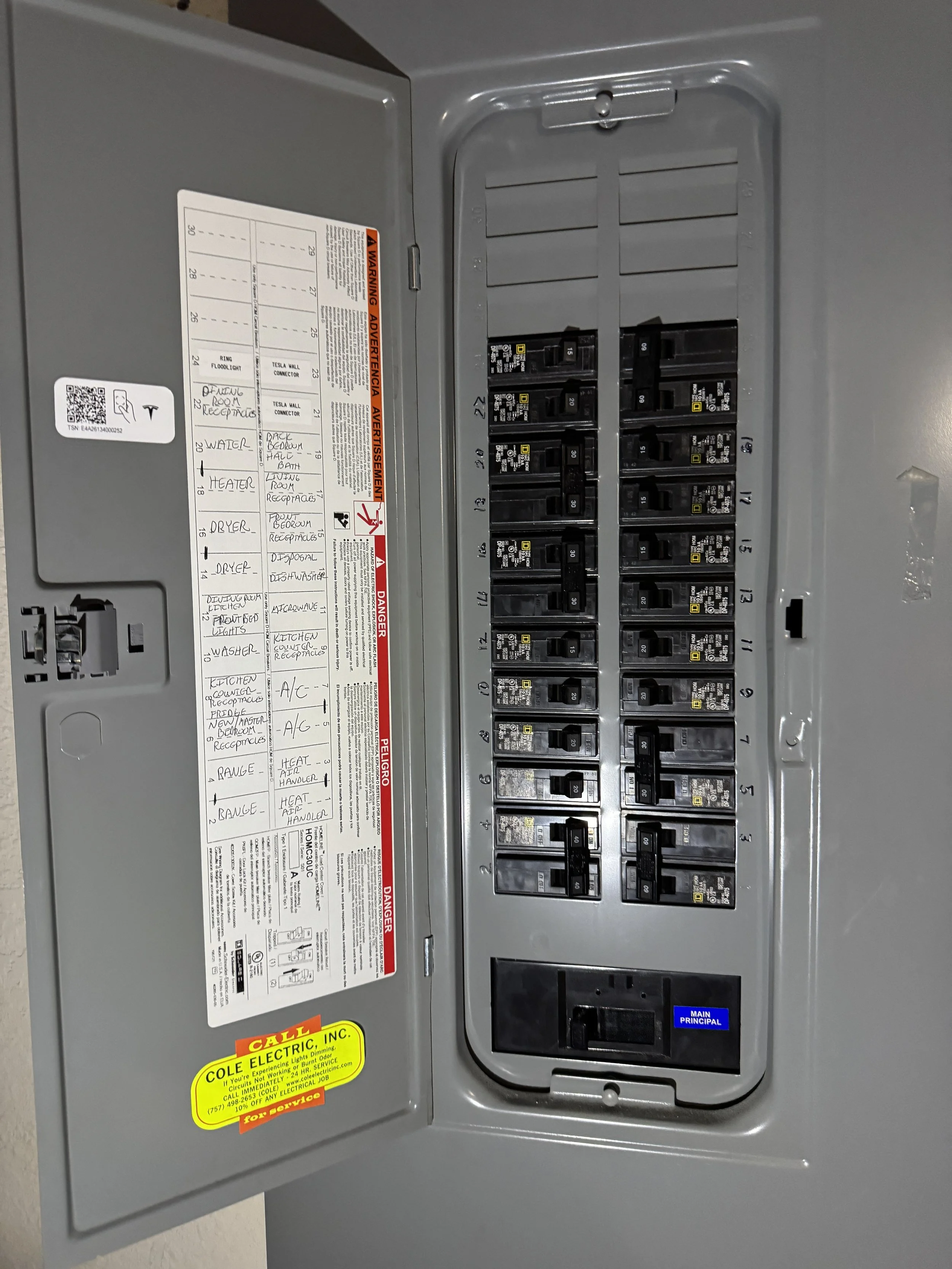
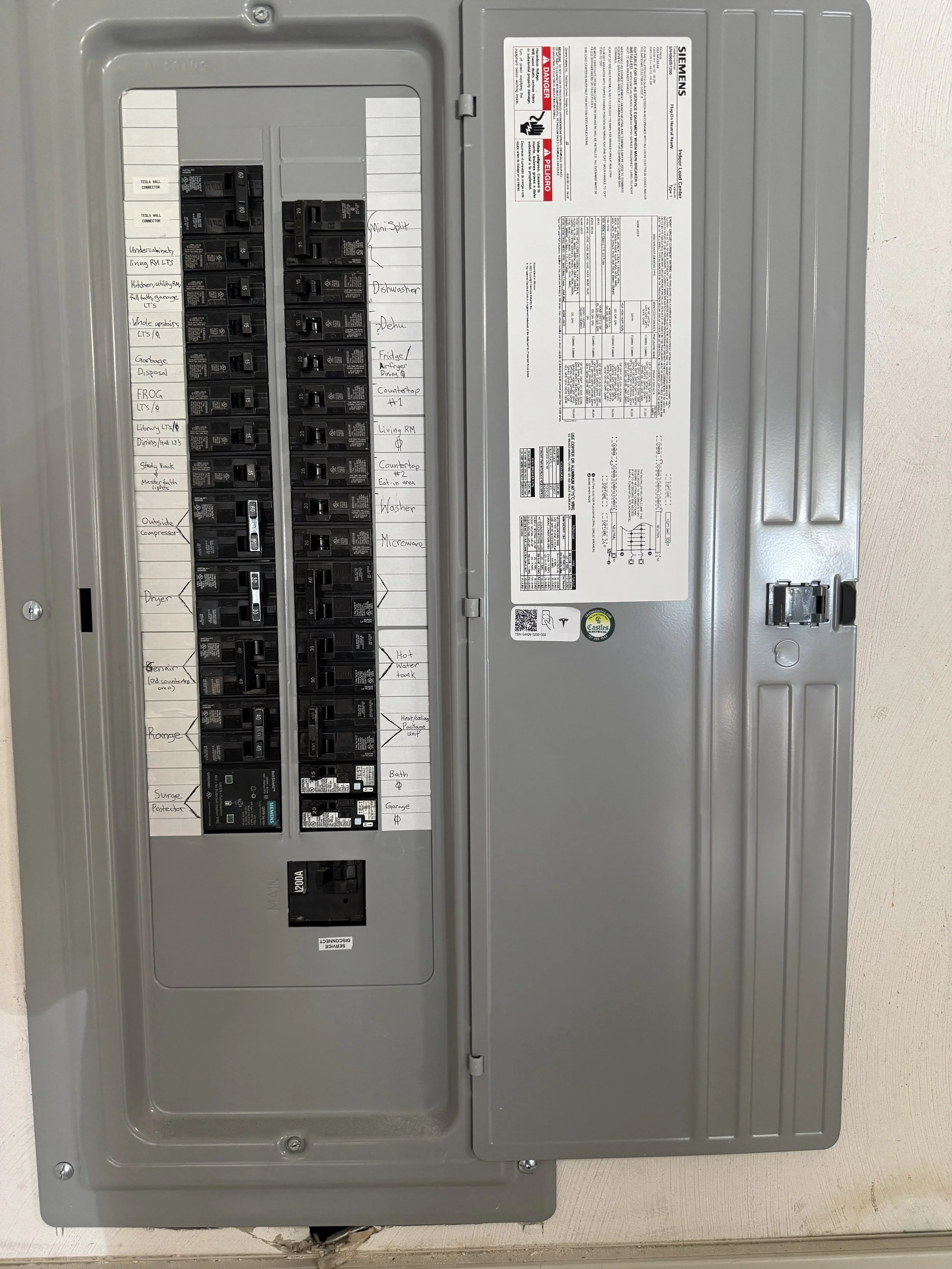
An old fuse box often carries a handwritten list that no longer matches the house. When the new panel goes in, the circuits are traced, and the directory is written by room and use, such as upstairs bedrooms, kitchen counter, or basement laundry.
Circuits we flagged during the assessment, such as older wiring or one circuit shared between rooms, are pointed out so you know what remains for later, and any rewiring in Norfolk is scoped as its own project. We provide documentation of the permitted and inspected work.
08 — Process
Replacing a Fuse Box in an Older Norfolk House
Tell us about the house
The neighborhood or build year, how many fuse boxes there are, and whether it is one home or more.
Look at the box and service
Circuits, add-ons, earlier changes, meter, and grounding.
Plan and written estimate
Panel location, what moves over, and what is flagged for later.
Permit and the swap
We pull the Norfolk electrical permit, coordinate the shutoff with Dominion, and our own licensed electricians make the swap.
Directory and city inspection
We request the city inspection, and the new panel gets a directory written by room.
09 — Proof
A Panel Replaced, and an Owner Who Came Out
One reviewer describes a panel replacement and upgrade and calls it a fantastic job. Another writes about a panel problem the owner came out to look at himself.
From our five-star Google reviews
Google 5.0 Rated by Hampton Roads Customers
Castles Electrical maintains a 5.0 rating on Google. The reviews below load as a live widget, so this page shows current feedback from real Castles Electrical customers.
10 — Why Castles
What an Older Norfolk House Gets From Castles
Two Boxes Sorted Out
Add-on boxes and split units traced to the right meter.
Built Around Your House
Panel plans for older Norfolk homes, from single-family houses to divided ones.
11 — FAQS