01 — Heating Fuel
Propane, Oil, and Wood: Suffolk’s Heating Mix
The Census Bureau’s American Community Survey asks each household what it uses most to heat the home. For roughly 37,900 occupied homes in the city, the 2020 to 2024 estimates show electricity and utility gas leading, with smaller groups on propane, oil or kerosene, and wood.
Put together, about 3,000 homes heat mainly with propane, oil, kerosene, or wood, and nearly 45 percent of Suffolk homes heat mainly with a burning fuel. The table compares each fuel with Virginia as a whole.
Source: U.S. Census Bureau, ACS 2020 to 2024 five-year estimates, Table B25040.
These are survey estimates, so each count carries a margin of error, and the smallest groups, such as wood heat, are the least precise. Read them as a picture of the city as a whole, not a count of any one road or neighborhood.
Heat the survey does not count
The question covers only the main heat source. A home can also have a propane space heater in a shop or den, or a wood stove used now and then, and the heating question does not count either one.
02 — CO Sources
Where Household CO Comes From
Our carbon monoxide detector installation page covers generators. The everyday picture includes the appliances that run all winter. In CPSC’s 2021 estimates, 86 percent of non-fire CO deaths from consumer products happened at home, and heating systems were linked to about 31 percent of them, second only to generators and other engine-driven tools.
The report’s product list also includes furnaces and boilers, portable heaters, water heaters, gas ranges, and charcoal grills. In its 2019 to 2021 averages, portable heaters were tied to more CO deaths than furnaces and boilers.
CPSC has long noted that carbon monoxide comes from burning fuel, so any fuel-burning appliance in a home can be a source. The alarm plan starts with a list of what burns fuel in your house.
Space Heaters and Venting
In the same CPSC report, LP gas heating was associated with about 40 percent of heating-related CO deaths in 2021, and roughly 78 percent of those involved unvented portable propane heaters. Kerosene portable heaters also appear on its product list. CPSC’s case notes often point to loose, blocked, or poorly installed vents and chimneys.
CPSC advises having a trained professional inspect, clean, and tune up central heating equipment, including flues and chimneys, every year, and ensuring combustion appliances are properly vented with sufficient supply air. That work belongs to a qualified heating technician or chimney professional.
Our part is the alarm system: adding CO protection to a smoke-only home, fitting combination units where they make sense, and wiring them so they sound together.
03 — Signals
Three Beeps or Four: Signals Suffolk Fire & Rescue Teaches
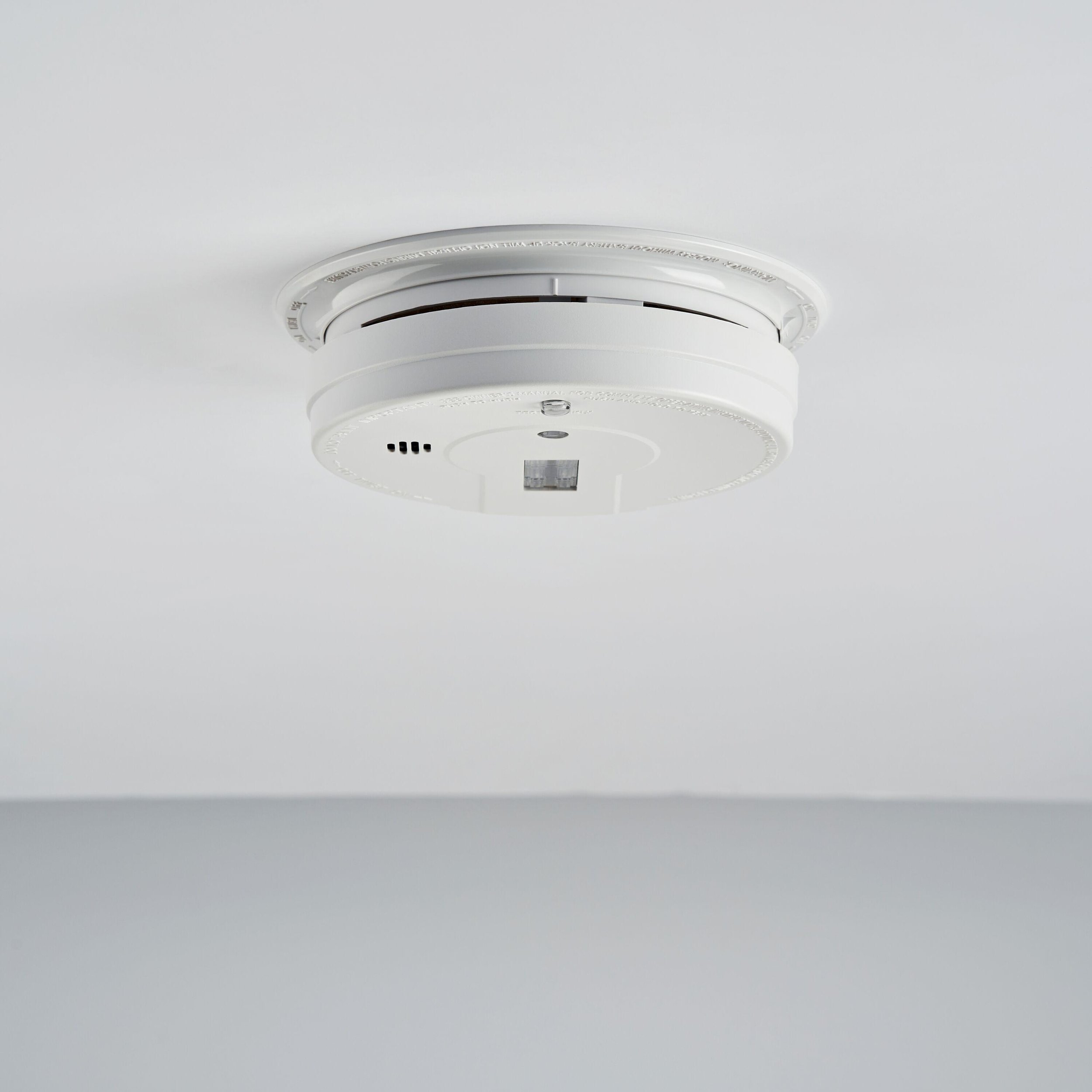
Suffolk Fire & Rescue has shared a guide to alarm sounds with residents, part of its 2021 Fire Prevention Week campaign with NFPA, Learn the Sounds of Fire Safety. A continued set of three loud beeps means smoke or fire: get out, call 9-1-1, and stay out. A continuous set of four loud beeps means carbon monoxide is present: go outside, call 9-1-1, and stay out.
The same guide explains the smaller sounds. A single chirp every 30 to 60 seconds means an alarm battery is low. Chirping that keeps going after a new battery means the alarm has reached the end of its life. CO alarms can also have their own end-of-life sounds, and those vary by manufacturer.
A mix of older and newer units from different makers can make those signals harder to sort out. When we finish an installation, we sound the system and show which pattern on your specific units indicates smoke and which indicates CO, where the test button is located, and how each model signals low battery and end of life.
05 — Process
From Heat Source to Signal Walk-Through
Heat source and household
A short conversation about how the house is heated, which rooms people sleep in, and who lives there, so the visit starts with a working list.
Coverage and age review
Each existing smoke and CO alarm is checked for location, age, power source, and whether the set matches, including any rooms or levels without an alarm.
Scope and estimate on paper
Added CO or combination units, hardwired replacements, and wired or wireless interconnection, with a free installation estimate honored for 30 days.
Installation and system test
Our licensed electricians mount and wire each unit, confirm battery backup for every hardwired alarm, and test the entire system.
Signal walk-through
We sound the alarms, show which pattern means smoke and which means CO, and cover monthly testing.
If the house is also due for a broader look, we can pair the alarm work with an electrical safety inspection of the rest of the system.
06 — Proof
An Electrician Who Listened
A homeowner’s review describes a friendly, knowledgeable electrician who listened to what they needed and gave the home a thorough exam.
From our five-star Google reviews
Google 5.0 Rated by Hampton Roads Customers
Castles Electrical maintains a 5.0 rating on Google. The reviews below load as a live widget, so this page shows current feedback from real Castles Electrical customers.
07 — Why Castles
What You Get From Castles
Matched to Your Heat Source
We place CO and combination alarms around the furnace, the water heater, the fireplace, and any propane appliance.
Know Each Signal
A walk-through that shows which sound means smoke and which means carbon monoxide.
CO Added to a Smoke-Only Home
CO or combination alarms brought into a house that has smoke protection alone today, placed around the appliances that burn fuel.
Battery-Only to Hardwired
Older battery-only units replaced with a hardwired, interconnected set with battery backup, wired so the whole set sounds together.
08 — FAQS