
Breaker Trips with No Load? Virginia Beach Electricians Explain Why
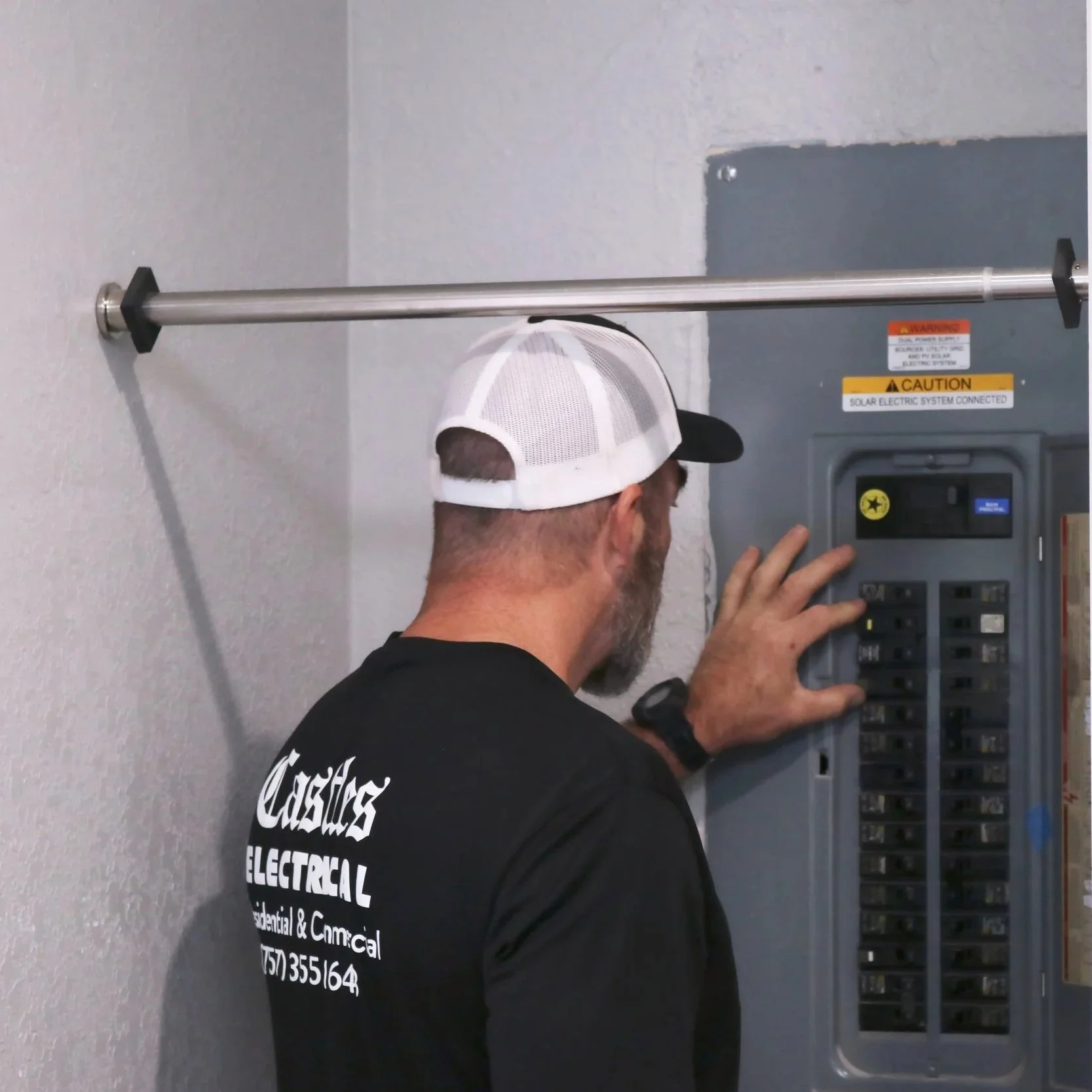
Expert Virginia Beach electricians investigate complex electrical issues, such as phantom breaker trips, ensuring home safety through precise diagnostic troubleshooting.
Why a Breaker Can Trip Even When Nothing Is Plugged In
A breaker tripping with no obvious load confuses most homeowners because it seems to violate basic electrical logic. If nothing is running, nothing should overload the circuit. In practice, breakers respond to more than visible appliance use. They monitor current flow, imbalance, heat, and fault conditions that can exist even when outlets appear unused. In Virginia Beach homes, breakers tripping with no load usually point to hidden electrical behavior rather than a faulty breaker acting randomly. Electrical systems operate continuously, and issues can develop upstream or within the wiring itself without any device being actively powered.
Many homeowners check outlets, unplug appliances, and reset the breaker only to watch it trip again within minutes or hours. That pattern indicates electricity is encountering resistance, leakage, or imbalance somewhere along the circuit path. Coastal conditions, aging infrastructure, and modern protection devices all contribute to these scenarios. Understanding why breakers trip without load requires looking beyond visible usage and focusing on how electricity behaves inside walls, panels, and connection points.
Hidden Current Flow Inside Modern Electrical Systems
Even when nothing is plugged in, electrical circuits still maintain voltage along the wiring. Breakers protect energized conductors, not just active devices. Any fault along that energized path can trigger a trip. Damaged insulation, moisture intrusion, or compromised connections allow current to flow where it should not, even without an appliance drawing power. Breakers respond to that unintended flow immediately or after brief exposure.
Virginia Beach electricians often explain that electrical load does not always mean something obvious, like a lamp or television. Leakage current, ground faults, and arcing can all occur quietly. These conditions generate heat or imbalance that breakers detect. Homes with modern arc fault or ground fault protection experience this more often because those devices react to subtle abnormalities that older breakers would ignore. What feels like a breaker tripping for no reason is usually the breaker doing exactly what it was designed to do.
Ground Fault Leakage Without Active Devices
Ground fault conditions frequently cause trips when no appliances are in use. A ground fault occurs when current leaks from a hot conductor toward ground rather than returning on the neutral. Moisture, damaged insulation, or contact with metal components creates that path. The amount of current involved may be small, but ground fault protection reacts quickly to prevent shock hazards.
Virginia Beach homes face elevated ground fault risk due to humidity and salt air. Moisture enters crawl spaces, exterior walls, garages, and junction boxes, especially after rain or during humid nights. Wiring insulation absorbs moisture over time, lowering resistance. Even without a device plugged in, energized wiring can leak current to ground. Ground fault breakers or outlets detect the imbalance and trip, often confusing homeowners who see no active load on the circuit.
Arc Fault Conditions That Exist at Idle
Arc fault protection monitors electrical waveforms for patterns associated with sparking connections. Arcing does not require a powered appliance. Loose terminals, deteriorated wiring, or damaged conductors can arc intermittently as voltage remains present on the circuit. That arcing produces heat and irregular electrical signatures that arc-fault devices detect.
In Virginia Beach, homes built or renovated under newer electrical codes have arc fault breakers protecting many living area circuits. These breakers trip when they sense unsafe arcing, even if no appliance is running. Arcing may occur due to vibration, thermal contraction, or corrosion-related contact degradation. Breakers trip to interrupt conditions that could lead to fire, long before visible symptoms appear.
Neutral Problems That Mimic No-Load Trips
Neutral conductors play a critical role in circuit stability. When neutral connections loosen or corrode, voltage imbalance develops. That imbalance affects the entire circuit, not just active devices. Breakers may trip as current attempts to return through compromised neutral paths, creating heat and instability.
Virginia Beach electricians frequently find loose neutrals in panels, junction boxes, or shared circuits. Coastal humidity accelerates corrosion at neutral bars and wire terminations. Even with no load, voltage remains present, and any leakage or imbalance triggers protective devices. Neutral issues often worsen gradually, causing intermittent trips that seem disconnected from appliance use.
Panel Related Issues That Cause Unloaded Trips
Sometimes the issue originates inside the breaker panel rather than the branch circuit. Corroded bus bars, damaged breaker clips, or improper breaker seating create resistance at the panel connection. When voltage energizes the circuit, heat builds at that interface. Breakers respond by tripping, even though no load exists downstream.
Virginia Beach panels experience accelerated aging due to salt air infiltration, especially in garages or exterior walls. Panel-related faults often cause multiple circuits to behave unpredictably. Homeowners may notice breakers tripping seemingly at random, regardless of usage. Inspecting only outlets and devices misses these upstream issues entirely.
Moisture Intrusion and Environmental Influence
Environmental factors play an outsized role in breaker behavior along the coast. Moisture intrusion changes how electrical materials behave. Insulation becomes less effective, metal corrodes, and contact surfaces degrade. These changes allow unintended current flow that protective devices detect.
In Virginia Beach, humidity spikes overnight and during storms. Breakers may trip with no load during these periods because conditions inside the walls and panels shift. Moisture-related trips often follow patterns tied to weather rather than usage. Recognizing this connection helps explain why breakers trip when nothing appears to be happening.
Wiring Damage Hidden Behind Walls
Wiring damage does not always announce itself dramatically. Nails, screws, or staples piercing cables during construction or renovations create latent faults. These faults may not cause immediate failure but allow current leakage or arcing once conditions align. Even with no device plugged in, energized wiring encounters compromised insulation.
Homes that have undergone multiple remodels face a higher risk of hidden wiring damage. Virginia Beach electricians often uncover damaged cables behind walls when investigating no-load breaker trips. The breaker trips because electricity encounters resistance or unintended paths the moment voltage is present.
Why Older Breakers and Newer Protection Behave Differently
Older breakers respond primarily to heat from overloads. Newer breakers include arc fault and ground fault detection that respond to subtle electrical behavior. Homeowners upgrading panels or circuits sometimes notice new tripping patterns afterward. The breaker is not more sensitive for no reason. It is detecting conditions previously ignored.
In Virginia Beach homes, retrofits often reveal long-standing wiring issues once modern protection devices are installed. Breakers trip with no load because they detect unsafe conditions that existed all along. Treating the breaker as the problem overlooks the safety improvement it represents.
Why Resetting the Breaker Rarely Changes the Outcome
Resetting a breaker restores power momentarily but does nothing to resolve underlying faults. Voltage returns to the circuit, encounters the same condition, and trips again. Repeated resets stress breaker components and can worsen calibration over time.
Electricians caution against repeated resets when breakers trip with no load. The breaker is responding to a persistent condition that requires investigation. Allowing the breaker to remain off until diagnosis prevents further stress on wiring and components.
How Electricians Diagnose No-Load Trips
Professional diagnosis begins with isolating the circuit from all devices, then testing for leakage, insulation resistance, and continuity. Electricians inspect panels, junction boxes, and known moisture exposure points. Specialized meters detect faults invisible to basic testing.
Virginia Beach electricians often start with environmental factors due to coastal conditions. Crawl spaces, exterior walls, and garages receive careful attention. Methodical testing identifies whether the issue involves ground faults, arcing, neutral instability, or panel defects. Accurate diagnosis prevents unnecessary component replacement and resolves the true cause.
Long-Term Effects of Ignoring Breaker Trips With No Load
Breaker trips that occur without an obvious load often get dismissed because nothing appears to be wrong day to day. Over time, that mindset allows small electrical defects to compound. Moisture continues corroding conductors, loose connections degrade further, and insulation weakens with repeated thermal stress. Each trip represents a moment when the electrical system encounters unsafe conditions. When those warnings go unaddressed, the margin for error shrinks steadily.
In Virginia Beach homes, environmental exposure accelerates this progression. Salt air and humidity do not pause between breaker resets. Wiring that leaks small amounts of current today may leak more tomorrow as insulation deteriorates. Arcing that trips a breaker intermittently can carbonize contact points, increasing resistance and heat. Eventually, the breaker may trip more frequently, or other circuits begin exhibiting similar behavior. What starts as an occasional no-load trip often evolves into broader system instability.
Why Breaker Sensitivity Is Rarely the Real Problem
Homeowners often assume the breaker itself has become too sensitive, especially when no devices appear to be drawing power. In reality, breakers trip because they detect abnormal electrical behavior. Protective devices do not develop seen problems without cause. When a breaker trips consistently with no load, it is responding to conditions that fall outside safe operating parameters.
Virginia Beach electricians routinely test breakers suspected of nuisance tripping and find them functioning within specification. Replacing the breaker alone may temporarily change behavior, but trips often return because the underlying condition remains. Viewing the breaker as the messenger rather than the culprit shifts focus toward identifying faults in wiring, grounding, or environmental exposure. That approach leads to a lasting resolution rather than repeated component swaps.
Shared Circuits and Unexpected Interaction
Some circuits behave unpredictably because they interact with other parts of the electrical system. Shared neutrals, improperly separated circuits, or multi-wire branch circuits can create conditions where one circuit influences another. Even when no devices appear active, voltage fluctuations and imbalance occur as neighboring circuits cycle.
Virginia Beach homes with older wiring layouts encounter this issue more frequently. Renovations sometimes alter circuit routing without addressing shared conductors properly. Breakers trip with no load because current paths behave differently than expected. These interactions rarely show themselves during casual observation and require deliberate testing to uncover. Correcting shared circuit issues stabilizes performance across multiple breakers rather than addressing symptoms one at a time.
When Panel Upgrades Reveal Hidden Problems
Electrical panel upgrades improve safety, but they can also expose existing defects. Modern breakers with arc fault and ground fault protection detect conditions that older panels tolerated silently. Homeowners sometimes notice breakers tripping with no load shortly after an upgrade and assume something went wrong during installation.
In many cases, the upgrade simply revealed long-standing wiring issues. Virginia Beach electricians often explain that the panel did not create the problem. It made the problem visible. Wiring that leaked current slightly or arced intermittently for years now triggers a protective response. Addressing these conditions improves overall safety and reliability, even if the initial adjustment period feels inconvenient.
Why Environmental Patterns Matter in Diagnosis
Breaker trips with no load often follow environmental patterns rather than usage patterns. Trips may occur after rain, overnight, or during humid conditions. These patterns provide valuable diagnostic clues. Moisture-driven faults behave differently from mechanical or installation-related issues.
In coastal Virginia Beach neighborhoods, electricians pay close attention to weather correlation when diagnosing no-load trips. Crawl spaces, exterior junctions, and service entrances become focal points. Understanding when trips occur helps narrow where faults develop. Environmental awareness turns what feels like random behavior into a predictable, traceable issue.
FAQs
Breakers protect energized wiring, not just active devices. Ground faults, arcing, moisture intrusion, or wiring defects can trigger trips even when no appliances are in use.
Humidity increases moisture absorption in wiring and components, which can lead to current leakage or imbalance. Coastal environments make this a common contributor to no-load trips.
Repeated resets allow the same unsafe condition to recur and can increase wear on the breaker. Persistent no-load trips should prompt inspection rather than repeated resetting.
Breakers rarely fail in ways that cause repeated no-load trips. Most often, the breaker is responding correctly to a wiring, grounding, or environmental issue elsewhere in the system.
Panel upgrades improve protection but may not resolve underlying wiring issues. In some cases, modern breakers reveal problems that need to be corrected before trips stop.