02 — Inside the Box
What Is Inside an Older Fuse Box
Pull-out blocks at the top
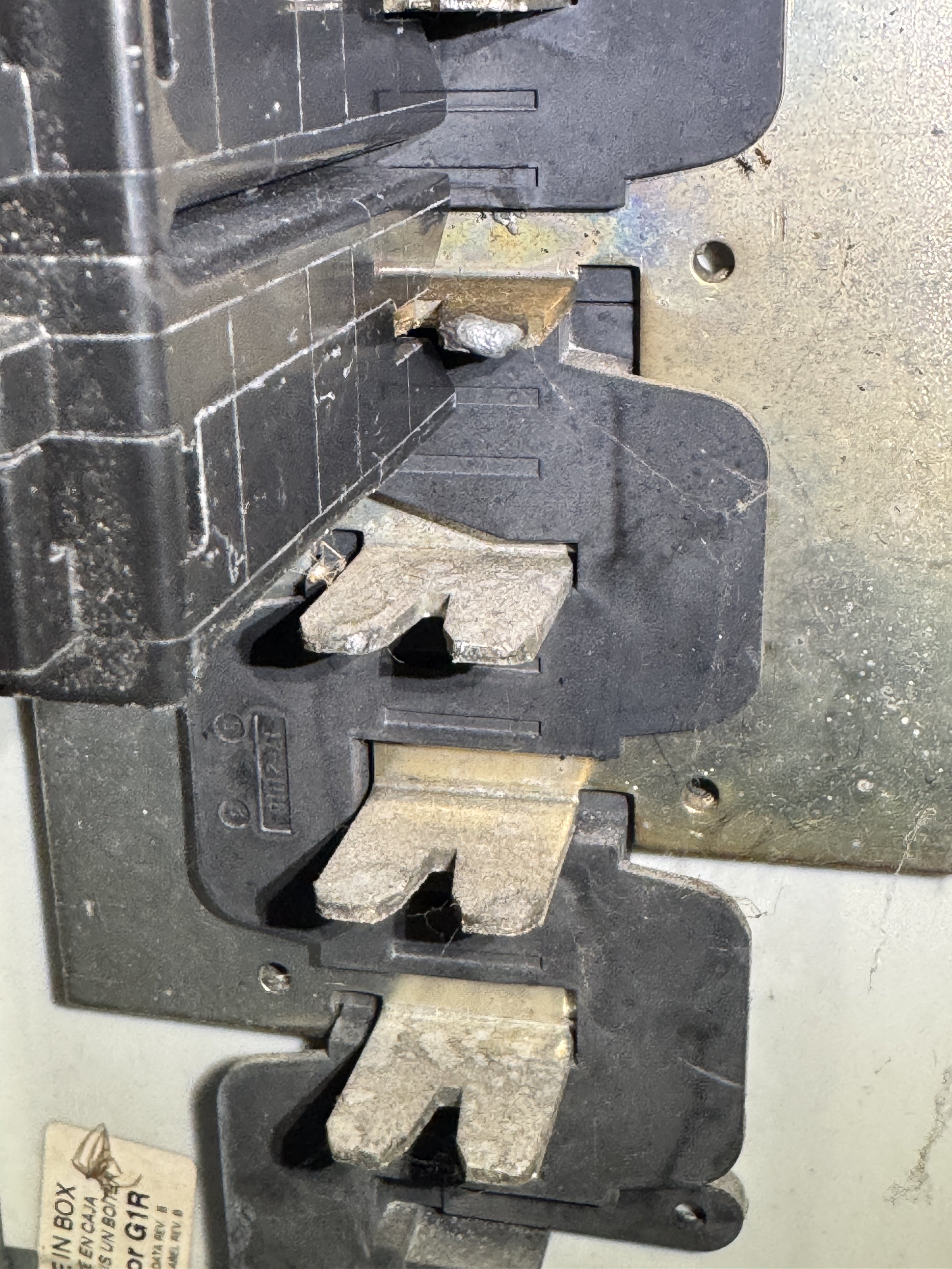
Many fuse panels use a fuse block as both the main protection and the main disconnect. InterNACHI describes these as Bakelite blocks holding two cartridge fuses, sometimes called shotgun shell fuses, and the block has to be pulled out to shut off power to the home. A second pull-out block often serves a large appliance such as a range.
60 or 100 amps
InterNACHI notes these panels are normally rated at either 60 or 100 amps, and InterNACHI’s course treats main fuses of 100 amps each as a sign of a panel installed in the 1960s. The screw-in fuses below the blocks feed the branch circuits. The course describes these installations as designed to supply a relatively small number of circuits, which was fine for an average family in the 1950s and 1960s.
Why the Fuses Are Not the Problem
The same course calls fuse panels generally more reliable than breakers in one respect, because a fuse will always blow when overloaded. The case for replacement rests on the rest of the assembly, the blocks, fuse holders, and connections that have been in service for decades, and on what a breaker panel adds.
03 — Statewide Code
Wired Before Virginia Had One Statewide Code
Virginia’s Uniform Statewide Building Code was first adopted in 1973 by the State Board of Housing. Its first edition took effect on September 1, 1973, and it referenced the 1971 National Electrical Code. Before that date, how a house was wired depended on the rules that applied where it stood.
Fuse panels belong to that earlier period. InterNACHI’s electrical inspection course describes them as universal from the earliest days of electricity in the home up to the 1950s, when breaker panels started to appear in residential construction, and notes that many homes built up until the late 1960s still had fuse panels. So, a typical fuse panel here was installed before the first statewide code existed. A panel installed today follows the current statewide code.
04 — Maintenance Code
Does the State Require Replacing a Fuse Box?
Owners of older houses ask this often. Virginia’s Property Maintenance Code, which covers existing buildings, addresses it directly. It says no provision of the code requires alterations to an existing building or its equipment unless conditions are present that constitute an unsafe structure.
Earlier editions of the maintenance code also treated houses built before the first statewide code as their own group. For those houses, a code official who found a serious and dangerous hazard could order the minimum fix, not a full update to new-construction rules. Your building official can tell you how the current edition applies.
Replacing a fuse panel is usually the owner’s decision, and specific hazards are for the building official to judge. Once a new panel goes in, that new equipment is installed to current code.
05 — Preparation
Getting an Older House Ready for Panel Day
Older panels collect changes. Over the past 50 years or more, circuits may have been added for a well, a window unit, or a workshop, and some of those additions tie into the panel in ways that need correcting. Our whole-panel assessment looks at each fuse position, what it feeds, the wiring entering the box, and the meter and service entrance outside.
A few things help before the first visit. Clear a path to the panel and the meter, and if you already know which rooms go dark when a particular fuse blows, jot it down. For homes on larger lots and farm properties, ask about pole-fed services at the estimate visit.
06 — City Record
Looking Up Your Panel’s Inspection
The replacement is filed through the city’s permit system as a Residential Single and Multi-Family Home Electrical Permit, and a City of Suffolk inspector checks the work. After that, the city’s Inspection Results lookup lets anyone search by street name, permit number, or date. Each entry lists the permit number, address, inspection type, inspector, scheduled and inspected dates, and the result.
The lookup page also invites permit holders to request email notice of inspection results by writing to the city permit office at CDDapplication@suffolkva.us.
07 — Why Castles
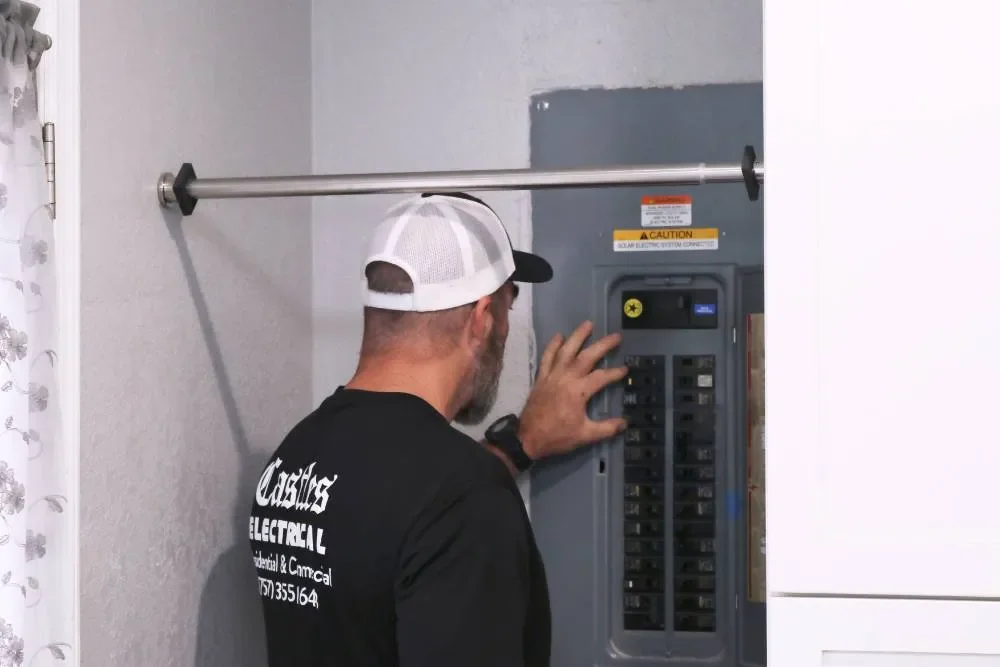
Castles on a Pre-1974 Panel
Pre-1974 Panels, Current Code
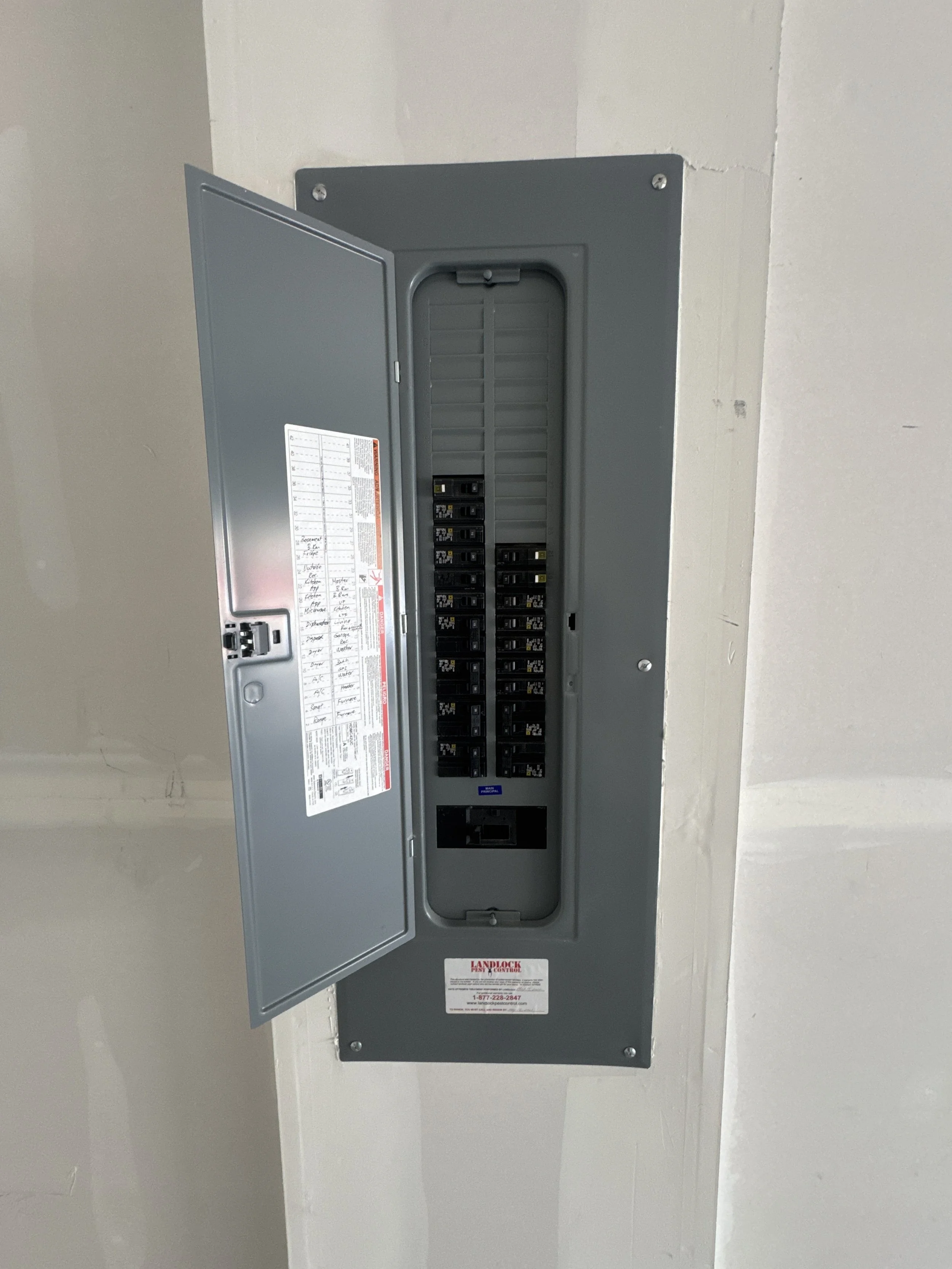
Old fuse boxes replaced with breaker panels built to today’s code.
Pull-Out Blocks Handled
Our electricians pull the main block and any appliance block on panel day.
08 — Process
From Fuse Panel to Inspected Breaker Panel
Look at the fuse panel
The main block, fuse positions, added circuits, meter, and service entrance.
List the circuits
What each fuse position feeds, including any circuits added over the years, is noted before anything is disconnected.
Written scope and estimate
A free installation estimate, honored for 30 days.
Permit and replacement
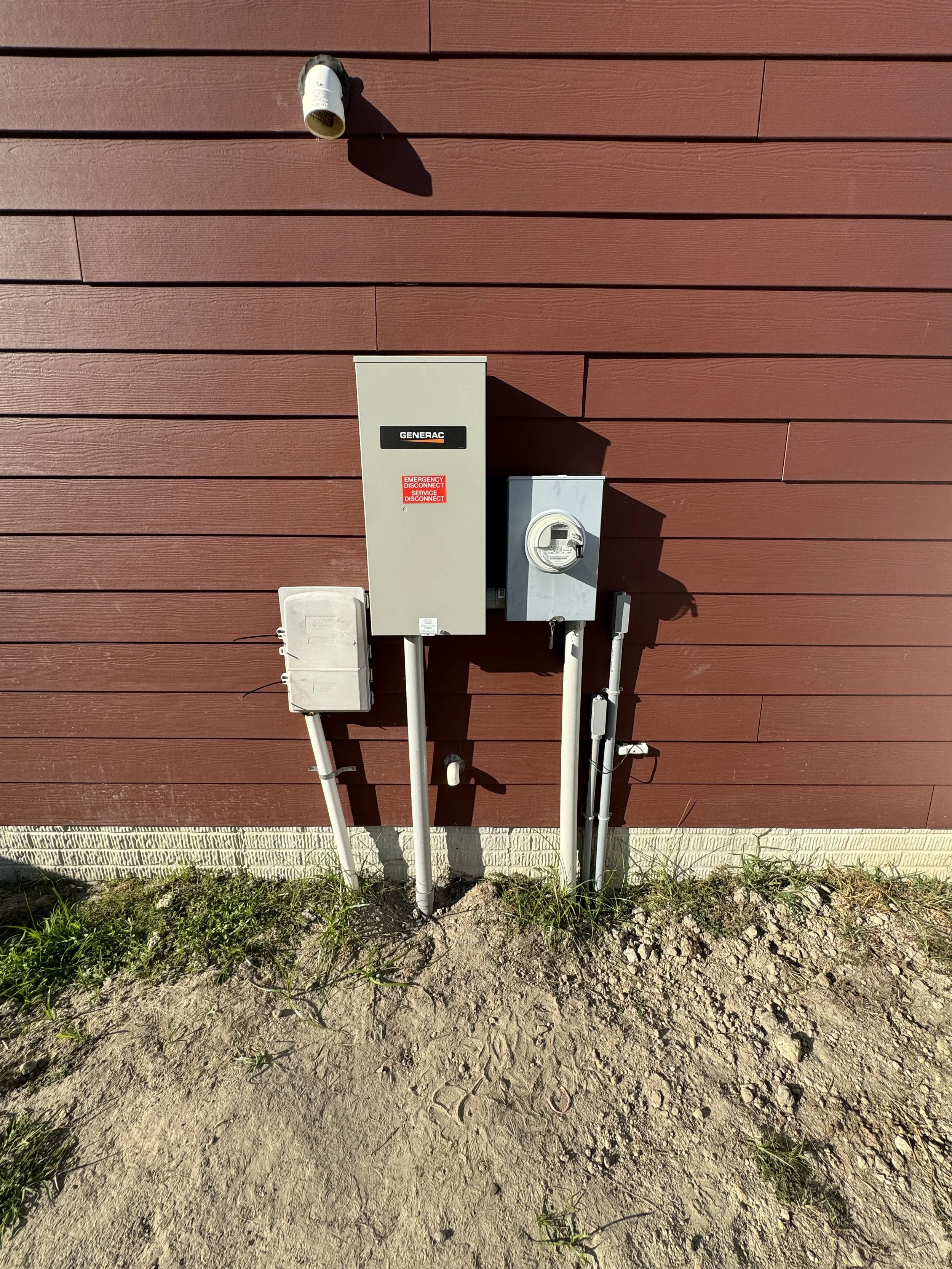
City permit, utility coordination, and the new breaker panel, with meter base or service-entrance updates where needed.
City inspection
A Suffolk inspector checks the work, and we show you the new panel.
09 — Proof
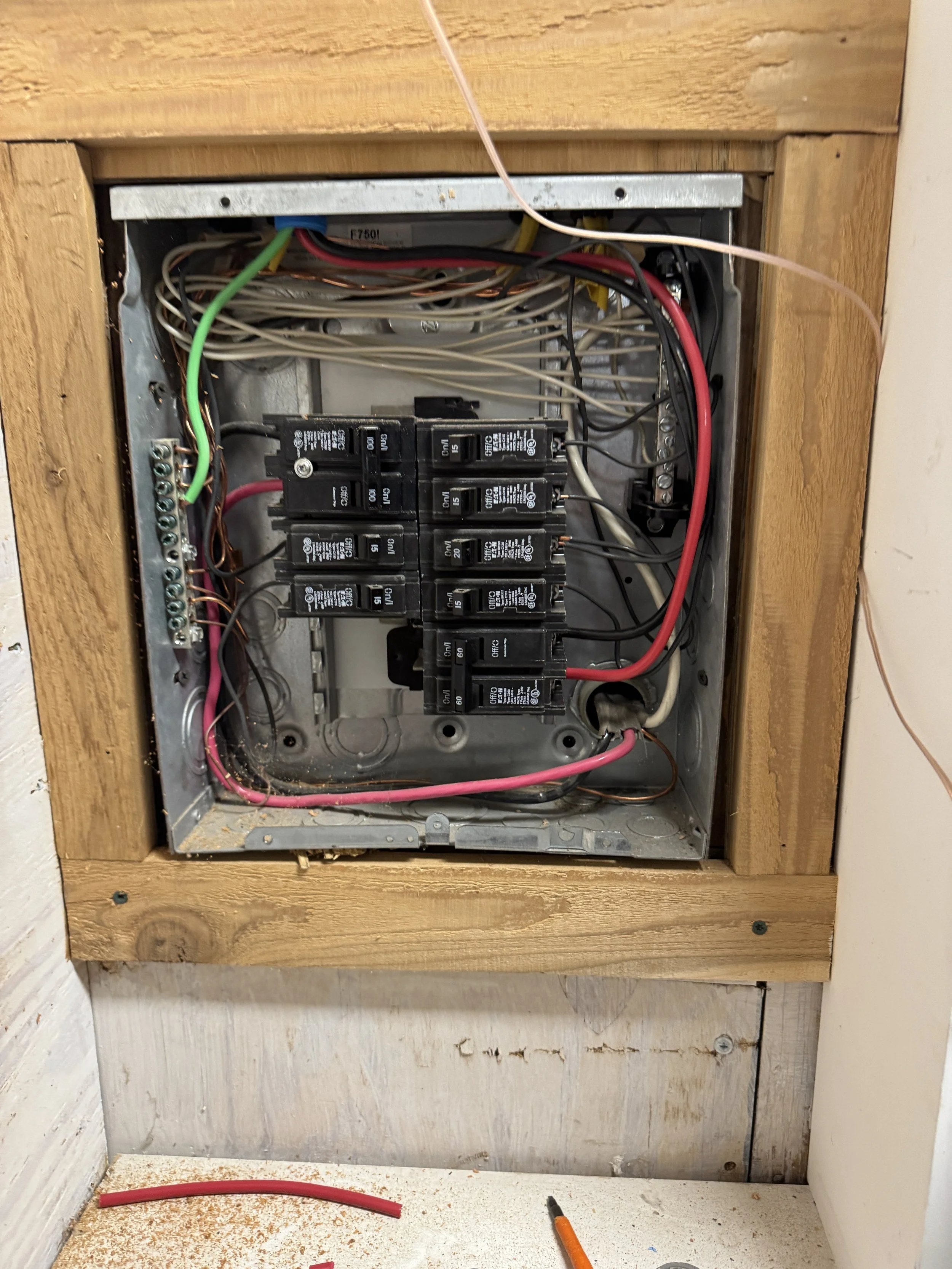
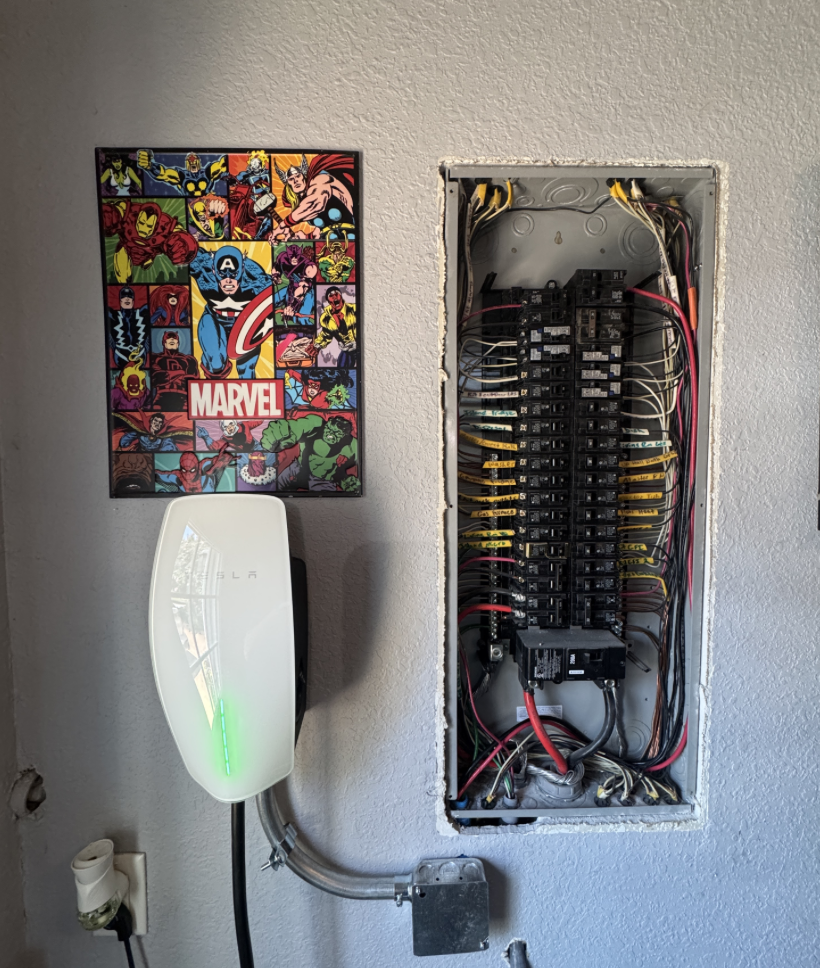
A New Box and a Charger Added
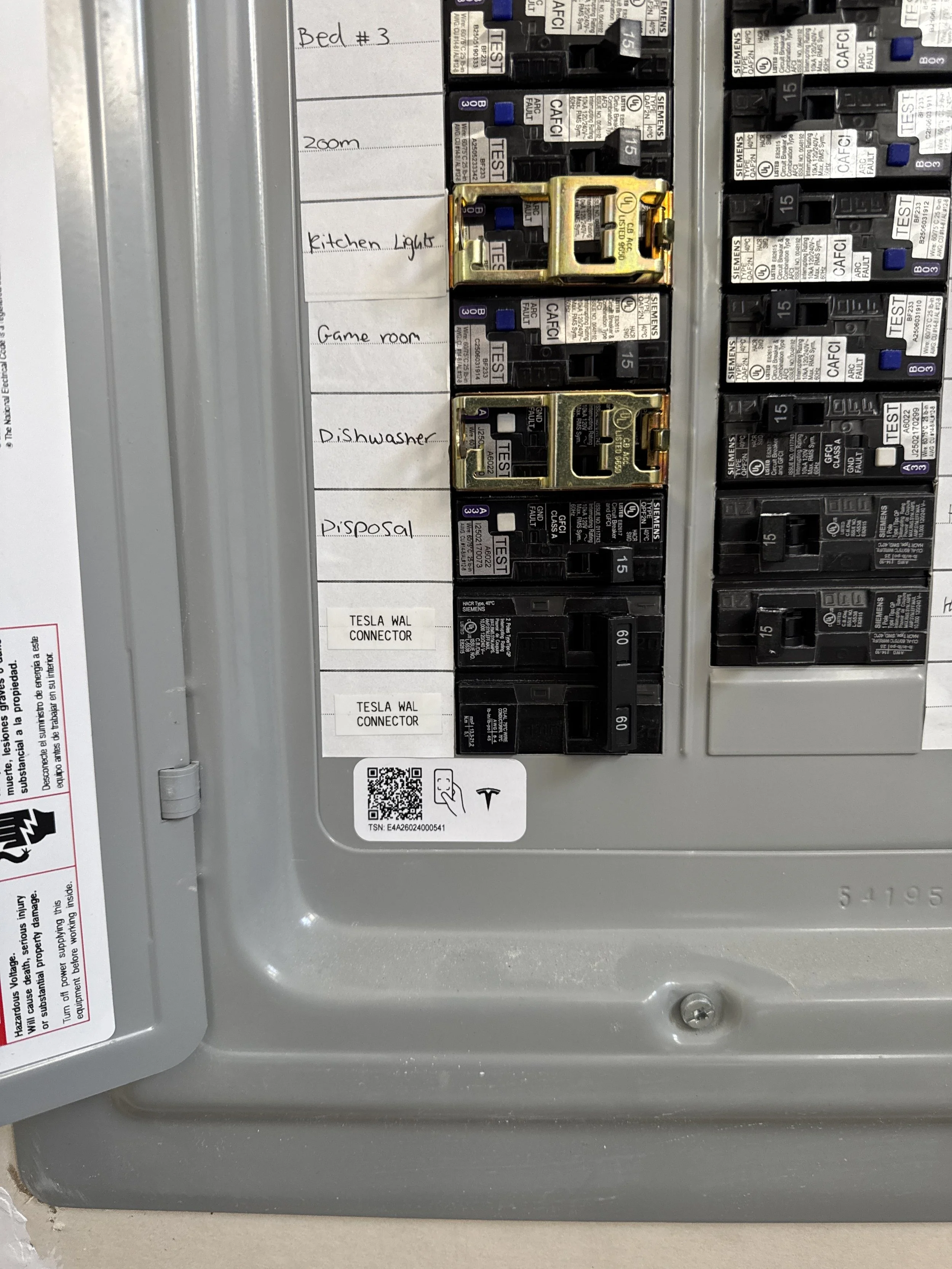
One customer had a new electrical box installed along with an EV charger. More of what customers say is in the live Google feed below.
From our five-star Google reviews
Google 5.0 Rated by Hampton Roads Customers
Castles Electrical maintains a 5.0 rating on Google. The reviews below load as a live widget, so this page shows current feedback from real Castles Electrical customers.
10 — FAQS