
01 — Your Generator
We Start With the Generator in Your Garage
The generator’s model number, or a photo of its outlet panel if you have one, tells us which 240-volt outlet it has, the breaker behind that outlet, and whether its neutral is bonded to the frame.
We size the switch to the generator’s running watts. A brief surge above the rating when a motor starts is normal, but the steady load should stay within it.
02 — Inlet and Plug
Matching the Inlet to Your Generator’s Plug
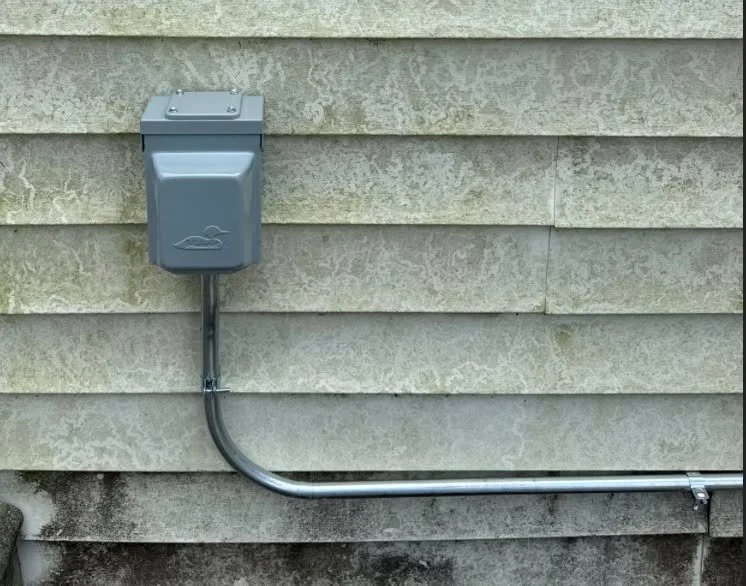
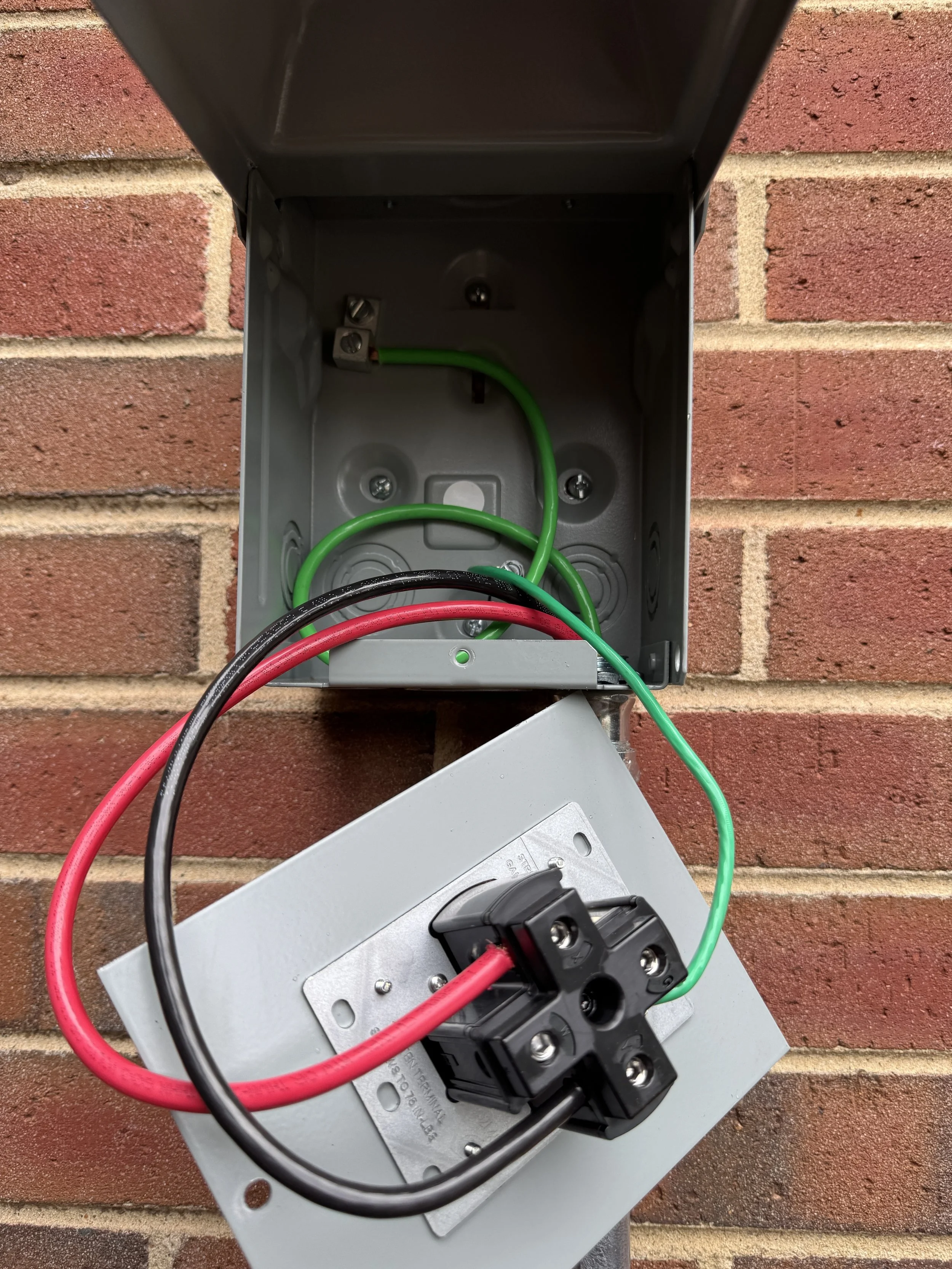
The power inlet is the weatherproof box on your outside wall where the generator cord plugs in. Most home setups use a 30-amp or 50-amp inlet, matched to the outlet on the generator. Reliance Controls, a transfer switch maker, also offers 20-amp models, with a ceiling of 5,000 running watts.
The wiring in the cord differs too. A 125/250-volt switch requires a four-wire cord with two hots, a neutral, and a ground, whereas a 125-volt switch uses a three-wire cord.
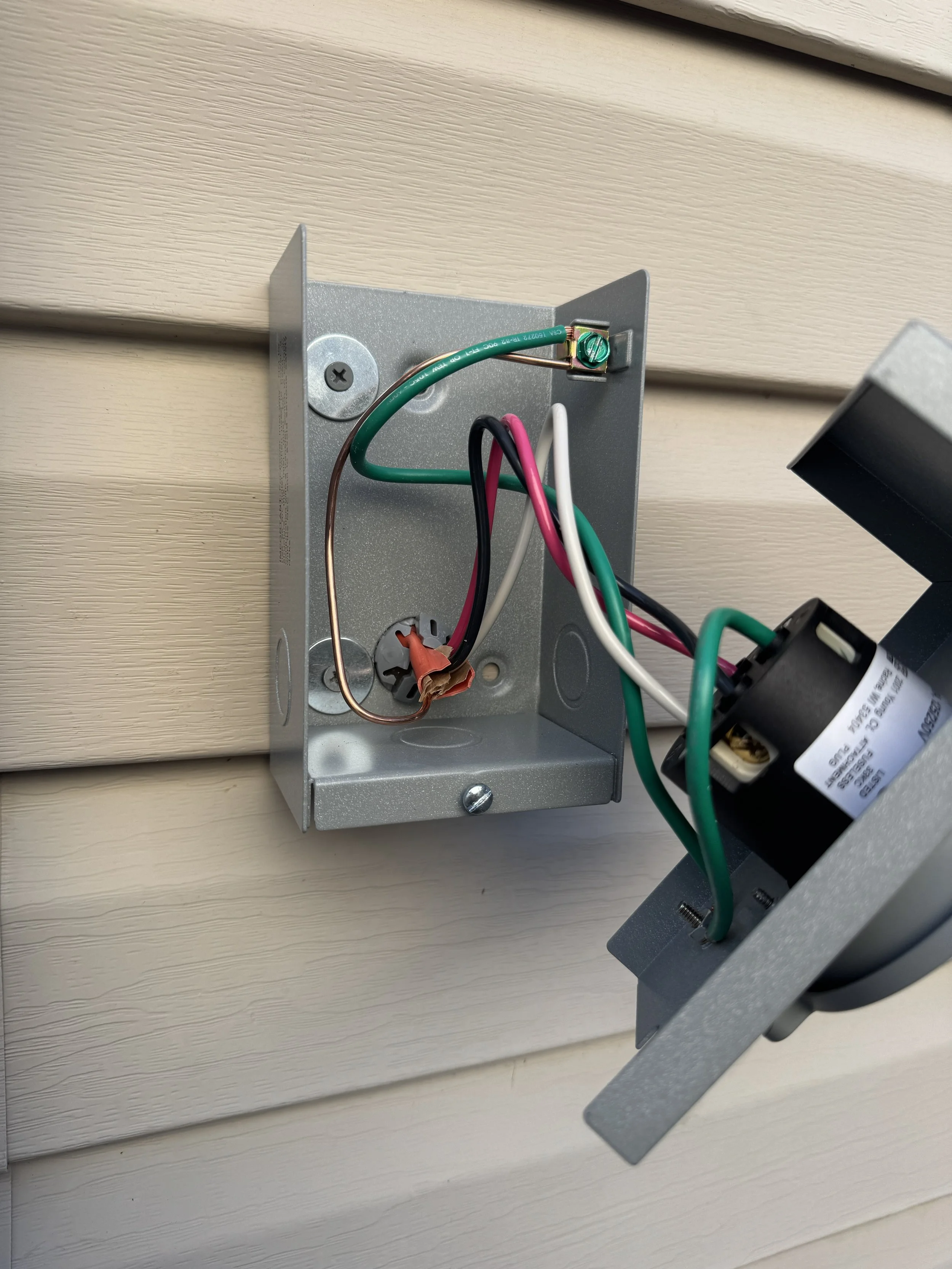
Generac’s manual for its 30-amp and 50-amp manual transfer switch models describes a 125/250-volt inlet that comes pre-wired to the switch. The table shows the wattage ceiling and smallest cord for each size.
03 — Circuits
Choosing the Circuits for a Portable Setup
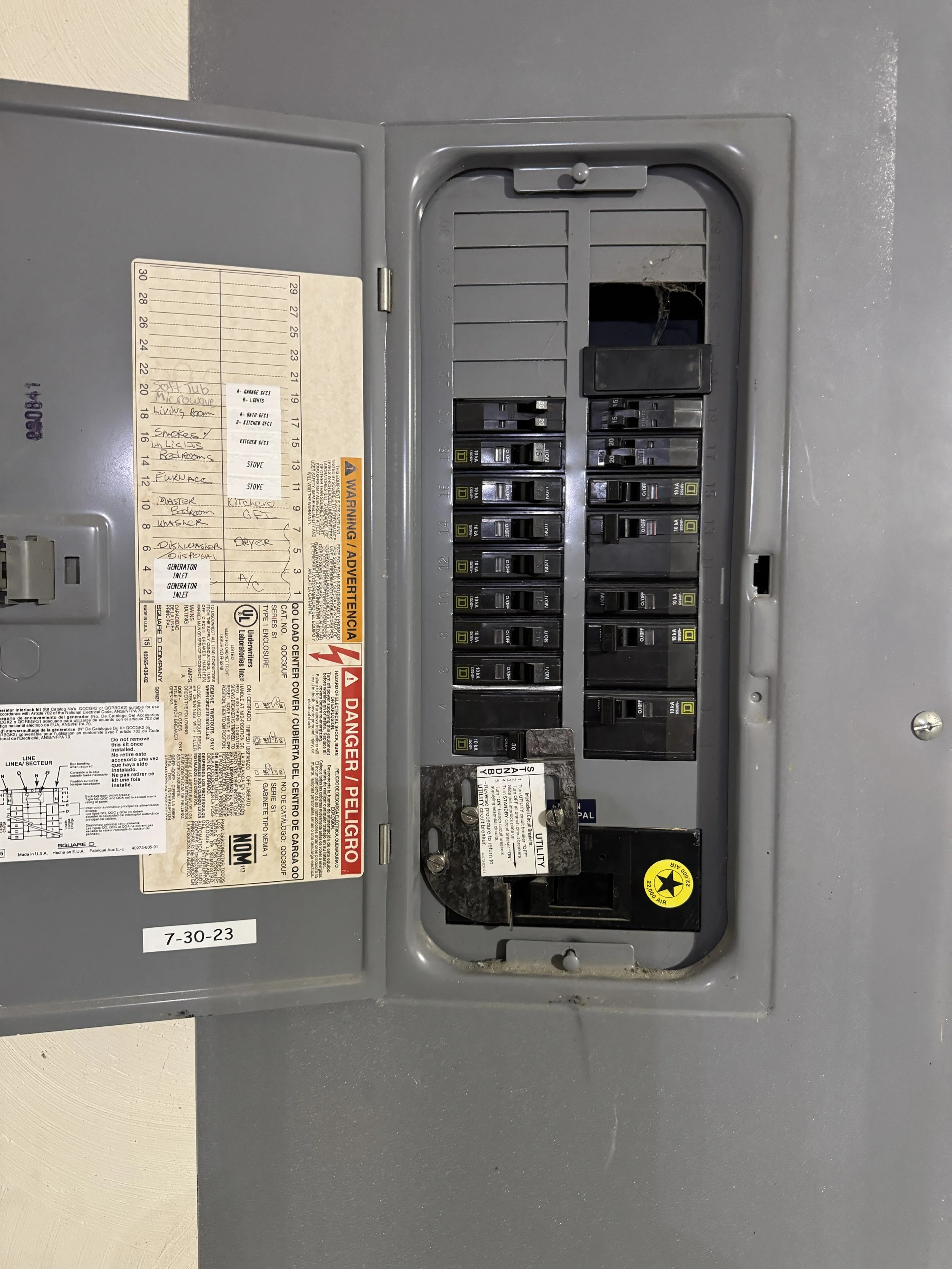
The circuit list decides the switch style. A compact switch usually has room for one 240-volt appliance. If you want two, or a larger 240-volt load such as an electric range, you need a 50-amp generator outlet, inlet, and switch, and often a larger transfer panel.
Some switches can feed some circuits from the utility and others from the generator. Switches with watt meters let you see the load on each of the two 120-volt legs, and we spread your circuits across both legs.
Newer breakers can change the count. Generac notes that GFCI, AFCI, or surge breakers in the transfer switch reduce the maximum number of circuits it can take, so a panel with several of those may need a larger switch. If the panel itself raises questions, an electrical safety inspection or a panel upgrade can come first.
04 — Neutral Design
Bonded or Floating Neutral: Why Some Generators Trip on a House Switch
Inside every generator, the neutral and ground are either tied together or kept separate. The first is called bonded-neutral and the second floating-neutral. Some generators are built with a bonded neutral so they pass OSHA inspections on job sites, and some of those also have built-in GFCI protection.
Your home’s main panel already bonds neutral to ground. Plugging a bonded generator into the house creates two parallel paths back to the generator, one on the neutral wire and one on the ground wire. The hot and neutral pass through the GFCI sensor while the ground does not, so the GFCI sees an imbalance and trips.
What we do about it
We check the generator’s neutral design and GFCI outlets before choosing a switch. A floating-neutral generator works with a standard manual switch. Generac also says its improved 30-amp and 50-amp HomeLink models can be used with portable generators featuring compatible GFCI outlets, so the outlet type matters as much as the neutral.
If a bonded generator keeps its bond, the manufacturers’ answer is transfer equipment that switches the neutral, and we plan for it. We leave the generator itself alone.
06 — Code
Does a Portable Generator Inlet Need Its Own Disconnect?
Virginia’s current building code incorporates the 2020 National Electrical Code, and Section 702.12 covers outdoor generator sets. Under part (B), a portable generator of 15 kW or less that connects via a flanged inlet or a cord-and-plug connection does not require a separate disconnect on the house.
Leviton’s code commentary on that rule, written for an earlier edition with the same wording, notes that the generator’s engine must be readily shut down. Reliance also notes that the National Electrical Code requires a transfer switch whenever a generator is connected to house wiring.
Part (C) applies to larger power inlets, rated 100 amps or more. Per that same commentary, equipment with those inlets has to be listed for the use and have an interlocked disconnecting means, unless the inlet itself is rated as a disconnect, so the inlet is never unplugged under load. Household 30-amp and 50-amp inlets fall under part (B), and your inspector has the final word.
07 — Why Castles
Two Checks That Decide the Hardware
The Neutral Comes First
Bonded or floating decides which switch a generator can work with, so we read it before anything is ordered.
Planned for a Cord Run in the Dark
The inlet goes where the cord reaches without crossing a walkway.
08 — Proof
A Generator Problem, Explained
One reviewer describes an electrician who walked them through what was going on with their generator, in terms they could follow.
From our five-star Google reviews

Google 5.0 Rated by Hampton Roads Customers
Castles Electrical maintains a 5.0 rating on Google. The reviews below load as a live widget, so this page shows current feedback from real Castles Electrical customers.
09 — Process
Starting From the Machine You Own
Start with the machine
The model or an outlet panel photo if you have one, the circuits you want during an outage, and a look at your panel’s space and breaker types.
Match the hardware to it
The outlet rating, breaker, and neutral design determine the inlet type and switch style. Those, the circuit list, and the inlet location go into a written plan with a free installation estimate.
Permit, install, hand over
We pull the electrical permit, mount the inlet, wire the switch, and request the city inspection. Then we check the switch with your generator connected and show you how to switch over and back.
At handover, the order matters. When utility power returns, flip the switches back to LINE first, then shut down the generator.
10 — FAQS