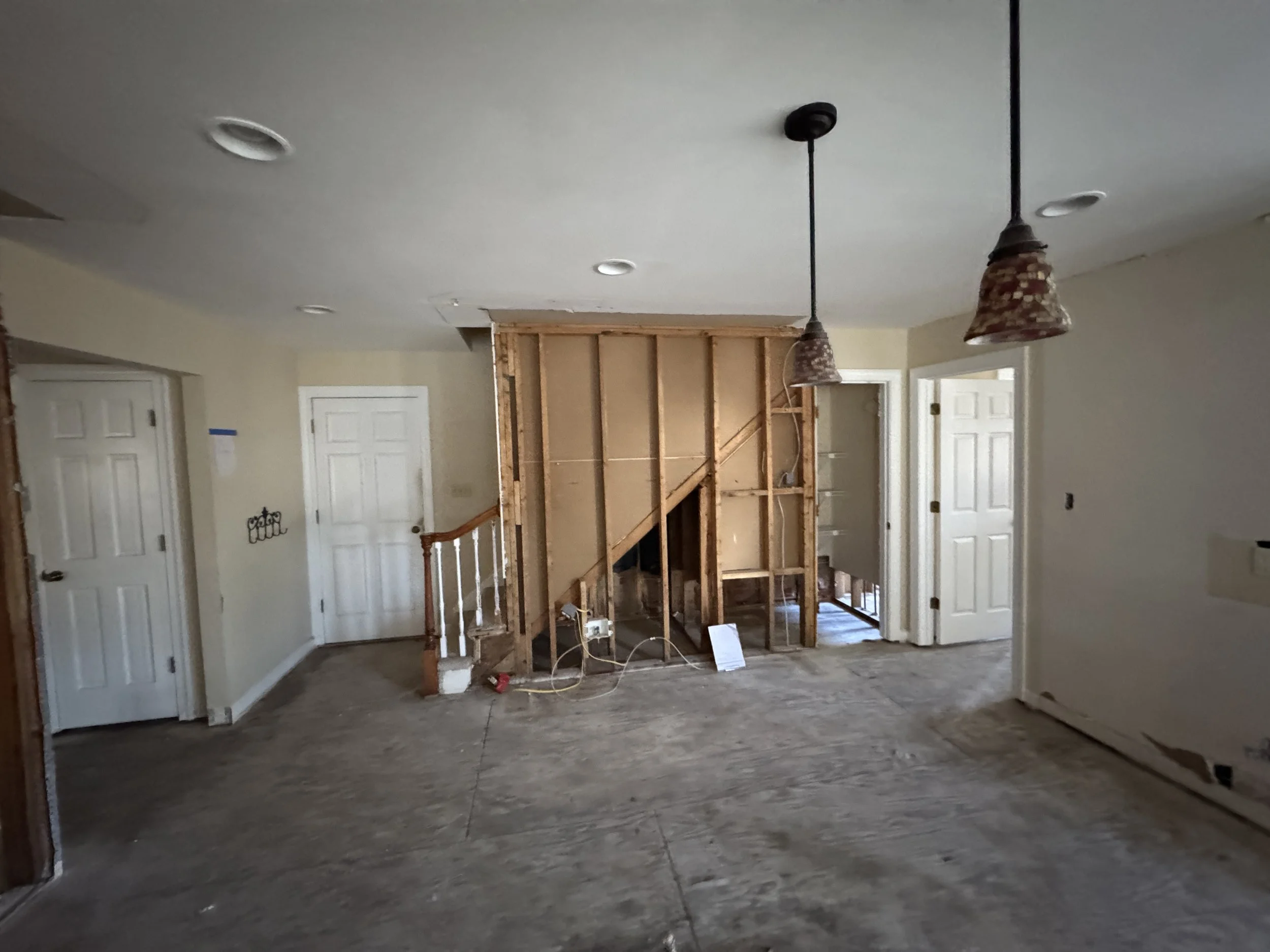
Room in an older Suffolk, VA house with a wall opened to the framing

Master Electrician & Class B Licensed

Knob-and-Tube Wiring Replacement in Suffolk, VA

Rural Suffolk waited a long time for electric lines. Community Electric Cooperative began building its first lines, from Windsor into what was then Nansemond County, in late 1939, as the knob-and-tube era was ending, so an old farmhouse may have knob-and-tube, early cable, or both.

We trace what is in the walls, attic, and crawlspace, then replace the old circuits with grounded copper wiring under permit.

Master Electrical & Alternative Energy License #2710048784 Class B Contractors License #2705166194 Google 5.0 Rated Family-Owned & Operated Since 2012 Licensed Electricians, Never Subcontracted Free Installation Estimates
Licensed. Insured. Trusted. We treat your home like it’s our own.
Locally Owned in Virginia Beach Since 2012 Serving Virginia Beach & Nearby Cities
GENERAC
TESLA
KOHLER
NABCEP
BBBA+
SquareD
GENERAC
TESLA
KOHLER
NABCEP
BBBA+
SquareD
Home / Suffolk, VA / Knob-and-Tube Wiring Replacement in Suffolk

01 — Co-op History

When the Lines Reached Rural Suffolk

Nationally, as late as the mid-1930s, nine out of 10 rural homes had no electric service, according to the National Rural Electric Cooperative Association.

Southeastern Virginia followed that path. Community Electric Cooperative received a federal Rural Electrification Administration loan in October 1939.

A month later, crews started the co-op’s first 220 miles of line, running from Windsor into Nansemond County, which has since merged into the City of Suffolk. Across its whole service area, the co-op started in 1950 with 2,451 meters, most connected after the war, and it reached 3,637 services by 1955.

Some 1,543 member-consumers turned out for the co-op’s first outdoor annual meeting, held in Suffolk’s Peanut Park in 1949.

For an old farmhouse, that timeline can matter more than the date on the deed. A house built in the 1880s may have gone decades without electric service, so its oldest wiring dates to when a line reached the property, not to the house itself.

02 — The Changeover

Wired at the Changeover

The home inspectors’ association InterNACHI describes knob-and-tube as an early standard wiring method in common use in North America from about 1880 to the 1940s, and says most houses built before World War II were wired that way. Over those same decades, cable that bundled a circuit’s conductors in one sheathed run took over, and later versions added a grounding conductor.

The co-op’s hookups straddle that shift. A Suffolk farmhouse connected in 1940 and one connected in 1948 could have been wired by different methods, and many were changed again as families added rooms and appliances. So we treat every co-op-era house as an open question until the wiring is traced.

If your older house is in downtown Suffolk or one of the historic villages, see our page on rewiring older houses in downtown Suffolk, which covers the city’s historic district guidelines.
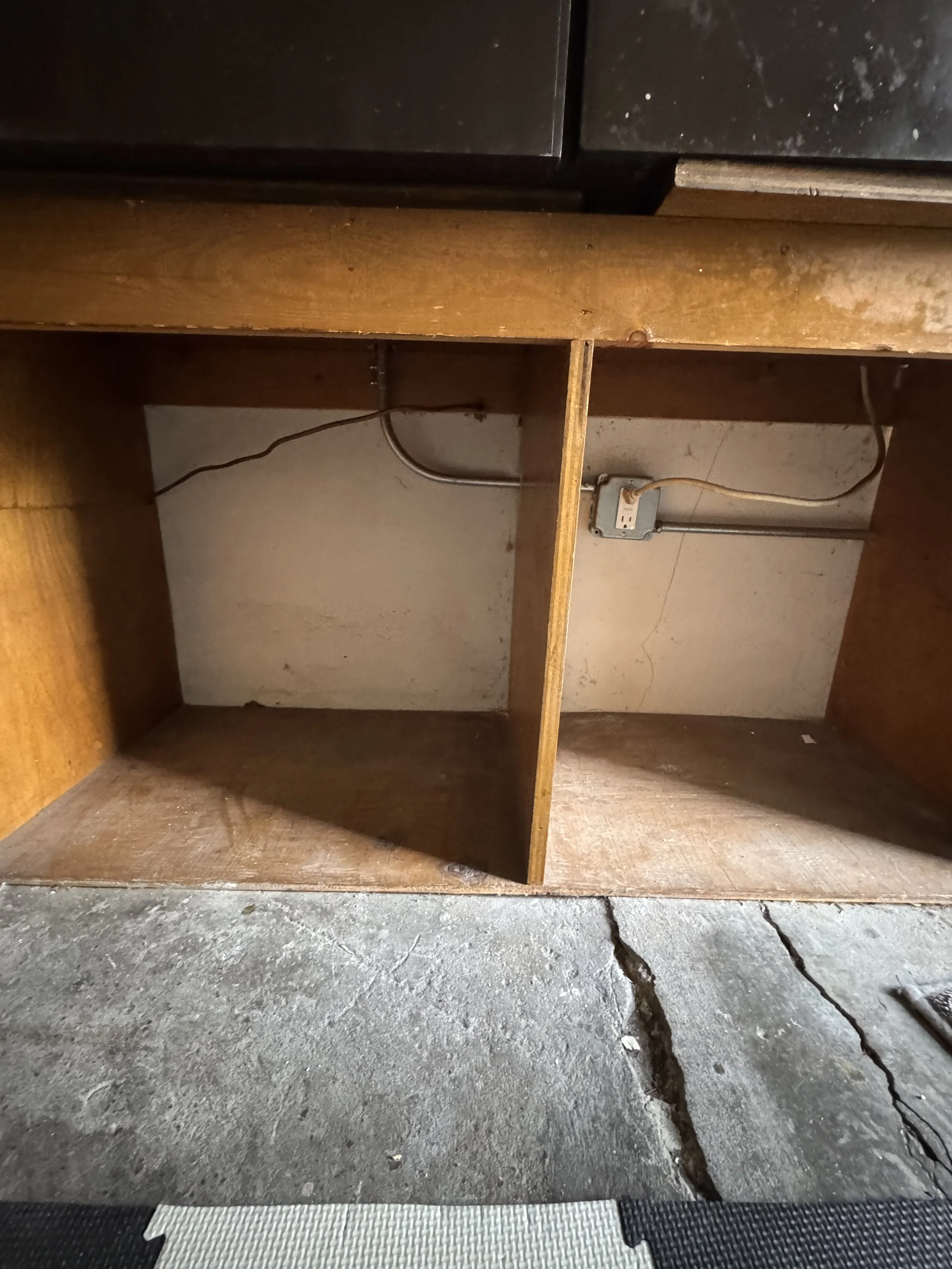
Cable and a receptacle in an unfinished space beneath an older Suffolk, VA house

03 — Identifying Old Wiring

How to Recognize Knob-and-Tube in a Farmhouse

First, look for where framing is exposed: the attic, the crawlspace, the underside of floors, and unfinished closets. Use a flashlight and leave the wires alone, since older insulation can crumble when handled.

Two wires, running apart

Look for two separate wires, each on its own line of porcelain knobs, passing through framing in porcelain tubes. Bill Kibbel, a historic-building inspector, notes that the hot and neutral wires stay at least 3 inches apart, except near a fixture connection, and that runs were usually set along the centers of joists and studs.

Cloth sleeves and wrapped splices

Where wires enter a switch, a lamp, or a wall, they were protected by flexible cloth or rubber sleeving called loom. Original splices were twisted together, soldered, and wrapped in rubber tape, so a taped joint along an attic run can be a clue.

A two-prong outlet alone does not prove knob-and-tube. Early cable without a ground often feeds the same kind of outlet, which is one more reason to have the wiring identified before a scope is written.

04 — Mixed Systems

Early Cable, Mixed Systems, and Later Add-Ons

Inspectors find that improper modifications are more common on knob-and-tube wiring than on modern wiring, partly because the systems have been around long enough to accumulate decades of changes. Kibbel calls improper alterations the most consistent problem he finds, and names branches added onto the original wiring as a common one.

On a farmhouse, those changes tend to follow the family’s history: a kitchen modernized after the war or a freezer added on the back porch. Each one may have tapped an original circuit.

Our assessment maps which runs are original, which were added, and where the two meet. Those junctions often decide the scope.

When the property was connected
Wiring you may find
What we look for first
Before the co-op era (in-town or early private service)
Knob-and-tube, often altered since
Original runs, splices, later extensions
Co-op lines arriving, 1939 to the war years
Knob-and-tube or early cable
Which method each room uses
Post-war hookups, late 1940s to 1950s
Early cable, sometimes with knob-and-tube in older sections
Where old and newer wiring meet
Rooms added or remodeled later
Newer cable tied into older circuits
Connections to original wiring
Barn, shed, or detached kitchen from the same years
Porcelain knobs or open runs
Whether it is still energized

05 — Outbuildings

Old Porcelain in a Barn or Detached Building

Outbuildings wired in the same years can hold the same porcelain. A barn, smokehouse, or detached kitchen may still carry open runs on knobs long after the farmhouse was updated. Some of those runs were disconnected decades ago. Others are still live, and nothing on the outside tells you which.

InterNACHI notes that knob-and-tube is not permitted in any new construction, but no code requires the removal of existing knob-and-tube outright, so an outbuilding is judged on its own condition and use. We can check whether old runs in a barn or shed are still energized and whether any new wiring there is installed using modern methods and is permitted where the city requires one.

For the rest of a barn or shop, from the feed to grounding and damp locations, see our electrical safety inspection in Suffolk.
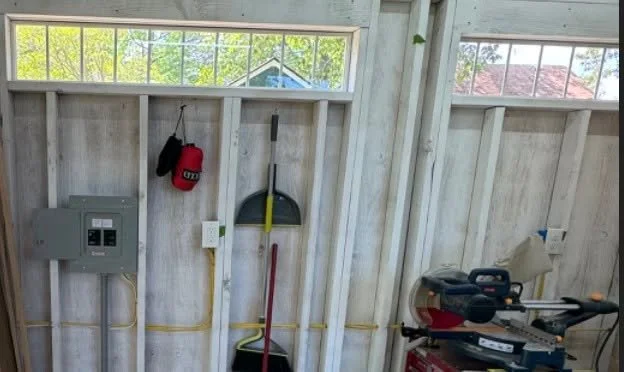
Panel on the open framing inside a detached outbuilding on a Suffolk, VA property
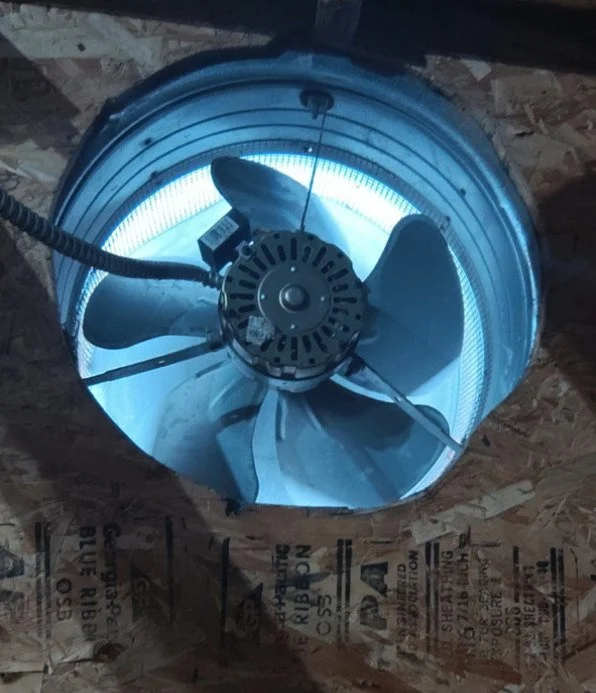
Gable fan among the rafters and sheathing of an attic in an older Suffolk, VA house

06 — Attics

Rodents, Heat, and Attic Storage

The porcelain is rarely the weak point. Its components have an almost unlimited lifespan, so the condition of a knob-and-tube system depends on the insulation on the conductors and the changes made over the years.

Kibbel observes that heat directly above ceiling lights and in unvented attics can degrade that insulation. Knob-and-tube can also be damaged when rodents access it or when items are hung from exposed runs in attics and basements.

Farmhouse attics and crawlspaces often double as storage, and country houses see their share of mice and squirrels. If you have noticed droppings, nesting, or gnawed material near old wiring, or items hung on exposed runs, mention it when you call so we check those areas closely.

07 — Process

From First Call to Final Inspection

01

Tell us about the property

Roughly when the house and outbuildings got power, which utility serves it, and how to reach the attic and crawlspace.

02

Identify the wiring

Room by room, which method each circuit uses and where old and newer wiring meet.

03

Trace what is live

Energized runs separated from abandoned ones in the house, and old runs in a barn or shed checked for power.

04

Written scope and free installation estimate

Full or room-by-room replacement with grounded copper, new outlets and switches, and panel updates where needed. Estimates are honored for 30 days.

05

Permit, rewire, and inspection

New circuits installed and inspected by the city.
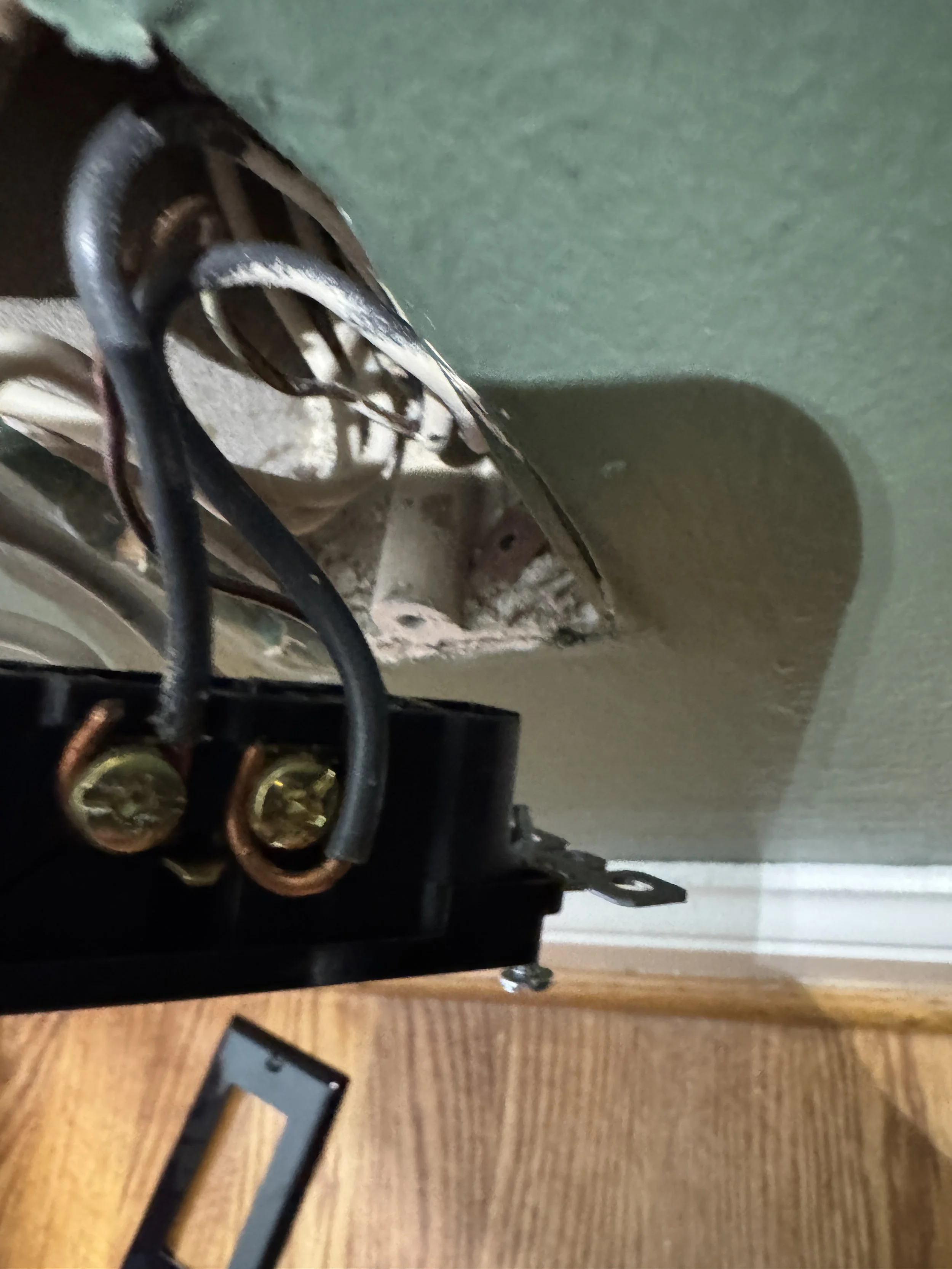
Old receptacle pulled from the wall with its original conductors still attached
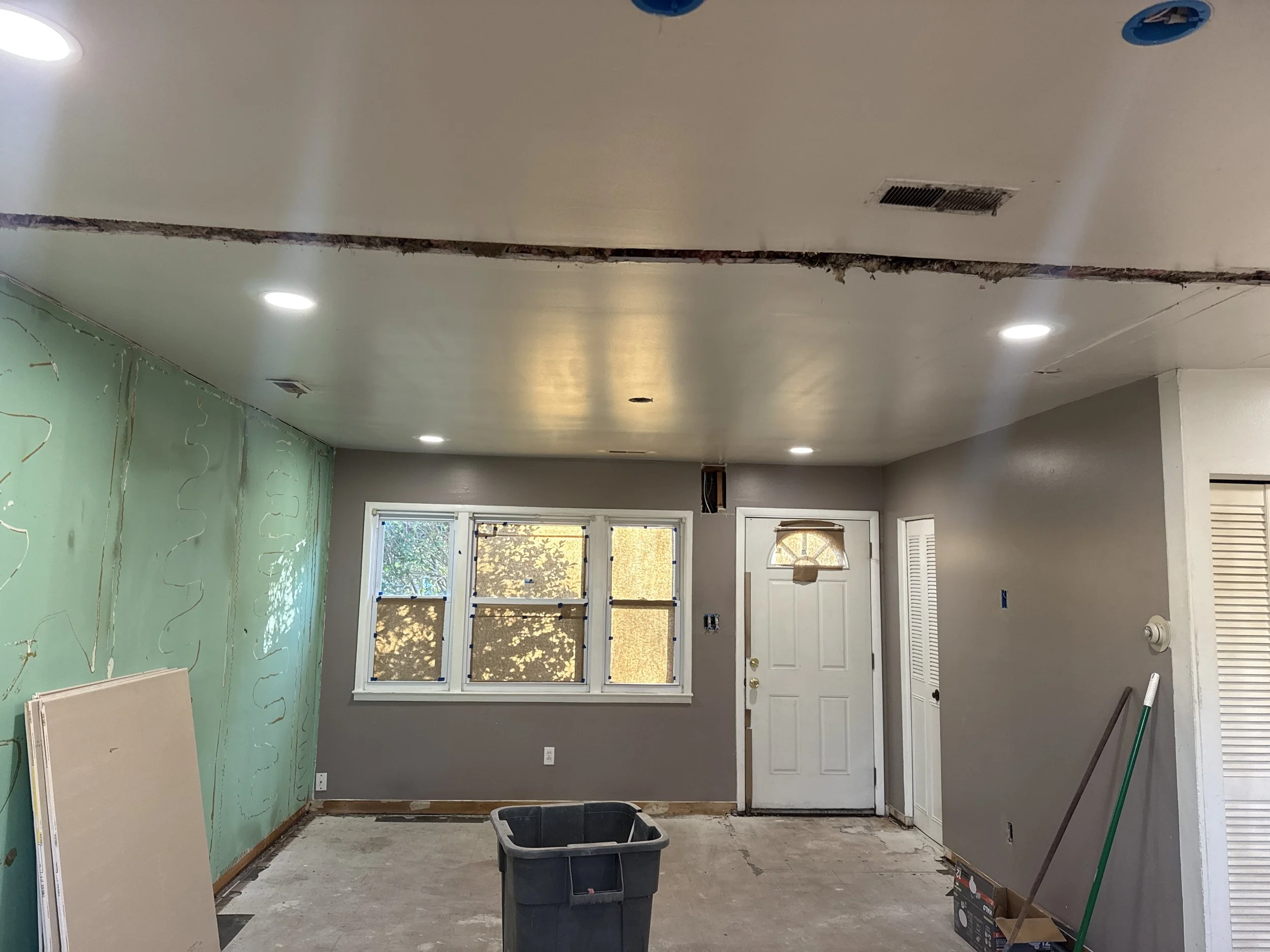
Room in a Suffolk, VA house being rewired, with the new ceiling lights on

Castles Electrical

Licensed, insured, and locally owned. The work is done by our own electricians, never subcontracted.

08 — Why Castles

How We Handle Farmhouse Wiring

Mixed Wiring Mapped

A 1940 farmhouse can hold three wiring methods. We map which room has which.

Live or Abandoned

Energized runs told apart from disconnected ones, including old porcelain in a barn or shed.

09 — Proof

Wiring Work in Our Google Reviews

Customers describe wiring and outlet work in older houses, and service they call outstanding.

From our five-star Google reviews
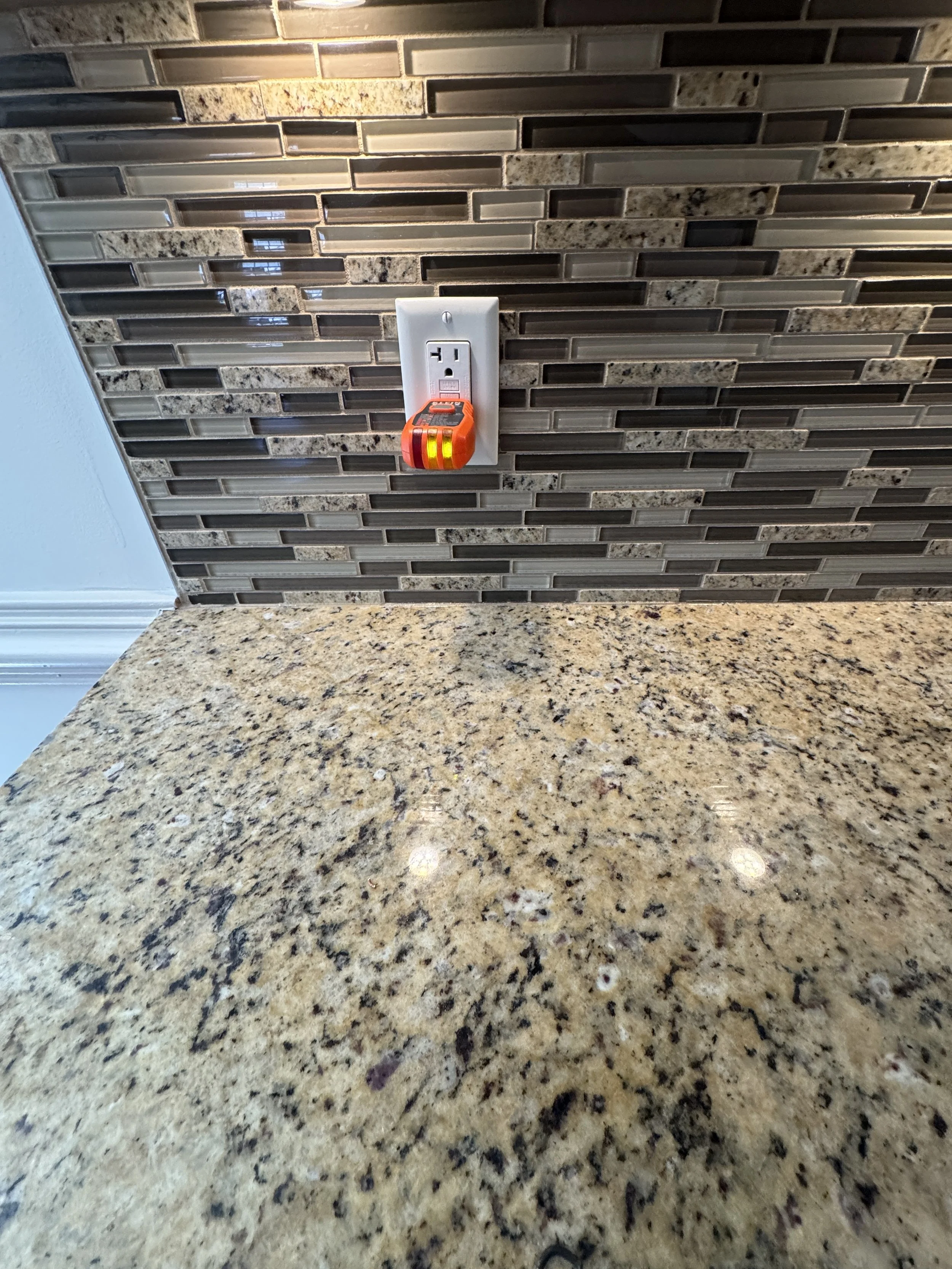
New grounded receptacle finished into a kitchen wall on a Suffolk, VA job
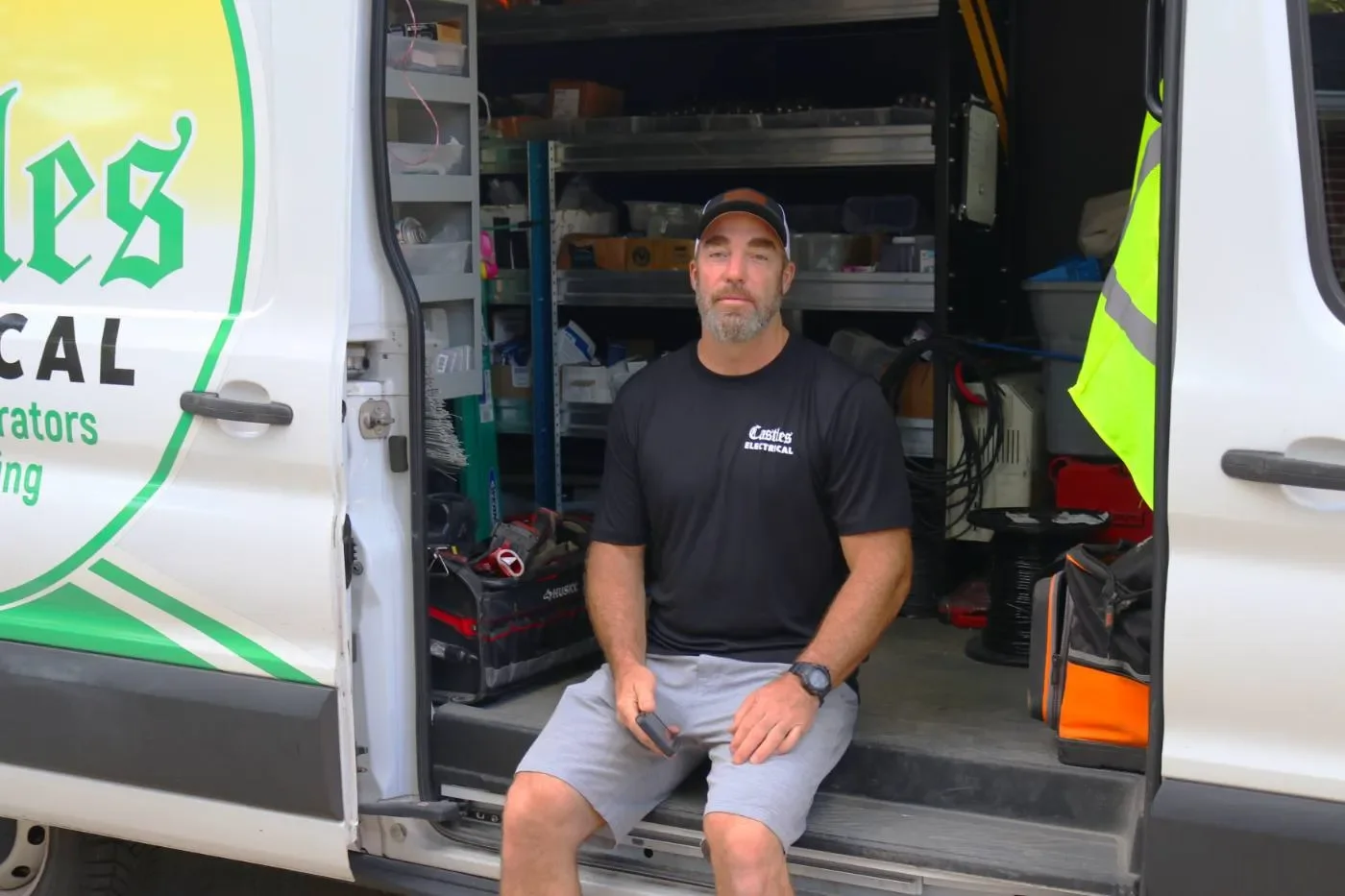
Castles Electrical electrician going through the findings with a Suffolk homeowner

Google 5.0 Rated by Hampton Roads Customers

Castles Electrical maintains a 5.0 rating on Google. The reviews below load as a live widget, so this page shows current feedback from real Castles Electrical customers.

Leave Us a Google Review

10 — FAQS

Suffolk Knob-and-Tube FAQs

How can we find out when our property first got electric service?+

Start with family records, old deeds, or long-time neighbors, and ask the utility serving the address whether it has anything on file. At the assessment, the wiring methods and old service equipment we find also give clues about when the house was wired.

We found wires wrapped together with black tape in the attic. Is that knob-and-tube?+

It could be an original soldered splice wrapped in rubber tape, or a later tie-in to a newer circuit. Leave it undisturbed and point it out when we visit.

There are porcelain knobs in our barn. Do those need replacing too?+

Not automatically. First we check whether they still carry power. Dead runs can be disconnected and removed where reachable, and live ones are evaluated for condition before you decide on replacement.

Our place got power in the early 1950s. Could it still have knob-and-tube?+

It is less likely, but worth checking, since older sections or reused materials can turn up. Tracing the wiring in the attic and crawlspace settles it.

We want to add shelving or hooks in the attic. Where are old wires likely to run?+

Kibbel notes that knob-and-tube runs were usually installed along the center of joists and studs, where nails were less likely to reach them, so fasten nothing into the middle of a framing member until the runs have been identified. Keep storage and hooks off exposed wires entirely. If you cannot tell what a run is, leave it for the assessment.

Ready When You Need Us

Find Out What Is Wired Into Your Farmhouse

The co-op’s first line reached Nansemond County in late 1939. A house older than that line was wired twice, and knowing roughly when power arrived narrows what is in the walls before anything is opened.

Office and hours

Based at 2984 S Lynnhaven Road, Suite 104, Virginia Beach, VA 23452.

  • Monday to Friday: 7:00 AM to 10:00 PM
  • Saturday: 7:00 AM to 7:00 PM
  • Sunday: Closed
  • After-hours voice messages are checked, and we take emergency and after-hours calls when we can

On a Suffolk farm, we start by asking when the line came down the road.

Castles Electrical electrician reviewing the job with a homeowner