02 — Property Plan
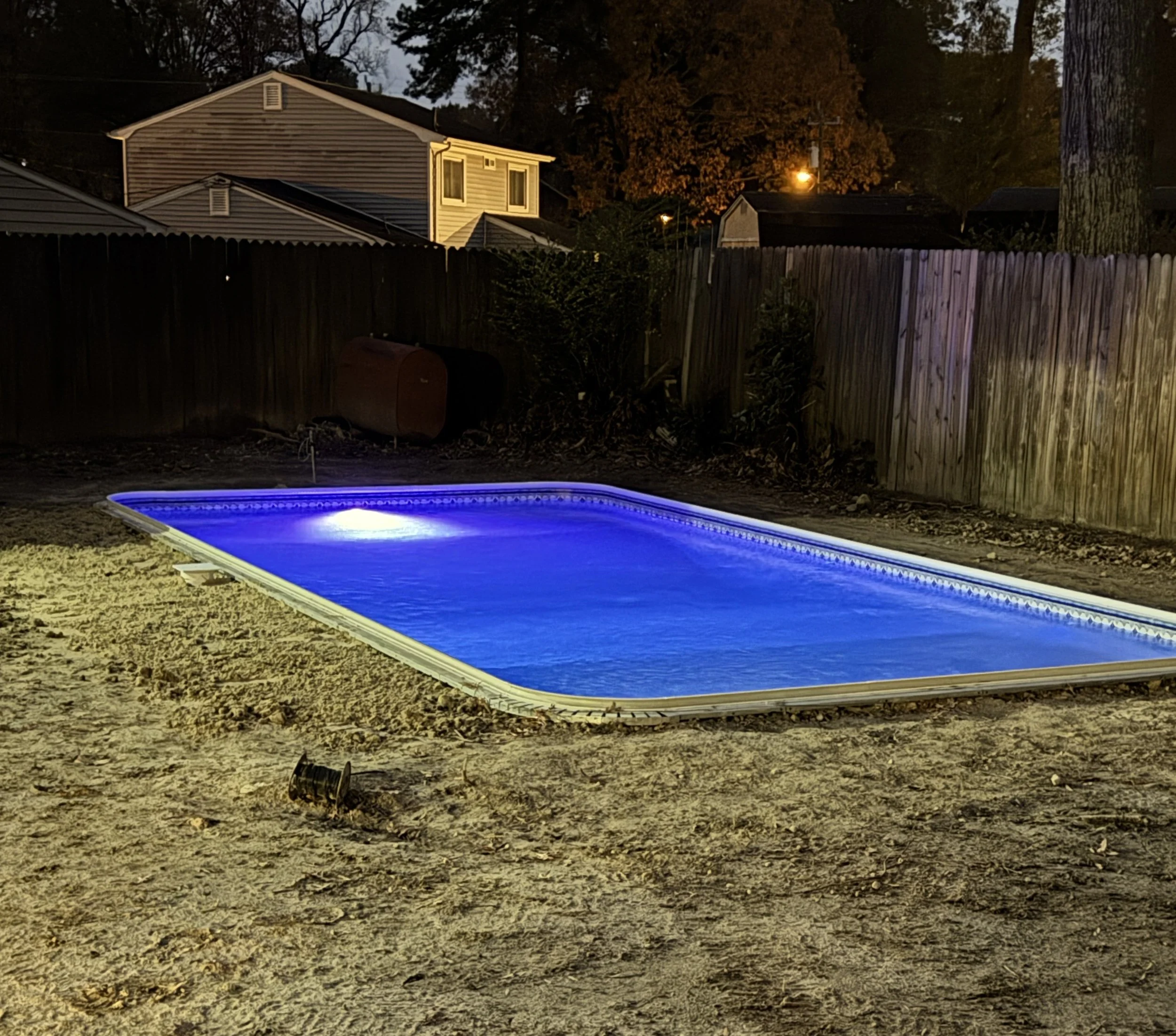
Where Suffolk Properties Usually Need Light
03 — Underground Runs
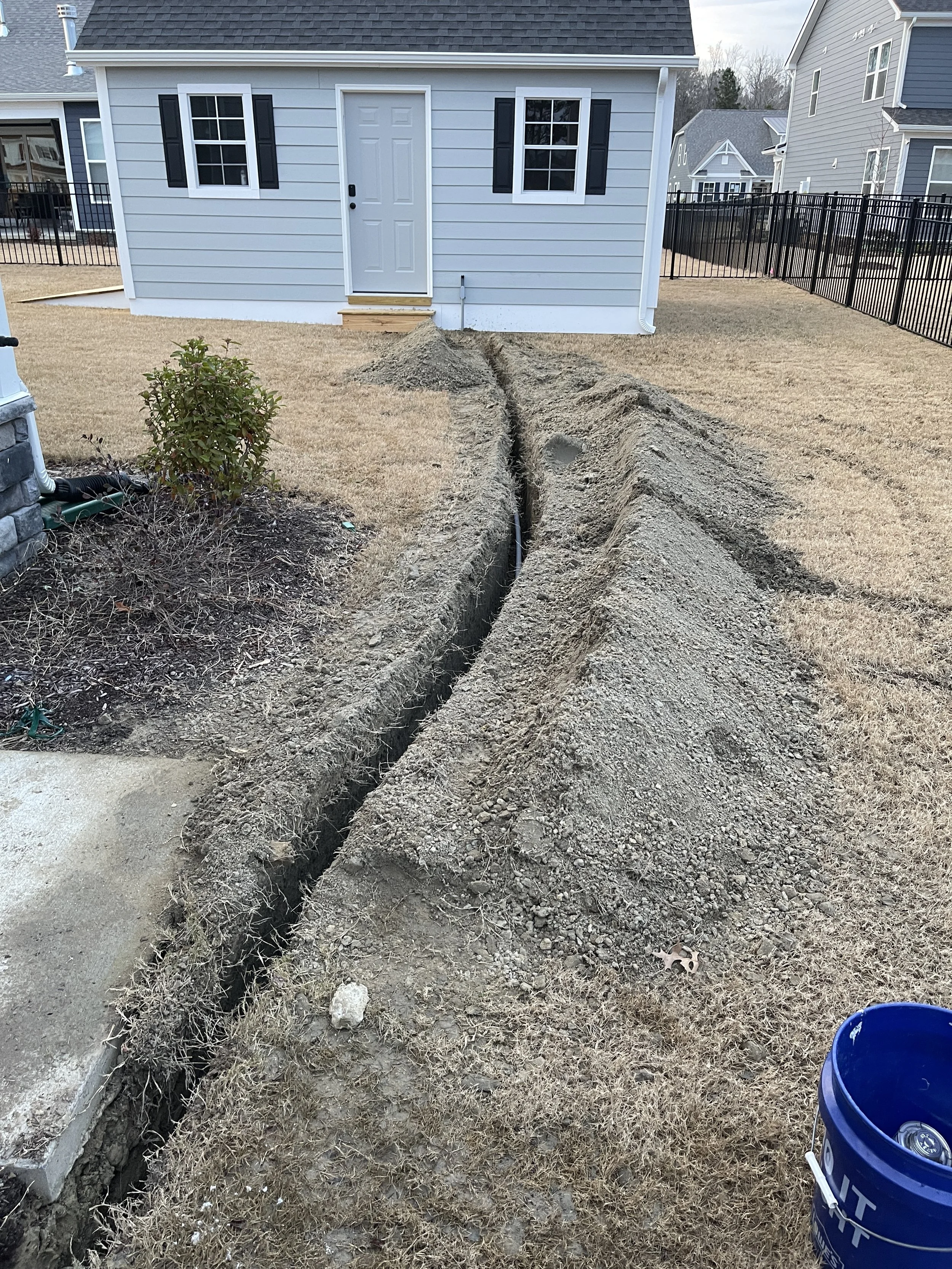
How Deep the Wire Goes to a Lamppost, Gate Light, or Shop
The burial table in the national electrical and residential codes Virginia builds on sets minimum cover for underground wiring. Cover is measured from the top of the cable or conduit to finished grade, so the trench itself runs a little deeper than the number. The right depth depends on the wiring method and where the run crosses.
Under public streets, roads, and alleys, every method needs 24 inches. A listed low-voltage lighting system’s instructions may allow its cable to run shallower than 6 inches, while the line-voltage feed to its transformer runs in the deeper rows.
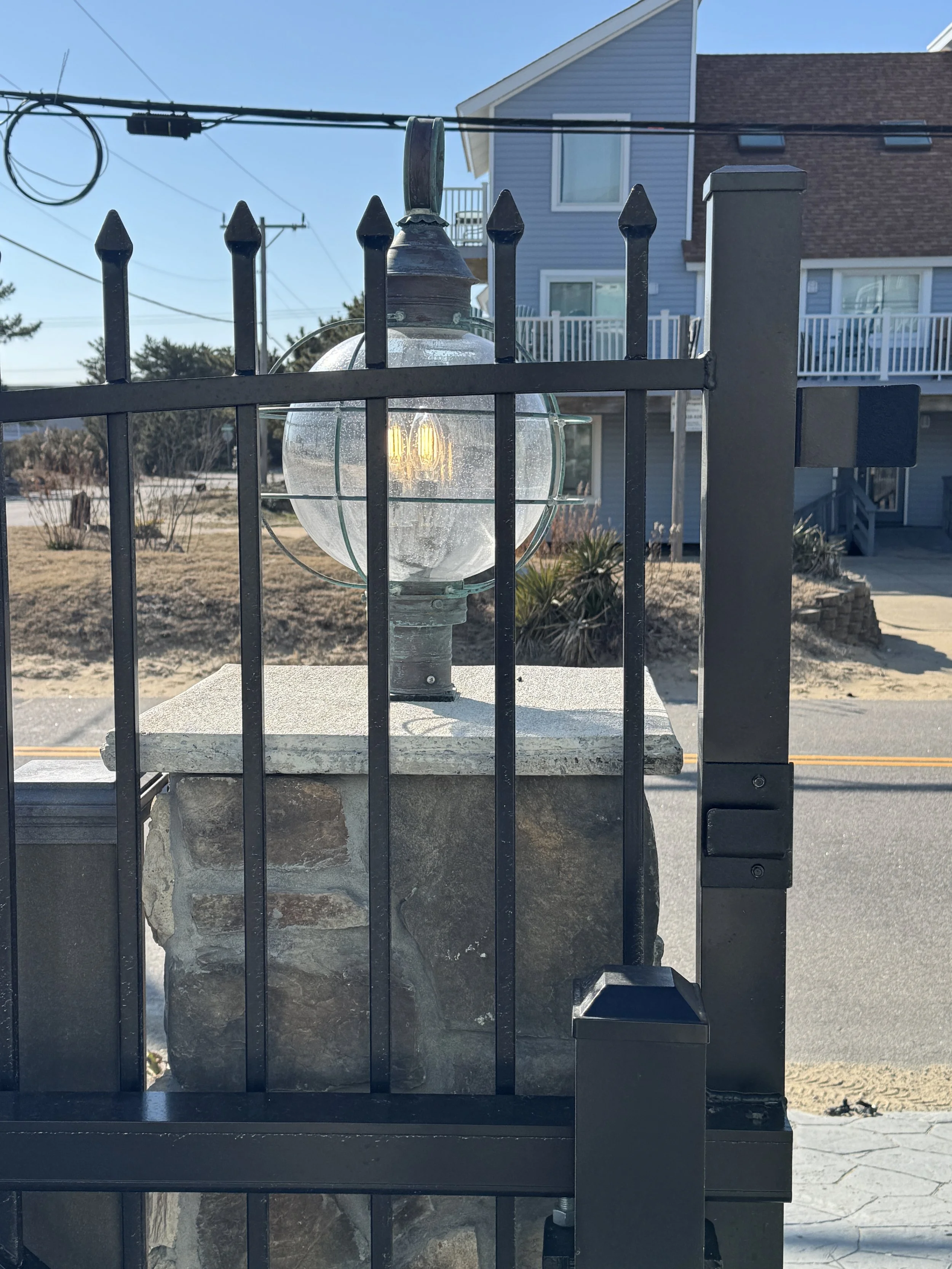
For a single lamppost or gate light, a GFCI-protected 120-volt circuit is often the practical choice, and we pick the method for each run.
04 — Sensors
When a Dusk-to-Dawn Light Stays On All Day or Blinks at Night
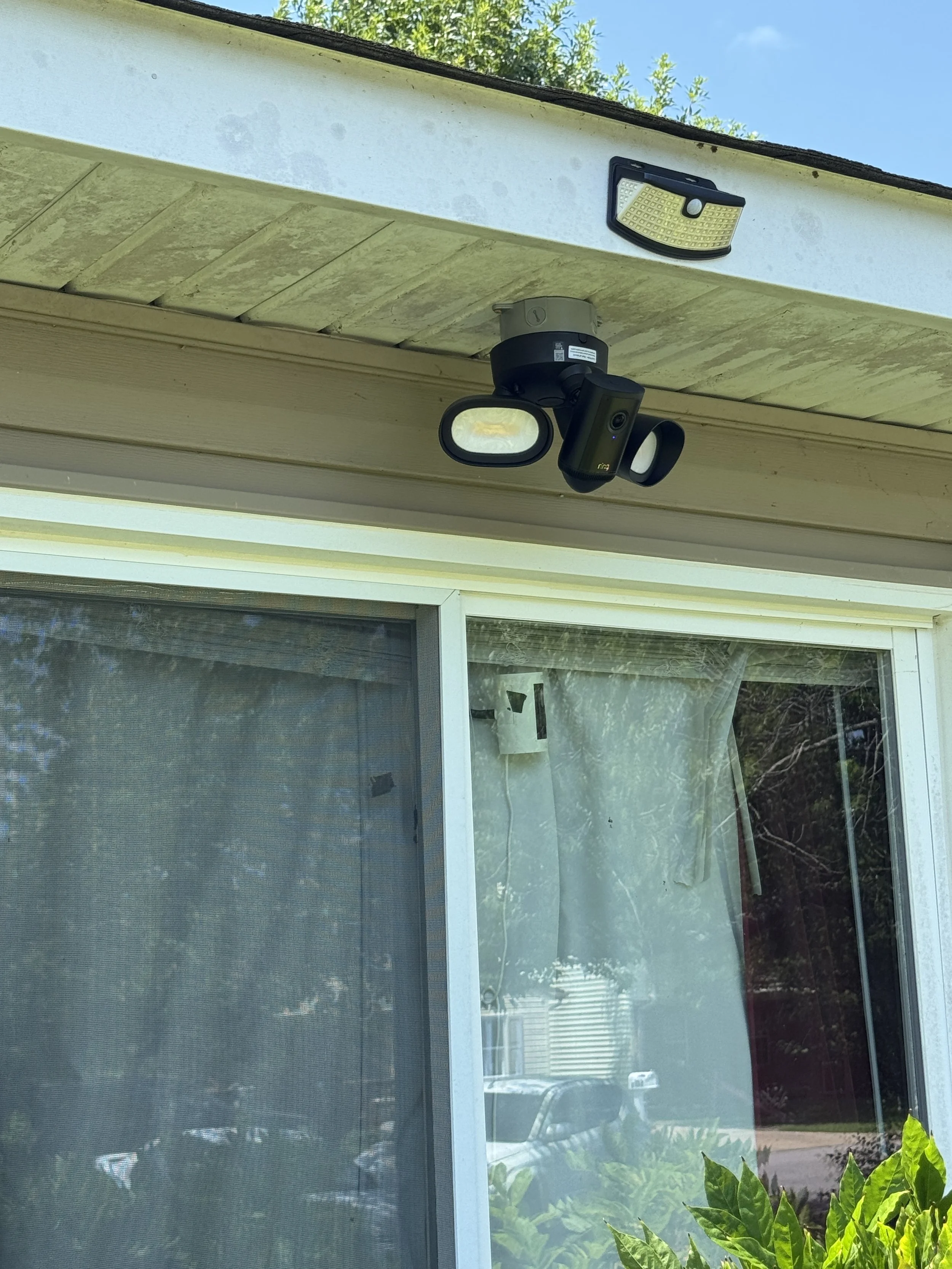
A photocell switches a fixture by reading daylight, and most complaints come from where the sensor sits. A light that stays on in daytime usually has a sensor that is dirty, blocked, or shaded, such as one under a deep eave, inside a covered porch, or behind a tree that has leafed out. Cleaning it and giving it open sky is the first step.
A light that shuts off at night or blinks is often seeing light from somewhere else: a floodlight on the same wall, a neighbor’s light, or its own beam reflecting back onto the sensor from light siding or a metal door. Re-aiming the fixture, moving the sensor, or shielding it usually settles it. A light that never comes on gets its power checked before the sensor is replaced.
One fixture maker suggests a quick test: cover the sensor with black tape or a dark cloth, and if the light comes on, the sensor works. A light that keeps flickering after its connections are checked, since loose wiring causes flicker too. On a shop or barn wall with a photocell, a timer, and a motion light together, we set each control for its own area so they stop fighting each other.
05 — Warm Light
Warmer Outdoor Light for Yards Near the Swamp and Woods
The Great Dismal Swamp, which borders Suffolk, is a national wildlife refuge of nearly 113,000 acres, and the U.S. Fish and Wildlife Service calls it some of the most important wildlife habitat in the mid-Atlantic region. It is home or a stopover for about 96 species of butterflies, 200 birds, and 47 mammals. Many rural yards here back onto woods, fields, and water where night insects gather at lights.
The Service’s advice for outdoor lighting is to use warmer bulbs of no more than 3000 kelvins, keeping blue-violet light down, and to control lights with motion detectors, timers, or dimmers so they are on only when needed. It cites a study in which about 62 percent fewer insects visited plants in a meadow lit by LED streetlamps than in one lit by the moon.
For porches, barn entries, and landscape lights, that points to warm white fixtures or lamps and motion sensors on approach lights, with all-night lighting kept to what is needed. We list the color temperature and control for each fixture on the estimate.
06 — FAQS
Suffolk Lighting FAQs
07 — Process
How We Light a Suffolk Property
Map where you park, walk, and work
We walk the drive, paths, and outbuildings and note where the house panel sits.
Plan fixtures and controls
Each area gets a fixture type, mounting height, and control.
Wire and install
We run the circuits, trench where cable goes underground, mount the fixtures, and file for a permit when the work calls for one.
08 — Why Castles
Built for Acreage and Outbuildings
Outbuildings Included
Barns, shops, and detached garages lit.
Landscape Systems Sized
Transformer and cable matched to the yard.
Aimed Down, Not Across
We point the floodlights at the ground, not at the property line.
Existing Systems Repaired
Dark landscape runs traced and fixed.
09 — Proof
Light Fixture and Switch Work in Google Reviews
One Google review mentions fixture, wiring, and switch work finished on time and efficiently. The full review is in the feed below.
From our five-star Google reviews

Google 5.0 Rated by Hampton Roads Customers
Castles Electrical maintains a 5.0 rating on Google. The reviews below load as a live widget, so this page shows current feedback from real Castles Electrical customers.