02 — Equipment Location
The 3-Foot Equipment Rule
On the city’s list, the pool pump and equipment location is subject to a condition: it must be at least 3 feet away from the pool barrier. Pick a spot that meets it before the equipment location goes on the survey. If the fence or gate line shifts during review, recheck the distance before any trench is dug.
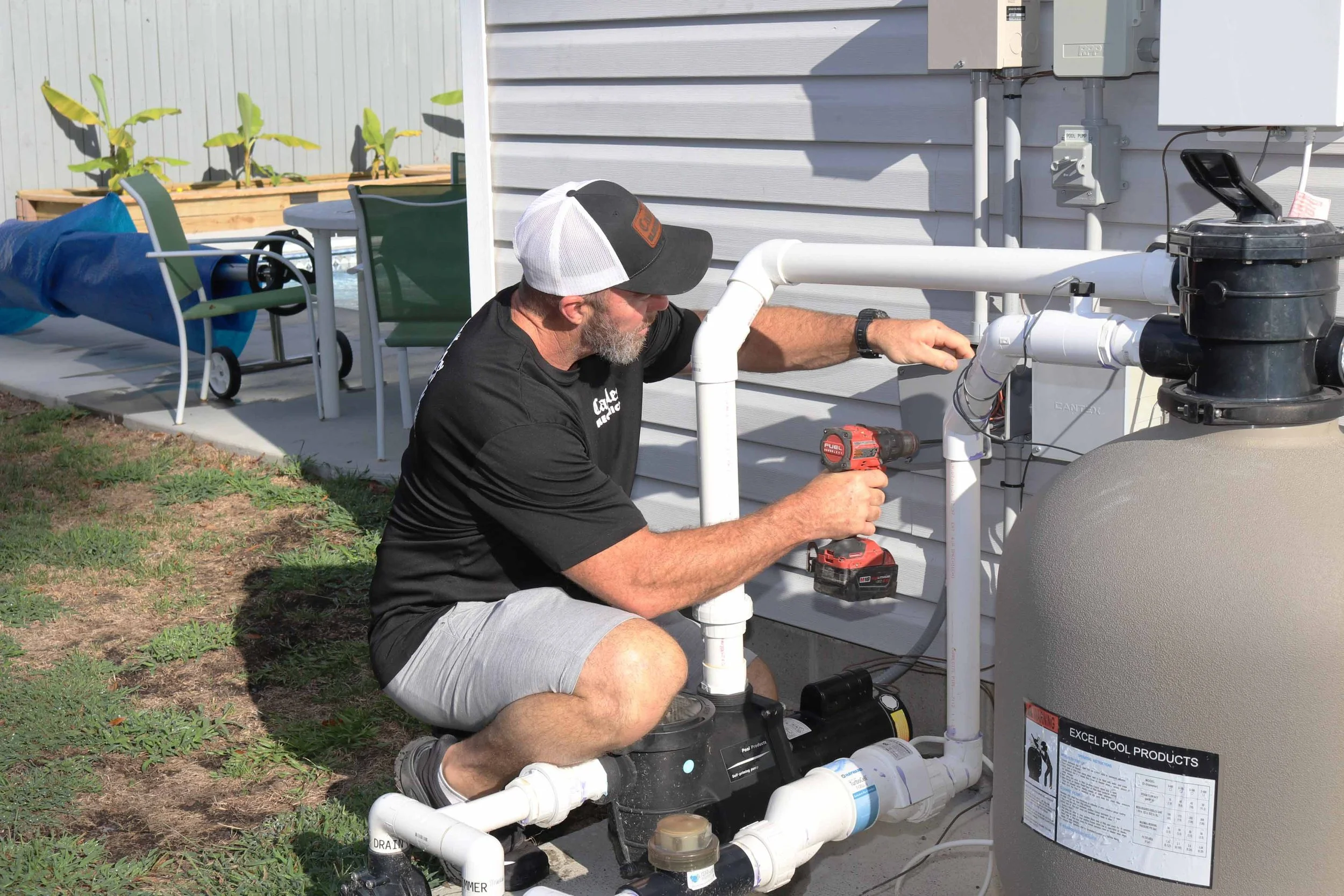
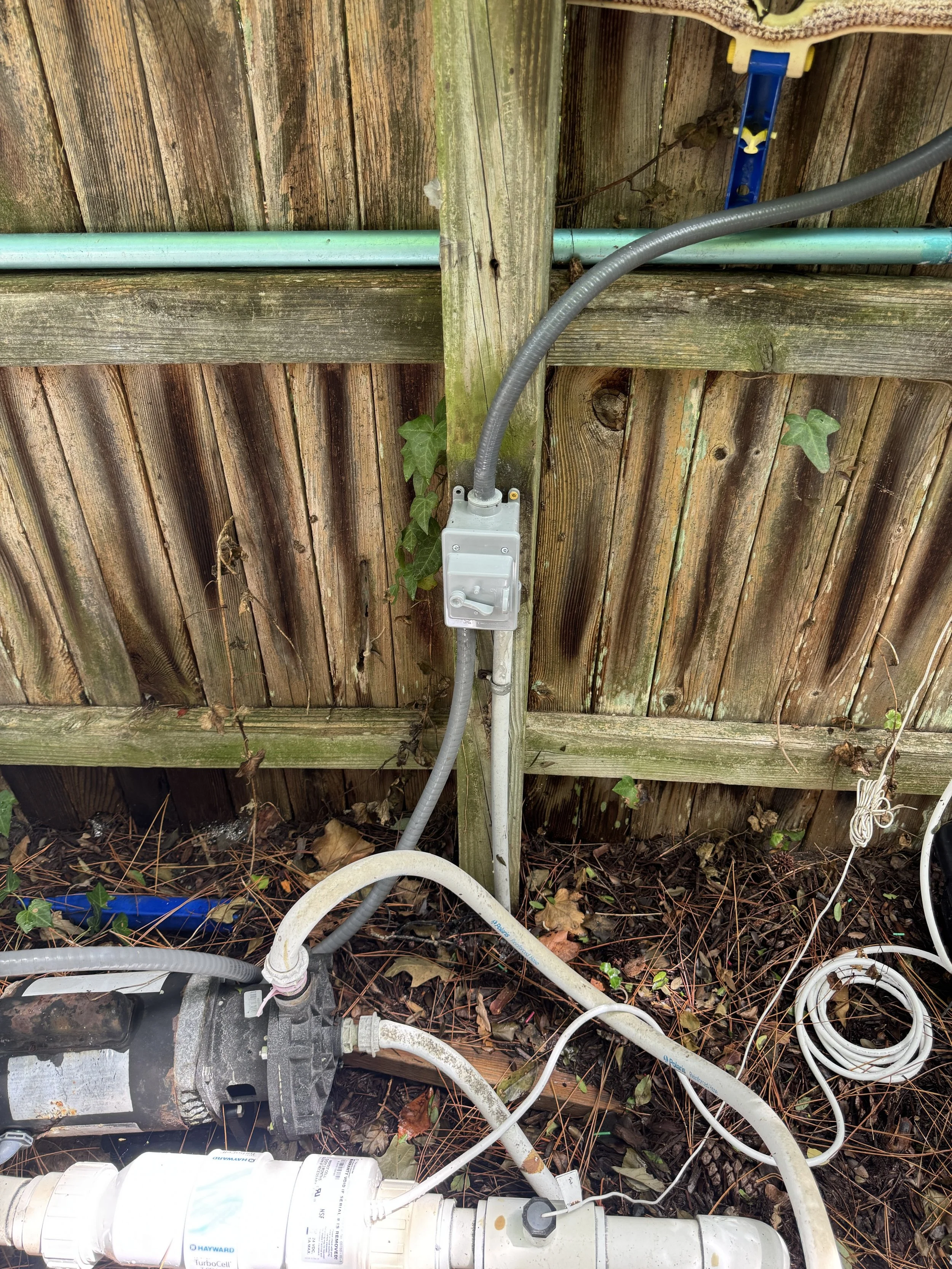
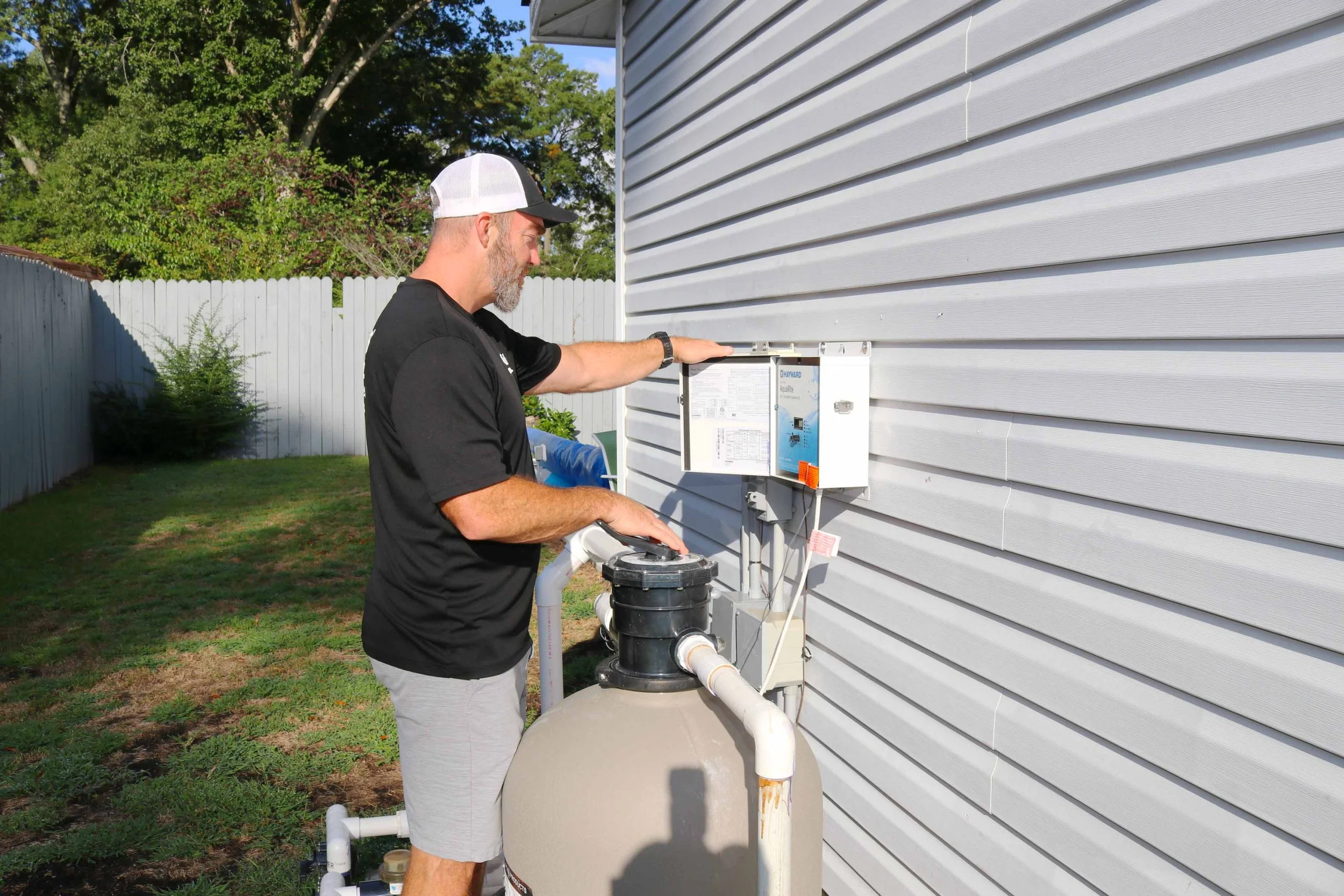
For the electrical side, the equipment pad is the destination. Its position sets how far the circuit runs from your panel and which way the trench goes across the yard. It also determines where the disconnect and any timer or automation controls are mounted, and the path the bonding conductor takes back to the pool.
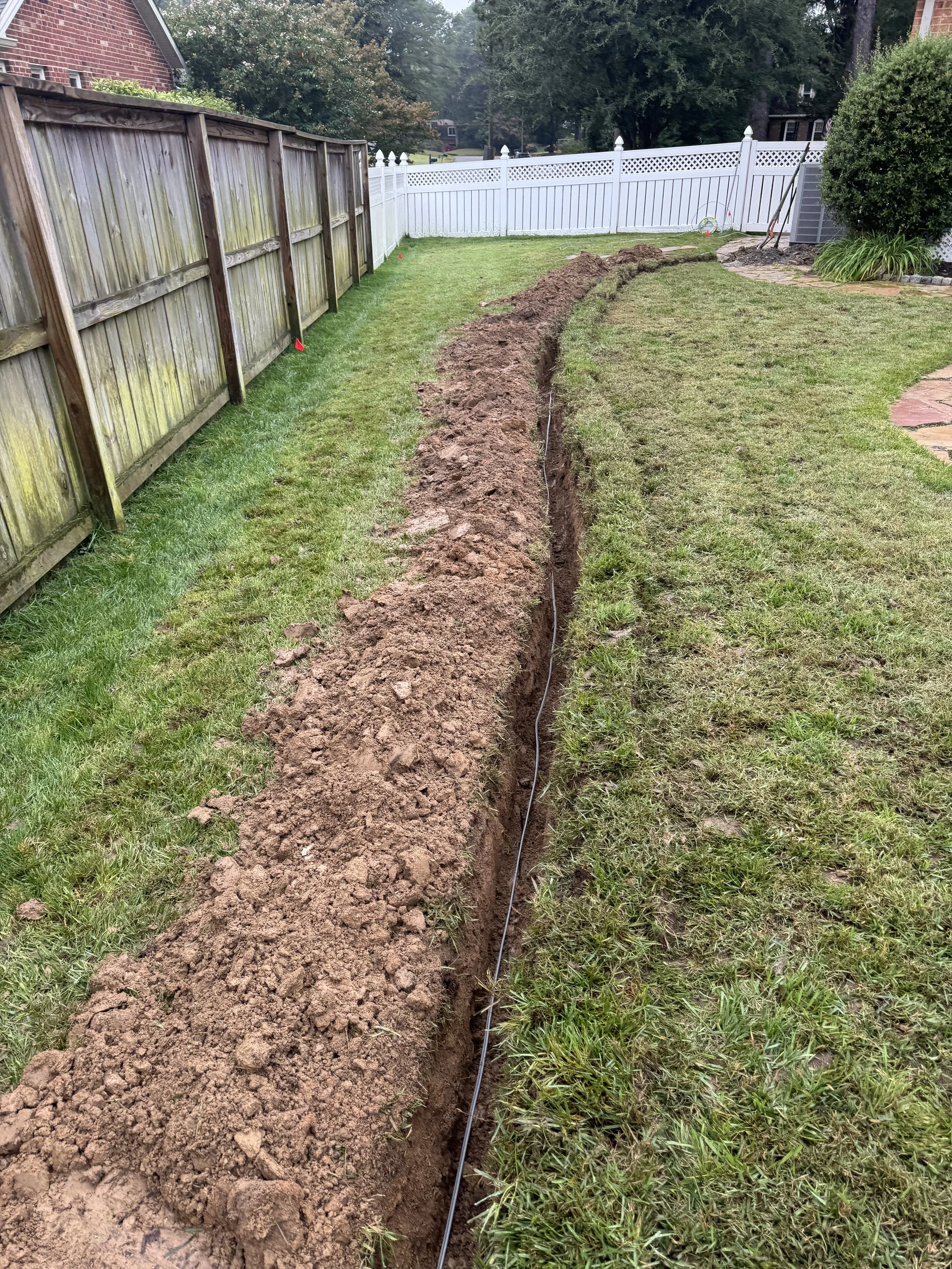
Moving a pad after zoning review means a revised plan, and moving a trench after the conduit is buried means digging it twice.
When we visit, we look at the panel, pad spots that clear the barrier by 3 feet, and any buried lines already known along the route, so your builder can show a location that works for the wiring.
03 — Bay and Flood Lots
Chesapeake Bay Preservation and Flood Zone Lots
Norfolk’s One-Day Review Quick Guide, updated in June 2026, lists pools and pool barriers among the projects that can qualify for faster review. Projects in the Chesapeake Bay Preservation Area or in a special flood hazard area are excluded, and the guide names the flood zones as VE, A, AH, AO, and AE.
Where the pool can go
The city’s 2019 bay preservation guidance for accessory structures names swimming pools alongside patios, decks, and sheds. It places accessory structures in the Resource Protection Area outside the 100-foot buffer, and in the Intensely Developed Area outside the 50-foot seaward buffer unless they replace existing impervious surface. Environmental Services can confirm current requirements for your lot.
What that means for the wiring
Once the allowed footprint is known, the equipment pad, the trench, and any lighting runs follow it. A trench that crosses toward a protected buffer is something to raise with your pool designer and the city’s Environmental Services team, reachable at (757) 664-4368, before digging. We fit our route to the plan they approve.
On a flood-zone lot, we plan equipment placement with the elevation certificate in hand.
04 — Hot Tubs
Hot Tubs and the Lockable Lid Rule
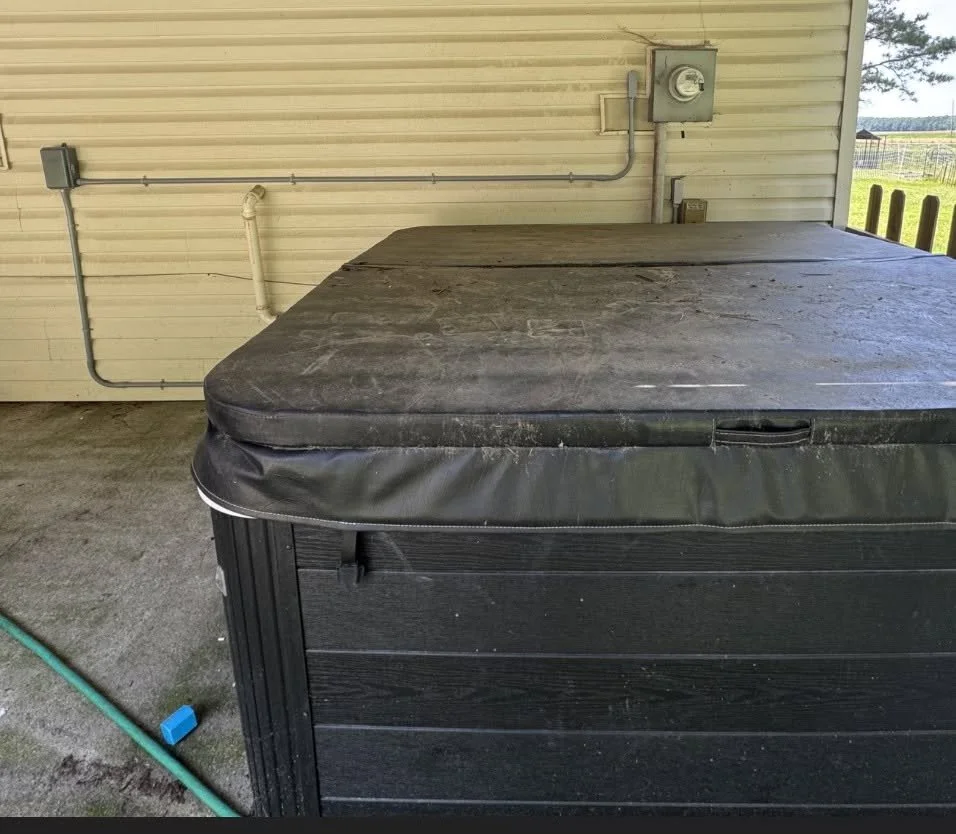
Norfolk’s pool page requires a lockable lid on a hot tub. The lid comes with the tub or from the spa dealer.
The city’s pool guidelines also include hot tubs and spas among the outdoor private pools that need a barrier, with in-ground, above-ground, and on-ground pools.
We run the dedicated circuit from the panel to the tub location, install the disconnect, and connect the spa pack to the manufacturer’s instructions.
05 — Underground Wiring
Underground Runs Close to the Pool Wall
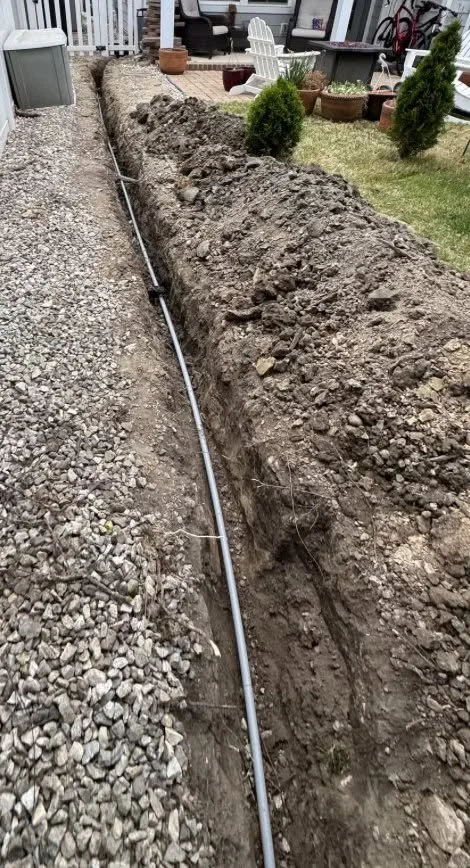
Virginia’s current code, the 2020 NEC, limits the wiring methods allowed for use underground near a pool. Underground wiring within 5 feet horizontally of the inside wall of the pool must use one of the wiring methods listed in section 680.11, such as intermediate metal conduit, with the burial depths of section 300.5 applying.
The circuit to the pool pump motor is its own rule: its wiring must include an insulated copper equipment grounding conductor, sized per code and never smaller than 12 AWG.
When the pad or a patio light sits on the far side of the pool from the house, the shortest route may cross that 5-foot band. We plan the conduit type for it or route around it before the deck goes in.
Landscape and patio lighting around the pool area often gets added in the same project, and our lighting page covers the outdoor fixture side of that work.
06 — Process
From First Call to Final Connection
Details, then a site visit
Share the pool or hot tub type, the rough location, and photos of your panel. We then review pad locations, the circuit route, and your electrical service, and provide you with an itemized written estimate.
Match the plans
Your pool builder puts the agreed equipment location on the survey before the city submittal.
Permit and rough-in
We pull the electrical permit, trench and set conduit, install bonding and equipment circuits, and call for inspection.
Final connections
Pump, heater, lights, and hot tub are connected and inspected, and we show you the disconnects and GFCI test buttons.
07 — Why Castles
Why Homeowners Choose Castles for Pool Wiring
Wired to the City’s Permit Path
We pull the electrical permit and match the equipment location to your survey.
Pools, Spas, and Hot Tubs
Pump, heater, lighting, and hot tub circuits with the bonding and ground-fault protection required by code.
08 — FAQS
Norfolk Pool and Hot Tub Wiring FAQs
09 — Proof
A Hot Tub, and a Pool at the End of a Trench
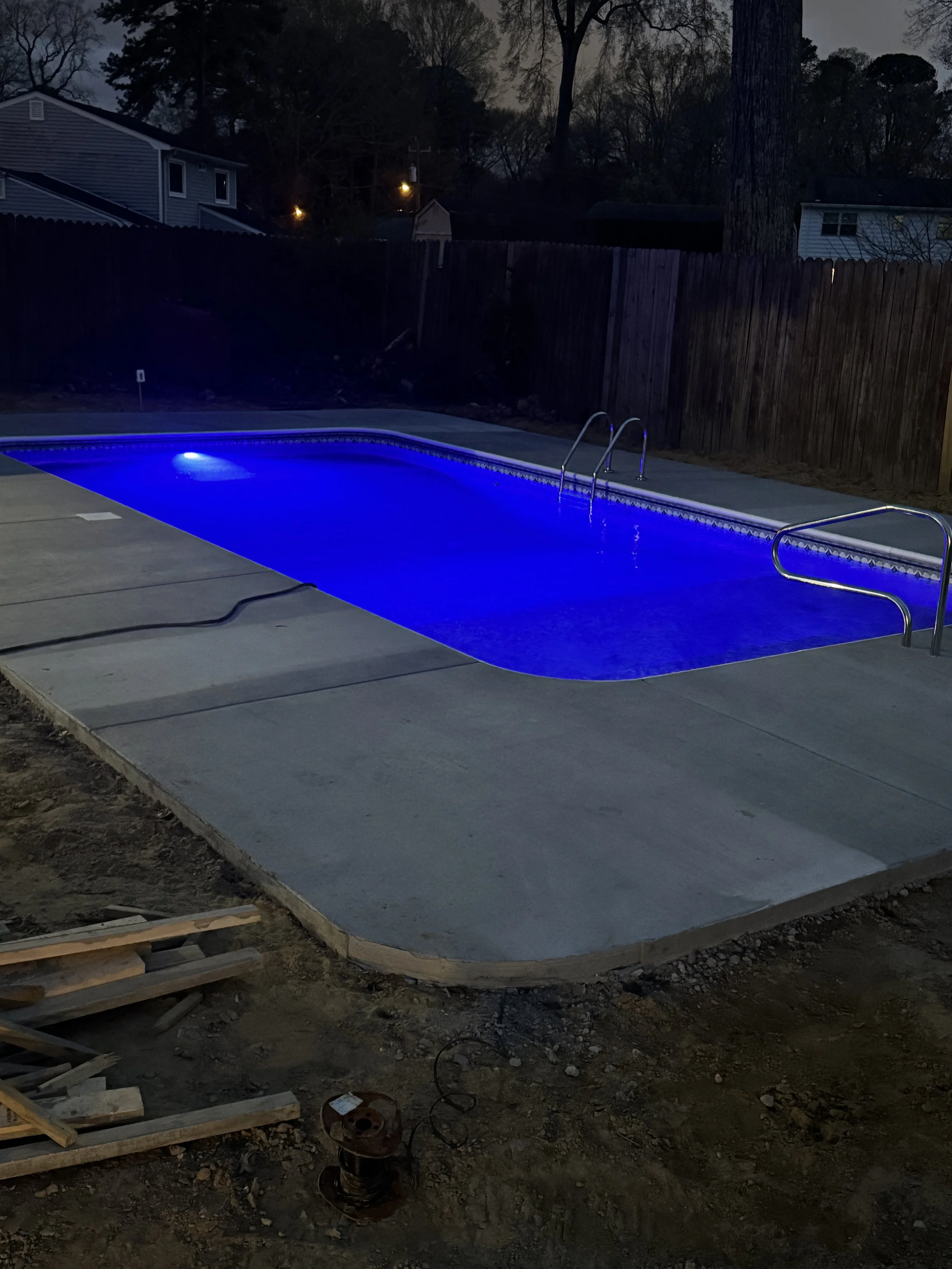
One reviewer describes wiring for a new hot tub, and another a panel replaced along with the run out to an above-ground pool.
From our five-star Google reviews
Google 5.0 Rated by Hampton Roads Customers
Castles Electrical maintains a 5.0 rating on Google. The reviews below load as a live widget, so this page shows current feedback from real Castles Electrical customers.