02 — Entry Lighting
Entry and Garage Lighting, Following Norfolk Police Advice
The Norfolk Police Department’s residential safety tips recommend using adequate exterior lighting, with all entrances and garages well lit, and leaving it on at night whenever possible.
That advice covers more doors than most houses light. A back door, a side door off the kitchen, and the garage’s entry door need light as much as the front porch and the overhead garage door do. All-night light at those doors can come from low-output, full-cutoff fixtures on a photocell.
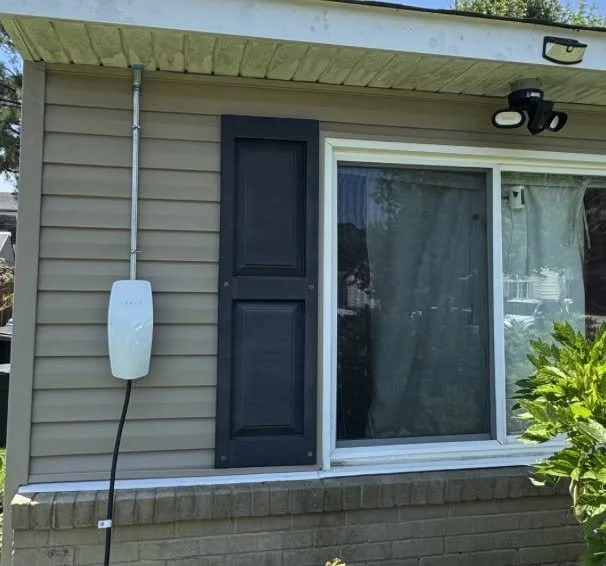
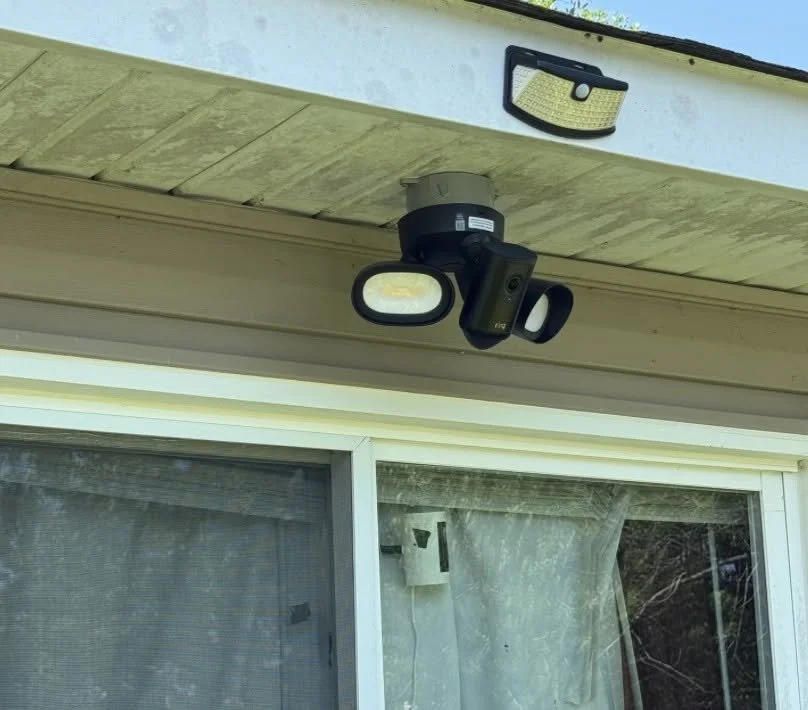
Motion floodlights still do the job on driveways and side yards, where a sudden light draws attention. The table below shows how the two kinds of fixtures divide the work on a typical Norfolk house.
03 — Security Lighting
Where Security Lights Belong on a Norfolk Home
04 — Streetlights
A Streetlight Out Front: Who Handles What
The city’s open data describes Norfolk’s streetlights as owned by Dominion Energy and leased by the city, and Dominion takes the outage reports for public streetlights. Dominion asks residents to jot down the pole number and the nearest street address before reporting it.
The same channel covers a watchlight on your own property that you pay Dominion to maintain. For a neighborhood light on private property, Dominion asks the homeowners association to contact it. Downed power lines and fallen streetlight poles should be reported by phone to Dominion at 866-366-4357. Stay well clear of them.
Our part is the lighting wired from your own panel: fixtures on the house and garage, and posts or floodlights in your yard and driveway.
05 — Historic Districts
Exterior Fixtures in Norfolk’s Local Historic Districts
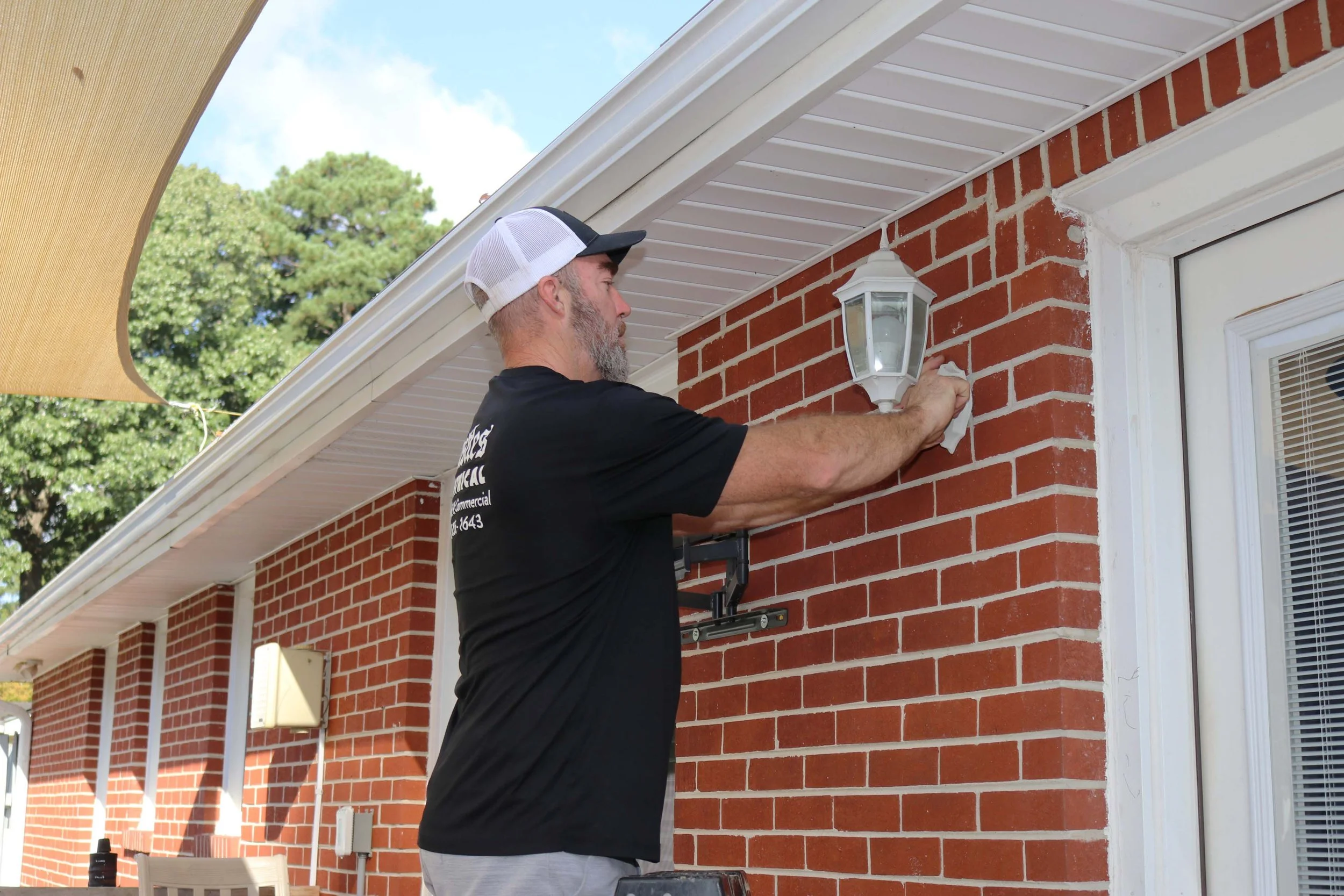
Norfolk’s Architectural Review Board reviews exterior changes in the city’s five locally zoned historic districts. According to the city’s brochure, exterior changes visible from the street undergo design review and require a Certificate of Appropriateness. A new porch lantern or a floodlight on the street face of a house can fall into that category.
The city says the typical process takes 2 to 6 weeks, depending on the project’s size and scale. Certificates are issued in accordance with the district design guidelines, which the board updated on May 26, 2026. Norfolk’s residential permit package also lists the certificate as a submittal item for exterior changes in a local historic district.
Check with the city’s planning staff before ordering a fixture for a house in one of those districts, and allow for the review in the schedule. We install the fixture you select, and the board approves, mount it carefully on older brick and trim, and keep new wiring as concealed as the house allows.
06 — After a Flood
After Water Reaches Yard or Basement Lights
A wet-location rating means a fixture can handle rain. It does not make the fixture submersible. Guidelines from NEMA, the electrical manufacturers’ association, say fluorescent, HID, and incandescent fixtures are not intended for submersion unless listed as submersible, and that fixtures known to have been submerged should be replaced. Flood water carries corrosive material and sediment, and damage to internal circuitry can keep a fixture from working properly even after it looks dry.
The same guidelines call for replacing water-damaged GFCIs and wiring devices, including an outdoor GFCI receptacle that feeds a landscape transformer or post light if flood water reached it. The Electrical Safety Foundation’s list of equipment to replace after water damage includes LED drivers.
The foundation recommends that qualified electricians evaluate water-damaged equipment, so leave the affected circuit off until it has been checked. When yard lighting is rebuilt, fixtures and transformers can go away from where water stood.
07 — Process
How a Norfolk Lighting Project Comes Together
Dark spots and spill noted
For exterior projects, we note where light is missing and where existing fixtures spill past the lot.
Layout and fixture selection
We choose fixtures, mounting heights, and controls for each area.
Installation
Wiring, boxes, and fixtures go in, with any required permit handled.
Aim and adjust
We aim the fixtures and set sensor range and sensitivity so the light stays where it belongs.
08 — Why Castles
Norfolk Exterior and Interior Lighting, Done Carefully
Shielded, Downward Fixtures
Light pointed where you need it.
New-Home Rules Planned
Lot-line and control requirements for new construction.
Hard-to-Reach Fixtures
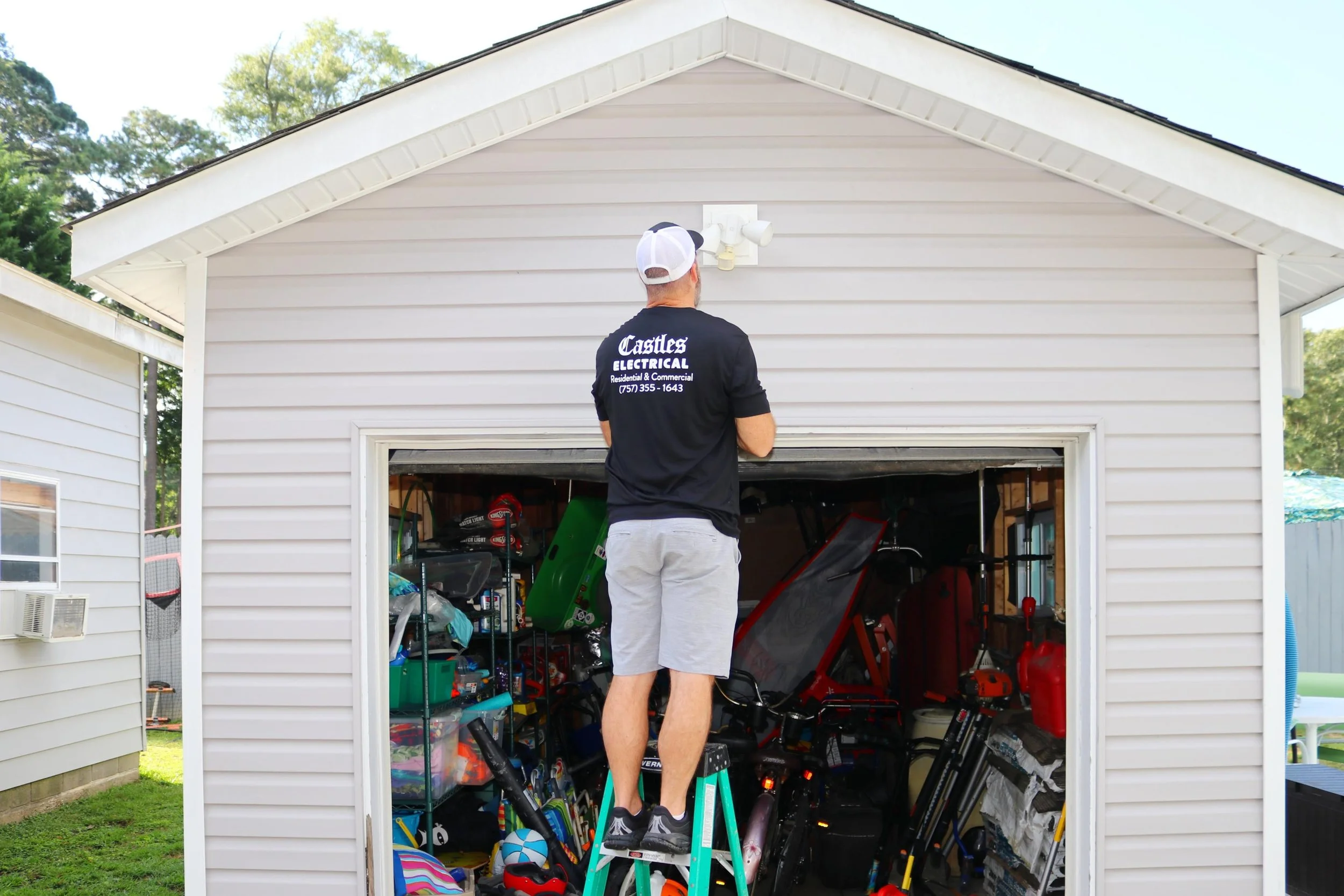
Second-story and gable lights installed safely.
Sensor Settings Tuned
Range and sensitivity set after install.
Historic-District Fixtures
Installed once the board approves.
Flood-Damaged Lights Checked
Water-exposed fixtures and GFCIs assessed.
09 — FAQS
Norfolk Lighting FAQs
10 — Proof
A Floodlight Nobody Could Reach
One reviewer wrote about a second-story floodlight that was difficult to get to, and about the clean work left behind.
From our five-star Google reviews
Google 5.0 Rated by Hampton Roads Customers
Castles Electrical maintains a 5.0 rating on Google. The reviews below load as a live widget, so this page shows current feedback from real Castles Electrical customers.