
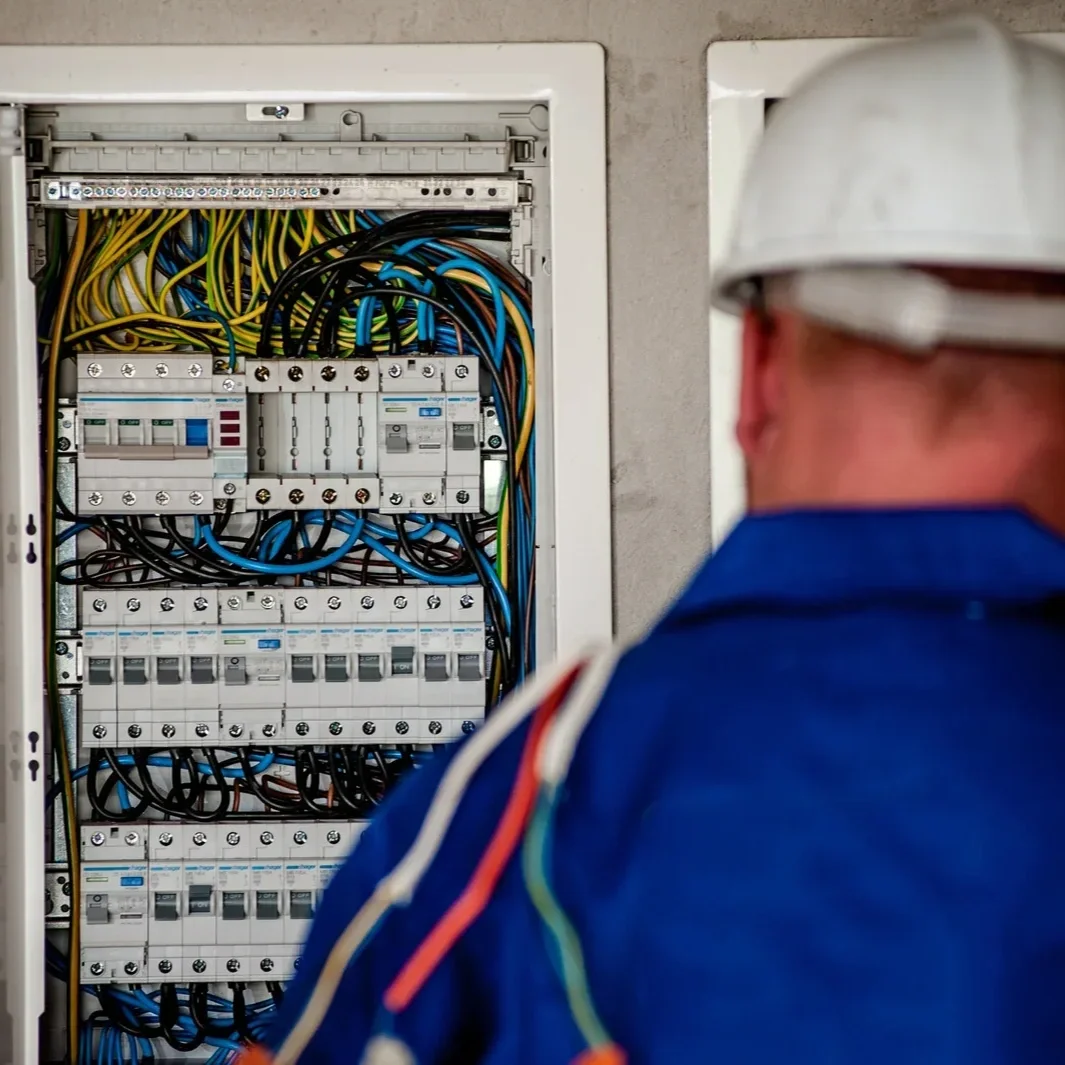
Outdated or overloaded panels are more likely to overheat or fail, which increases the risk of electrical fires, unexpected outages, and damage to sensitive appliances.
An electrical panel replacement is more than a convenience upgrade; it is a critical safety measure that keeps your home’s wiring, circuits, and devices operating within safe limits. Outdated or overloaded panels are more likely to overheat or fail, which increases the risk of electrical fires, unexpected outages, and damage to sensitive appliances.
Modern building codes assume higher household power usage than in past decades, so older panels often no longer meet current standards for capacity or safety. When a licensed electrician replaces your panel, the work is designed to align with today’s code requirements and inspection criteria, helping protect your property and preserve insurance coverage.
Signs you need to replace your electrical panel
Frequent breaker trips, especially when multiple appliances run at once, can indicate that your existing panel is strained or that connections inside the panel are deteriorating. Flickering lights, buzzing sounds from the panel, and warm or discolored breaker switches are additional red flags that the system may be overloaded or failing.
The age and brand of your panel also matter. If your panel is several decades old or known to be from a recalled or problematic manufacturer, replacement is often the safest course of action. Ignoring these warning signs can leave your home at higher risk for fire, equipment damage, and prolonged power loss.
The benefits of modernization
Upgrading to a modern electrical panel brings several practical benefits: improved safety protections, better short-circuit handling, and more consistent power delivery to every room. Newer panels offer higher capacity and better compatibility with high-demand devices like EV chargers, upgraded HVAC systems, and whole-house surge protectors.
A properly sized, code-compliant panel can also support energy-saving devices and smart-home systems, allowing you to monitor usage, manage circuits remotely, and reduce wasted energy. These improvements, combined with documented electrical upgrades, can enhance your home’s marketability and overall value.
Common types of electrical panels
Most homes use one of three basic panel types. Older properties may still rely on fuse boxes, which use replaceable fuses that blow when overloaded and typically offer limited capacity and convenience. Standard circuit breaker panels are now the most common, providing resettable breakers and far better flexibility for modern loads.
Newer smart panels add monitoring features, app-based controls, and detailed circuit-level data. While smart panels cost more to purchase and install, they can help households track energy usage and integrate with solar, backup batteries, or EV charging, making them attractive for long-term planning.
Hiring a licensed electrician
For electrical panel replacement, homeowners should work only with licensed, insured, and properly trained electricians. In Virginia, licensed contractors must meet state requirements for education, experience, and testing, and they are responsible for following the National Electrical Code along with local amendments.
Quality contractors carry general liability insurance and workers’ compensation, protecting you if accidental damage or injuries occur during the project. Online reviews, references, and a proven local presence provide additional confidence in the electrician’s reliability and long-term support.
Questions to ask before hiring
Before signing a contract, ask potential electricians about their specific experience with panel replacements, including similar projects in homes of your age and size. Clarify who will pull the permits, how long the work and power shut-off are expected to take, and what warranties they provide on both parts and labor.
Communication is important for a smooth project. Discuss how the company will keep you updated on schedule changes, inspection times, and any unexpected issues found during the job, so you are not caught off guard.
Getting accurate quotes
Request detailed, written estimates that outline the panel brand and size, labor hours, permit costs, potential wiring corrections, and any add-ons such as surge protection. Clear scope-of-work descriptions make it easier to compare multiple quotes fairly, instead of focusing on price alone.
Well-prepared estimates also help you anticipate incidental costs, such as service upgrades or repairs to meet code, so you can budget for realistic totals rather than only the base panel swap.
Understanding the electrical panel replacement process
Most professional panel replacements follow a predictable series of steps: initial assessment and load calculation, planning and permitting, coordination with the utility, power shut-off, removal of the old panel, installation of the new panel, reconnection of circuits, testing, and final inspection.
Homeowners do not need to know every technical detail, but understanding the sequence helps with scheduling, preparing the workspace, and planning for a full or partial day without electricity. Knowing when inspections will occur also makes it easier to arrange access for officials and to be present if questions arise.
Preparing your home for the project
Creating a clear workspace
Clearing the area around your electrical panel is one of the most helpful steps you can take before your electrician arrives. Move storage boxes, shelving, appliances, or furniture away from the panel so there is a clear, well-lit work zone and enough room for tools and ladders.
A clutter-free area allows the crew to work efficiently and reduces trip hazards, which improves safety for both the technicians and anyone else who might pass through the space.
Protecting floors and belongings
Panel work can involve drilling, cutting, or handling old cable sheathing, which may create dust and small debris. Protect nearby floors with tarps or plastic sheeting, and remove or cover items that could be stained or damaged.
If your panel is in a finished area, consider relocating delicate items such as electronics, framed art, or upholstered furniture to another room until the job is complete and cleanup is done.
Notifying occupants and neighbors
Everyone in the household should know when the power will be shut off, how long it might last, and which areas of the home will be off-limits during the work. This is especially important for children, older adults, and anyone working from home or relying on powered equipment.
If your panel is on an exterior wall or close to a shared space, letting neighbors know about scheduled work can prevent confusion about utility vehicles, brief noise, or temporary access restrictions.
Arranging access for the electrician
On the day of the replacement, make sure your electrician has a straightforward path from the entrance to the panel and to any other areas that may need inspection, such as grounding locations or subpanels. Secure pets in a separate room or area so they do not accidentally enter the work zone or escape through open doors.
If you live in a gated community or a building with controlled entry, provide access codes, parking instructions, or gate information ahead of time to avoid delays.
Planning for a power outage during replacement
Understanding the timeline of power disruption
For most residential projects, the actual panel replacement and associated power shut-off last several hours. Many contractors estimate around half a day to a full day of on-site work, depending on panel size, wiring condition, and inspection timing.
Local permitting and inspection schedules can add time before and after the physical replacement, so it is wise to plan for a window rather than an exact minute-by-minute duration.
Managing essential appliances
Before the outage, reduce the load on your system by turning off and unplugging sensitive electronics where practical. For refrigerators and freezers, keep doors closed during the power-off period to preserve cold air; many remain within a safe temperature range for several hours if unopened.
If anyone in the home relies on medical devices that require power, coordinate with your electrician in advance and arrange backup power sources or temporary relocation for the duration of the outage.
Ensuring emergency lighting
Place flashlights, battery-powered lanterns, and spare batteries in easily accessible locations, especially in hallways, bathrooms, and near stairways. Avoid relying solely on phone flashlights, since batteries may be needed for communication during the work.
Test these lights before installation day so you know they are ready to use if the crew needs to shut the power off earlier than expected.
Backup power options
Some homeowners choose to use portable generators or battery backup systems to keep critical loads running during panel replacement. If you plan to use a generator, discuss safe connection methods with your electrician beforehand to avoid dangerous backfeeding into the utility lines.
Portable power stations can be a safer alternative for small loads like phones, laptops, or a few medical devices, as long as their capacity and run time match your needs.
Ensuring safety precautions
Personal safety for residents
During the project, avoid entering the immediate work area and do not touch tools, equipment, or exposed wiring. Keep children and pets away from the panel location and any temporary access paths used by the electricians.
If the electrician asks you to leave certain breakers off or avoid resetting any devices until they have finished testing, follow those instructions carefully to prevent accidental damage or shock risk.
Safety measures for the worksite
Qualified electricians should use proper lockout or tag-out procedures to ensure power is safely disconnected at the appropriate points. You can also expect them to wear appropriate protective equipment and to follow professional safety practices for ladder use, grounding, and circuit testing.
If you notice unsafe behavior, such as working without shutting off power to the panel or bypassing protective covers unnecessarily, it is appropriate to ask for clarification or request that work pause until you understand the approach.
Communication channels during work
Before work begins, agree on a clear point of contact, whether that is the lead electrician or a project manager. Decide how you will communicate during the day, especially if you will be in another part of the home or off-site.
Having a direct contact number makes it easier to address quick questions, approve necessary changes, or respond if the crew uncovers unexpected conditions that affect cost or schedule.
Post-installation check for hazards
Once the new panel is live, pay attention to any unusual behavior such as frequent, immediate breaker trips, buzzing, or a persistent burning smell. While minor odors can occur as new components warm up, anything strong or ongoing should be reported immediately.
You can also lightly feel the panel door (without opening it) after it has been operating for a while. If it is noticeably hot rather than slightly warm, contact your electrician to investigate.
Handling permits and inspections
Understanding local permit requirements
In Virginia and most jurisdictions, replacing an electrical panel requires a permit because it involves service equipment and significant electrical system changes. Permits help ensure that the work is reviewed and inspected under the applicable building and electrical codes.
Most reputable electricians will handle permit applications on your behalf, but you can always ask to see the permit or confirmation number and where it must be posted during the project.
Scheduling inspections
Inspections may occur after rough work, final installation, or both, depending on local rules. Your electrician typically coordinates with the inspection office, but the homeowner often needs to provide access to the property, especially if the panel is indoors.
Inspection windows sometimes span several hours, so plan for someone to be available or arrange secure access for the inspector.
What inspectors look for
Inspectors focus on code compliance, including correct panel mounting, conductor sizes, breaker ratings, grounding and bonding, working clearances, labeling, and the condition of terminations. They may ask the electrician to perform some tests or open the panel cover for closer inspection.
Passing inspection confirms that the installation meets minimum safety standards, which supports both your long-term safety and your eligibility for insurance coverage.
Keeping records and documentation
After the project, keep copies of permits, inspection approvals, invoices, and warranty documents in a dedicated home file. These records can simplify future troubleshooting, insurance claims, or real-estate disclosures when you sell your home.
Documenting the date and scope of the upgrade also makes it easier to plan future projects, such as EV charger installations or additions, since electricians will know what equipment is already in place.
Budgeting for your electrical panel replacement
Estimating total costs
Total costs for panel replacement typically include the panel itself, breakers, labor, permit fees, and any incidental materials such as grounding hardware or new service conductors. Across many regions, full replacements commonly range from roughly one to several thousand dollars, with higher prices for larger or smart panels and complex wiring changes.
Labor rates and local code requirements can significantly influence final pricing, particularly where extensive rewiring or service upgrades are needed to bring older homes up to current standards.
Managing unexpected expenses
During panel replacement, electricians may discover issues such as deteriorated feeders, undersized conductors, or outdated grounding that must be corrected to pass inspection. These findings can add costs that were not visible during the initial walkthrough.
Setting aside a contingency budget helps you handle these surprises without delaying the work or compromising on safety or code compliance.
Evaluating financing options
If the project cost is high, you may consider options such as home-equity financing, specialized improvement loans, or contractor-offered payment plans. Each approach carries different interest rates and repayment terms, so weigh long-term costs carefully.
Using short-term credit cards for major electrical work may be suitable for smaller projects, but larger upgrades often benefit from lower-interest solutions when available.
Comparing upfront vs long-term savings
Investing in a modern, properly sized panel can reduce future repair costs, help avoid emergency callouts for repeated breaker issues, and protect electronics from damage caused by poor voltage stability.
When combined with energy-efficient appliances or smart-home monitoring, an upgraded system can also support lower utility usage and safer integration of technologies like solar power or EV charging, which may enhance long-term value.
Preparing for appliance and system reconnection
Coordinating with technicians
As power is restored, your electrician may bring circuits back online in a logical order, often starting with essential systems such as HVAC, refrigeration, and lighting. Follow their guidance on when to plug devices back in or restart complex systems like security or networking.
If your home uses specialized equipment, such as sump pumps or whole-house fans, let the electrician know where these circuits are so they can verify proper operation.
Resetting clocks and networked appliances
After a full power shut-off, many devices will lose their clock settings, scheduled programs, or Wi-Fi connections. Plan a few minutes to reset microwaves, ovens, irrigation controllers, routers, and smart devices once the system is stable.
If any smart-home equipment has trouble reconnecting, try a standard reboot process and consult the manufacturer's instructions before assuming there is an electrical problem.
Verifying circuit labels
Take time to review the new panel directory with your electrician. Confirm that major rooms, large appliances, and specialty circuits are clearly and accurately labeled. Clear labeling is invaluable during future maintenance, storms, or remodeling.
If you notice any mislabeled or unclear entries later, update the directory while the details are still fresh, instead of waiting until the next outage.
Testing for proper function
Once the panel is live and the crew has completed initial testing, walk through your home to check lighting, outlets in key rooms, and major appliances. Test GFCI and AFCI devices as recommended, and confirm that everything you depend on daily is functioning as expected.
If anything seems off—such as breakers that trip immediately, nonworking outlets, or unusual behavior—notify your electrician promptly so issues can be addressed under the project scope or warranty.
Post-replacement maintenance tips
Routine inspection recommendations
Even after a successful upgrade, it is wise to visually inspect your panel periodically. Look for signs such as corrosion, rust, moisture, or breakers that appear damaged, and note any recurring tripping patterns that could indicate deeper issues.
Many homeowners schedule a professional electrical check every few years, especially if they add new high-demand appliances or systems.
Knowing when to call the electrician
Persistent buzzing from the panel, repeated trips on the same circuit, or a panel door that feels hotter than usual are all reasons to contact a licensed electrician. Do not attempt to remove the panel cover or tighten breakers yourself, as this can be dangerous without proper training.
Prompt attention to early warning signs can prevent more serious failures or hazards.
Updating home documentation
Record the panel’s brand, model, amperage rating, installation date, and the electrician’s contact information in your home maintenance records. This information is useful for future projects or warranty service.
When selling your home, being able to show proof of a recent, permitted panel upgrade can reassure buyers and their inspectors.
Planning for future load growth
As you consider future upgrades—such as a hot tub, workshop equipment, or EV charging—talk with your electrician about available capacity and options for expansion. Planning ahead now can make later additions smoother and less expensive.
A well-sized panel with extra breaker spaces and modern protection features offers flexibility as your household’s electrical needs evolve.
Communicating with your family during the process
Explaining the project to children and the elderly
Before work begins, explain in simple terms that professionals will be improving the home’s electrical “control center” so everything runs safely. Let children and older relatives know there will be a period with no power and that certain areas will be off-limits.
Reassure them that this is a planned, temporary change and that you have flashlights, backup plans, and professionals managing the work.
Assigning roles or tasks
Assign family members age-appropriate jobs, such as gathering flashlights, managing pets, or helping move small items away from the panel area. Involving everyone can reduce anxiety and make the day feel more organized.
This shared responsibility also reinforces safety habits around electricity and work zones.
Setting expectations for the day
Share the expected schedule, including when technicians will arrive, when power will likely go off, and when you expect inspections or follow-up. Remind everyone about potential noise from drilling or movement around the home.
Clear expectations help prevent frustration and make the day feel more predictable.
Gathering feedback after completion
After the project, ask family members what went smoothly and what they would adjust for any future electrical or renovation work. You may discover helpful ideas about communication, lighting, or managing schedules.
These conversations help reinforce safety awareness and improve preparedness for future projects.
Preparing for specific panel locations
Basement panel preparations
Basement panels often sit near storage, utilities, or areas with higher humidity. Before work begins, move boxes and stored items away from walls and ensure there is a dry, stable footing for ladders.
Consider adding temporary lighting if the area is dim, since the main lights may be off once the panel is shut down.
Garage electrical panel preparations
For panels located in garages, move vehicles out of the way and clear paths around wall-mounted cabinetry or tools. Store loose items and secure sharp tools so technicians can move safely and freely.
Make sure the garage door can be opened manually if it relies on electric operators that will be offline during the replacement.
Outdoor panel considerations
If your panel is outdoors, trim back landscaping that may restrict access or visibility. Clear pathways, remove obstacles like trash cans, and ensure there is adequate working space near the enclosure.
If rain or severe weather is expected, discuss contingency plans with your electrician, as outdoor work may need to be rescheduled or temporarily protected.
Getting ready for tight spaces
Panels installed in small closets or cramped utility rooms require extra effort to clear shelves, stored items, and cleaning supplies. Empty the space as much as possible and improve lighting in advance.
Good access is not only a convenience; it is also required by code for safe working clearances around electrical equipment.
Preparing for special circumstances
Dealing with old or hazardous panels
Some older panels are linked to safety concerns or recalled components. If your electrician has identified such a panel, follow their recommendations closely and avoid opening or tampering with it yourself.
In rare cases where hazardous materials like asbestos are present nearby, specialized handling or coordination with abatement professionals may be required before electrical work proceeds.
Working with multi-family homes or rentals
In multi-family properties or rentals, coordinate timelines with property managers, landlords, or HOAs. Tenants should receive written notice of power outages, access requirements, and any temporary restrictions around shared spaces.
Clear communication reduces confusion and helps ensure that all units and common areas affected by the panel work are prepared.
Accommodating home-based businesses
If you run a business from home, plan ahead for how the outage will affect your operations. Arrange to work from another location, pause scheduling, or rely on temporary backup power for essential equipment.
Notify clients or colleagues of planned downtime so expectations are managed and deadlines are adjusted as needed.
Addressing medical needs and equipment
For households with medically necessary equipment, communicate with healthcare providers about the planned outage, especially if the disruption will last several hours. Explore backup power options, temporary relocation, or alternative care plans if necessary.
Provide your electrician with clear information about critical circuits so they can prioritize testing and restoration.
Anticipating and resolving common problems
Dealing with delays or scheduling conflicts
Weather, permit issues, or emergency calls can occasionally delay panel replacement dates. Maintain flexible expectations and stay in contact with your electrician to reschedule quickly if needed.
Having a backup day in mind for work and inspections can ease the impact of unexpected changes.
Managing dust and debris
Ask your electrician what level of cleanup they provide after the job. Many companies remove debris and vacuum the immediate work zone, but pre-laying protective coverings and planning your own light cleaning afterward can help keep your home in top shape.
Once work is finished, check surfaces near the panel and along access routes for dust, and wipe down as needed.
Addressing unexpected electrical issues
During the project, the crew may uncover outdated wiring, improper past repairs, or hidden damage. Trust the electrician’s professional judgment in recommending corrective work, and ask for a revised written estimate if the scope changes significantly.
Although these surprises can be frustrating, addressing them during panel replacement is usually more cost-effective than waiting for failures later.
Handling warranty issues
If problems arise after installation, refer to your contract and warranty documents. Contact the electrician promptly, describe the symptoms, and document dates, photos, and any actions taken.
Most reputable companies stand behind their work and will schedule follow-up visits to diagnose and correct genuine defects.
Preparing for final inspection and sign-off
What happens during the final inspection
During the final inspection, the inspector will review the panel installation, grounding, labeling, and clearances, and may request operational checks. They may ask you or the electrician questions about the scope of work or any special features.
Being available or reachable helps resolve questions quickly and reduces the chance of delays in receiving approval.
Finalizing paperwork and compliance
After passing inspection, make sure you receive any completion reports, updated permits, and final invoices. Notify your homeowner’s insurance company about the upgrade if recommended, as some policies may note major electrical improvements.
These final steps close out the project formally and document that your system meets current standards.
Verifying satisfactory completion
Before considering the project complete, walk through the work with your electrician. Review the panel directory, confirm the location of main shut-offs, and ask any remaining questions about operation or maintenance.
Address any punch-list items, such as missing labels or cosmetic issues around the mounting area, while the crew is still on site.
Planning long-term upkeep
Once everything is signed off, store all related paperwork in a secure, easily accessible place. Add reminders to your calendar for periodic panel checks or future electrical evaluations.
Keeping your electrician’s contact information handy simplifies future projects, upgrades, or warranty-related appointments.
Preparing your home for electrical panel replacement involves thoughtful planning, careful hiring, workspace preparation, budgeting, and coordination with permits and inspections. When homeowners understand the process and take practical steps before installation day, the project tends to run more smoothly, with fewer surprises and less disruption.
A well-executed panel upgrade offers long-term safety, reliable performance, and better support for modern and future electrical needs, from everyday appliances to advanced smart-home systems. Treating this work as a professional, code-compliant project rather than a quick fix helps protect your investment, enhance property value, and provide peace of mind for years to come.
Electrical Panel Replacement FAQs — Essential Information for Homeowners
How long does an electrical panel replacement usually take?
Most residential electrical panel replacements take several hours of on-site work, often around half a day, although complex projects or inspection schedules can extend the overall timeline.
Can I stay in my home during the panel replacement?
Yes, you can typically remain at home, but you will be without power for much of the work and should stay clear of the panel area and any designated work zones for safety.
What should I do if something isn’t working after the new panel is installed?
If lights, outlets, or appliances do not work properly after the upgrade, contact your electrician promptly so they can test the circuits, confirm labeling, and correct any issues under the project scope or warranty.
Will upgrading my electrical panel increase my home’s value?
Upgrading to a modern, code-compliant panel can make your home more attractive to buyers and home inspectors, since it supports current electrical demands and documents a major safety improvement.
Castles Electrical is the one-stop destination for electrical panel installation, electrical panel replacement, whole home rewiring, new construction wiring, electrical safety inspections & code compliance and commercial electrician services in the Virginia Beach area. Serving residential and commercial customers, our licensed electricians always put customers first. Call today for a free estimate.